Best Kids Scooters That Actually Hold Up to Real Use
The best kids scooters for every age, tested by four boys. Honest picks for toddlers through big kids, with what actually holds up to daily riding.
We have gone through more scooters than I can count around here. With four boys, there is always someone learning to balance on two wheels for the first time while someone else is already tearing around the cul-de-sac on something faster, and someone in between is somewhere on that spectrum. Scooters get left out in the rain, dropped on the driveway, and ridden over every curb and crack our street has to offer, so I have a pretty good sense at this point of which ones actually survive a summer of real use and which ones are done after a few weeks.
This is not a list of the flashiest scooters on Amazon. It is the ones that have held up in our garage, sorted roughly by age, with honest notes on where each one starts to fall short. If your kid is begging for a scooter after seeing the neighbor's kid fly past on one, one of these four should fit.
What Actually Matters in a Kids Scooter
A few things I look at now before letting a scooter anywhere near our driveway.
Wheel count and lean-to-steer versus handlebar steering. Younger kids do much better with a three-wheel, lean-to-steer scooter, where you shift your weight to turn instead of twisting the handlebars. It is far more forgiving for a kid who is still working on balance. Older, more confident riders usually want a two-wheel scooter that turns the way a bike does, because it is faster and easier to do tricks on.
Deck size relative to the kid's shoe size. A deck that is too small means a kid's foot hangs off the edge, which is both uncomfortable and a real tripping hazard. Check the deck length against your kid's current shoe size, not just the age range on the box, especially if your kid runs big or small for their age.
Wheel material. Cheap plastic wheels are loud and rattle over every seam in the pavement. Polyurethane wheels, which most of the decent scooters use, roll smoother and quieter and last a lot longer before they start to wear flat on one side.
Weight limit versus your kid's actual weight. Every scooter lists a max rider weight, and it is worth checking against where your kid actually is, not where they were six months ago. A scooter pushed past its rated weight wears out the folding mechanism and the wheels much faster.
Whether it folds for storage or the car. If you are hauling scooters to a park or a homeschool co-op meetup regularly, a folding scooter that collapses down with one hand is worth paying a little more for over one that only compresses partway or not at all.
At a Glance
| Pick | Best For | Wheels | Age Range | Approx. Price |
|---|---|---|---|---|
| Razor A5 Lux | Older kids, speed and durability | 2, 8 in urethane | 8+ | $70-$90 |
| WAYPLUS KS1 | Budget pick, everyday riding | 3, lean-to-steer | 6+ | $40-$55 |
| Razor Jr. Folding Kiddie Scooter | Young beginners learning balance | 3, lean-to-steer | 3-5 | Under $35 |
| Micro Kickboard Mini | Toddlers, smoothest ride | 3, adjustable T-bar | 2-5 | $60-$75 |
Razor A5 Lux Kick Scooter
My oldest is fast on this thing, faster than I am totally comfortable with some days, and it is the scooter that has genuinely earned its keep after two riding seasons of daily use. The extra-large deck gives him room to stand comfortably even now that his feet have grown, and the 8 inch urethane wheels roll over cracked pavement and gravel driveway seams without the jolting rattle that smaller wheels give you.
The frame is aluminum, which keeps the whole thing light enough for him to carry back into the garage one-handed, but it has not bent or loosened up even after being dropped on concrete more times than I want to admit. It folds down for the car when we take it to a park with smoother pavement than our street. The rear fender brake works well once a kid has the hang of using it, though that took my son a couple weeks of practice before he stopped just dragging his sneaker instead.
The honest limitation: this is a two-wheel scooter, and it is genuinely not the right starting point for a younger kid still working on balance. He tried to hand it down to his younger brother, and it was immediately clear that brother needed more wheels under him first. This one is built for a kid who already has some scooter experience and wants to go faster.
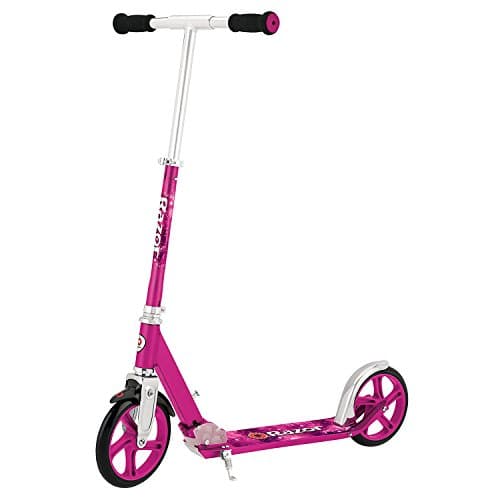
An extra-large aluminum deck with 8 inch urethane wheels built for speed and stability on real pavement, not just a driveway. Rated for riders up to 220 pounds, so it has years of use left in it. Best for confident riders age 8 and up who already have their balance down.
WAYPLUS KS1 Kick Scooter
This is the one I recommend to other homeschool moms when they ask for a scooter that will not break the bank but still holds up to actual daily riding. It is a three-wheel, lean-to-steer design, which makes it a good middle step for a kid who has outgrown a toddler scooter but is not quite ready for a two-wheel one yet. The wide rear deck gives room to plant both feet for coasting, which my middle son does constantly on the way down our driveway.
The adjustable handlebar height means it has kept up with him through a growth spurt without needing to be replaced, and the light-up wheels that spin as he rides have kept his interest going well past the first week, which is more than I can say for some of the toys that end up abandoned in the garage. For the price, the build quality has genuinely surprised me. The bearings still roll smooth after a summer of use.
Where it falls short compared to the Razor: the plastic components on the steering column feel a bit more flexible than I would like for a heavier or more aggressive rider, and it is not rated for the same top speeds. For a kid in the six to nine range who wants their own scooter without a big investment, it has done exactly what we needed.
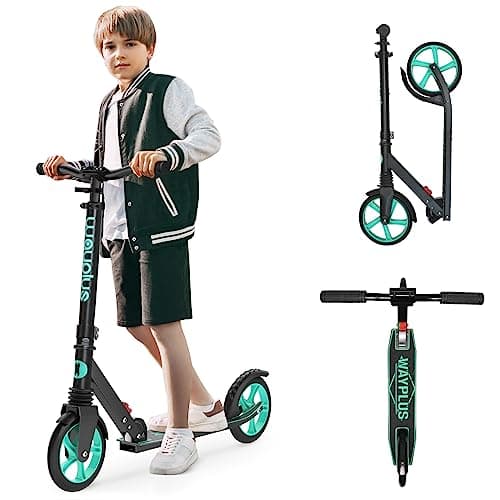
A budget-friendly three-wheel scooter with an adjustable handlebar that grows with your kid and light-up wheels that keep younger riders interested. Lean-to-steer design makes turning intuitive for a kid transitioning up from a toddler scooter. Best for ages 6 and up who are not ready for a two-wheel scooter yet.
Razor Jr. Folding Kiddie Kick Scooter
For my youngest right when he was starting out, this was the scooter that actually let him ride without me hovering the entire time. The three-wheel lean-to-steer design meant he could turn just by shifting his weight instead of needing the coordination to twist a handlebar, which made a real difference in how quickly he got comfortable. Within a couple of weeks he was cruising up and down the driveway on his own instead of needing a hand held the whole time.
It folds flat for storage, which matters more than I expected once we had multiple scooters stacked by the garage door. The deck sits low to the ground, so the learning curve for getting on and off is much shorter than it was with his older brothers' scooters at that age, and there is less distance to fall if he does lose his balance.
The caveat is that it is genuinely a beginner scooter, not one that will keep up with an older, faster kid for long. My son outgrew both the size and the speed within about a year and a half of steady use, which is normal for this age range but worth knowing going in. Do not expect it to last through elementary school the way the Razor A5 has for his brother.
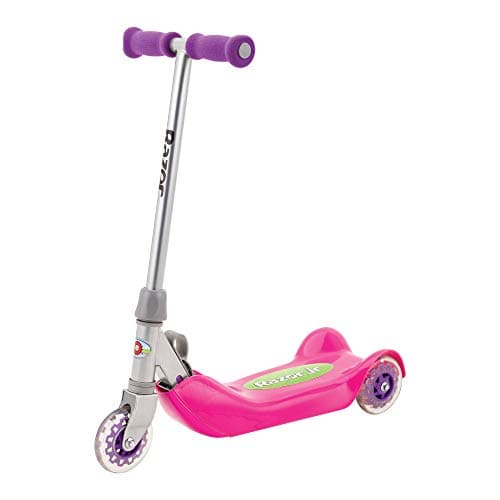
A three-wheel, lean-to-steer scooter built specifically for beginners, with an extra wide deck and a low ride height that makes getting on and off easy for a small kid. Folds flat for storage between rides. Best as a first scooter for ages 3 to 5 who are still building balance and coordination.
Micro Kickboard Mini
This is the one I would point a friend toward if their toddler is riding a scooter for the very first time. The Swiss-designed lean-to-steer system is noticeably smoother than the other three-wheel scooters we have owned, and the T-bar handle adjusts as your child grows, which meant it fit my youngest from right around age two all the way through his early preschool years without needing to be replaced.
The polyurethane wheels roll almost silently compared to the louder plastic wheels on some of the cheaper toddler scooters we tried first, and the whole thing feels genuinely stable under a wobbly toddler in a way that gave me more confidence letting him ride it without holding onto the handlebar the entire time. It is rated up to 110 pounds, so there is real room to grow into it rather than outgrowing it in a single season.
The honest downside is the price. It costs noticeably more than the other toddler-range option here, and for a family testing the water with a first scooter that might get used for one summer and forgotten, that is a real consideration. For us, with four kids who have each had a turn on it, the cost has evened out over time, but it is not the pick if you are not sure your toddler will stick with it.
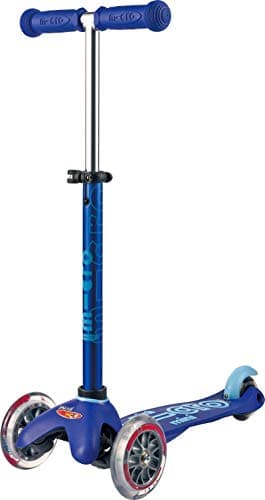
A smooth-rolling three-wheel scooter built specifically for toddlers, with an adjustable T-bar handle that grows with your child and polyurethane wheels that roll quietly and evenly. Rated up to 110 pounds for real room to grow. Best for ages 2 to 5 who are riding a scooter for the first time.
Scooter Safety Gear We Actually Use
None of these scooters go out the door without a helmet, no exceptions, even for a quick trip down the driveway. We keep a small stash of kids bike and scooter helmets in different sizes by the garage door so nobody has an excuse to skip one because it is upstairs. Knee and elbow pads are a good idea for a kid who is still working on balance, though my older boys have mostly graduated out of needing them for casual driveway riding.
For evening rides when the sun starts going down earlier, we added reflective wheel and wrist accessories to make sure drivers can actually see them from a distance. It sounds like overkill until you are the one watching a kid disappear around a corner as the light fades.
How We Store Four Scooters Without Losing Our Minds
With four scooters and four kids who each insist theirs is uniquely identifiable despite looking nearly identical, a wall-mounted scooter rack by the garage door has saved us more arguments than almost any other single purchase. Each kid gets an assigned hook, and Sunday evenings we do a quick check that everyone's scooter actually made it back inside instead of sitting out overnight collecting dew.
I also learned to write names on the underside of the deck with a paint pen after two of the boys ended up with the exact same model in the exact same color one Christmas. It is a small thing, but it has cut down on the "that's mine, no it's mine" arguments considerably.