Best Scalp Serums for Hair Growth That Actually Work
The scalp serums that actually helped my thinning hair, from peptide formulas to rosemary blends. An honest guide to what works and what to skip.

I noticed the thinning around my temples after my last pregnancy. Not dramatic, not all at once, just a gradual postpartum thing where my part looked a little wider than it used to and my hairline at the temples felt noticeably sparser. As a mom of four, postpartum hair shedding wasn't new to me, but this round felt slower to bounce back. I started using minoxidil, paid attention to my iron levels and stress, and added a scalp serum to the routine. The combination is what actually moved the needle, and the right serum made a real difference.
I have now tried eleven different scalp serums over the past two and a half years. Some were expensive. Some were overhyped. A few genuinely moved the needle, and those are the ones on this list. I will also tell you about the approach that did not work for me, because I wasted six months on it and I would rather you did not.
Why Scalp Serums Actually Work
Your hair grows from follicles in your scalp. Most hair loss treatments that work, work by targeting those follicles directly: reducing inflammation around them, increasing blood flow to them, delivering growth-signaling peptides to them, or blocking the hormonal signals that shrink them. A shampoo or conditioner does not have enough contact time to do any of this. You rinse it off in sixty seconds. A serum you apply and leave on is doing the actual work.
The scalp is also very different from the rest of your skin. It is thicker, more oily, and has a more complex microbiome. Products formulated for skin do not translate well to the scalp. A good scalp serum is formulated specifically to penetrate through the follicle layer, and the ingredients list reflects that.
The other thing nobody tells you: timing matters as much as product. I saw almost no results from any serum during the eight months I was severely sleep-deprived and skipping meals. The follicles were not in a state to respond. Once I addressed the underlying sleep and cortisol issues and brought my iron levels up, the same serums started working visibly. Products are not a substitute for fundamentals, but they are a real accelerant once the fundamentals are in place.
What to Look for on the Label
Before I get into specific products, here is what I look for so you can evaluate anything you come across:
Peptides. Specifically signal peptides like biotinoyl tripeptide-1, acetyl tetrapeptide-3, or copper peptides. These communicate with follicle cells to extend the growth phase of the hair cycle and stimulate dermal papilla activity. The research on this class of ingredients is solid.
Caffeine. This one has good evidence behind it. Caffeine blocks DHT at the follicle level and increases follicular cell proliferation. It is one of the more affordable actives in scalp serums and is often underrated because it does not have the mystique of peptides or adaptogens.
Rosemary extract or rosemary oil. The evidence for rosemary oil is legitimately strong. A 2015 clinical study found rosemary oil equivalent to 2% minoxidil for improving hair count after six months, with fewer side effects. This is not folk medicine. The mechanism is improved circulation to the follicle and reduced inflammation.
Niacinamide. Supports the scalp barrier, reduces inflammation, and improves follicle health. You will find it in most well-formulated serums now.
What I skip: keratin-focused formulas (this works on the hair shaft, not the follicle, so it improves appearance but does not stimulate growth), biotin topically (the evidence for topical biotin on hair growth is much weaker than for oral biotin, and follicle absorption is limited), and serums with a lot of fragrance or alcohol high on the ingredient list (both irritate the scalp and can worsen inflammation around the follicle).
The Ordinary Multi-Peptide Serum, My Everyday Pick
This is the serum I have used almost continuously for over a year, and it is the one I recommend first to anyone who asks. The Ordinary Multi-Peptide Serum for Hair Density packs biotinoyl tripeptide-1, acetyl tetrapeptide-3, and three plant stem cell extracts into a lightweight, water-based formula that costs under $25. For what it contains, the price is absurd.
I apply it every night to dry scalp with my fingertips, focusing on my temples and part line. I let it absorb for a few minutes before putting my hair up or going to bed. Within the first month I noticed reduced shedding in the shower. By month three I had visible baby hairs along my hairline where I had not had any for years.
The formula is unfragranced and absorbs without leaving any residue, which matters to me because I wear my hair up most days and do not want product buildup at the roots. The pump dispenses just the right amount for a full scalp application.
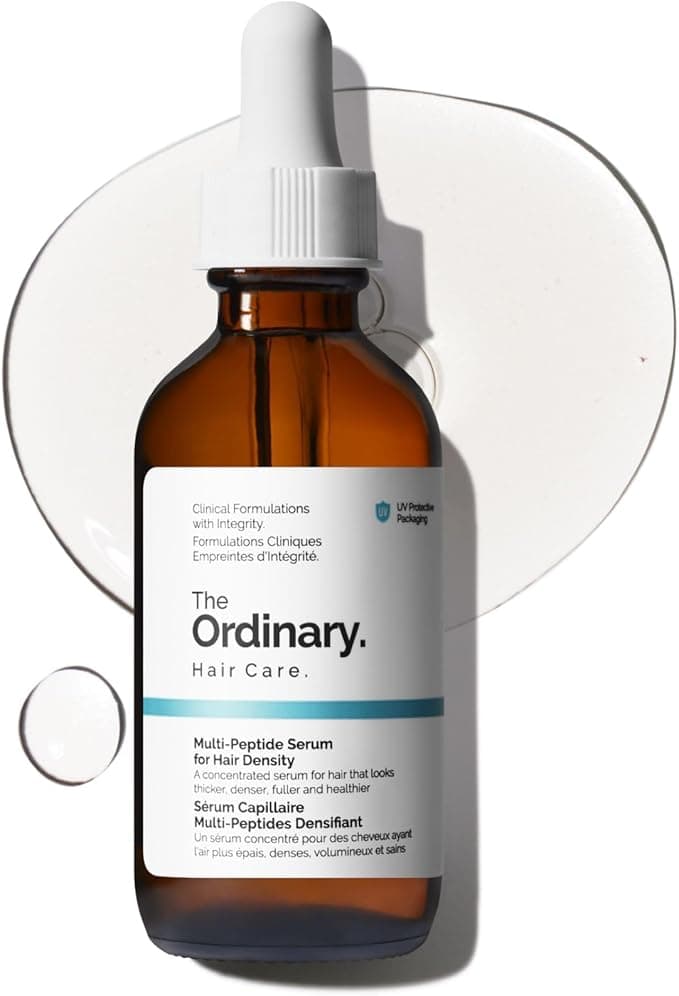
The Ordinary Multi-Peptide Serum for Hair Density
My everyday scalp serum. Biotinoyl tripeptide-1, acetyl tetrapeptide-3, and plant stem cell extracts in a lightweight formula under $25. I have been using it for over a year and it is genuinely the best value in this category. Baby hairs came back at my temples after three months of consistent nightly use.
The one honest caveat: this is not an overnight solution, and if you go into it expecting dramatic results in two weeks, you will be disappointed and stop using it before it has a chance to work. Give it ninety days minimum. Hair cycles are slow. The follicle you are trying to wake up has been dormant for months, and it takes time to respond.
Mielle Organics Rosemary Mint Oil, The Massage-In Option
I almost did not include this one because it is an oil, not technically a serum, but the results I got from it early in my hair loss journey were real enough that it belongs here. The Mielle Organics rosemary mint strengthening oil contains rosemary, peppermint, and over thirty natural oils including biotin-rich castor oil. It is the most affordable option on this list by a significant margin.
I used this for about seven months before switching to the peptide serum. My approach was to warm a few drops in my palms, massage it into my scalp for three to five minutes (the massage itself is genuinely beneficial for circulation), and then leave it on for at least an hour before washing. I did this twice a week.
What I noticed most was a reduction in the itchy, irritated scalp that had been making things worse. Inflammation around the follicle is a real contributor to hair thinning, and the anti-inflammatory properties of rosemary and peppermint made a noticeable difference in scalp health, which is a prerequisite for growth.
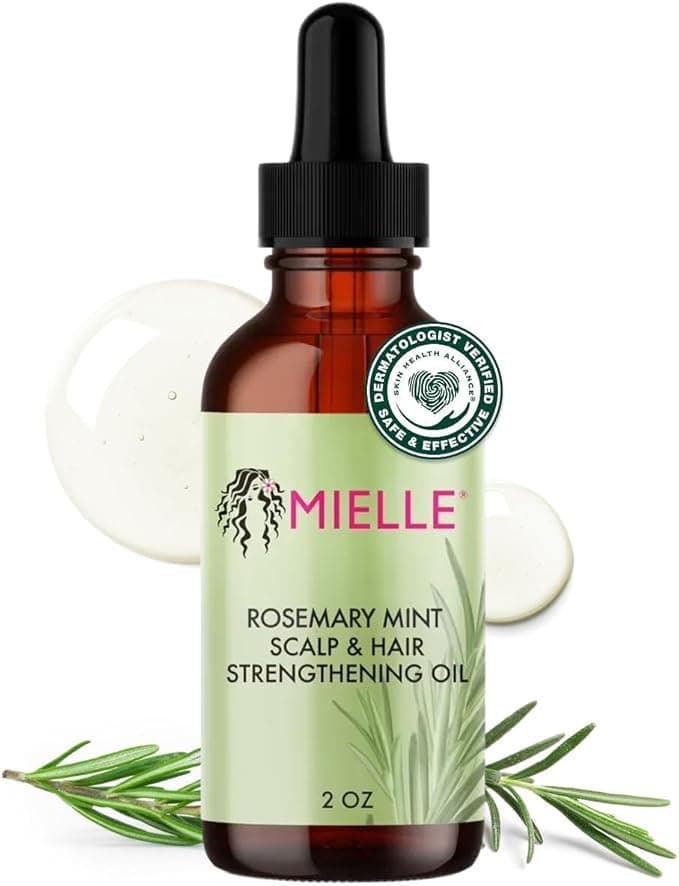
Mielle Organics Rosemary & Mint Scalp & Hair Strengthening Oil
The massage-in option and the most affordable on this list. Rosemary, peppermint, and castor oil in a blend that reduces scalp inflammation and improves circulation. Use it two to three times a week as a pre-wash scalp massage. I used this for seven months and my scalp was noticeably calmer and healthier, which created better conditions for growth.
The downside is obvious: it is an oil, which means you need to wash it out, and if you have fine hair, it can feel heavy if you leave it in too long. I always washed same-day. If you have thick or textured hair, you can probably get away with an overnight treatment.
PURA D'OR Hair Thinning Therapy Serum, The Kitchen Sink Formula
The PURA D'OR serum is the formula I reach for when I want everything at once. It contains copper tripeptide, biotin, caffeine, plant stem cells, catalase (which breaks down hydrogen peroxide that builds up in the follicle with age), rosemary, and green tea extract. It is a longer ingredient list than the others, which can be a good or bad thing depending on how your scalp responds.
For me, it works well as a once-a-week intensive treatment rather than a daily serum. I apply it after washing my hair, focus on the areas where my density looks thinnest, and let it absorb before styling. The caffeine gives it a mild tingly feeling that tells you something is happening, which I find reassuring.
The one honest limitation here: it contains some fragrance-adjacent botanicals that occasionally caused minor scalp irritation for me when I used it daily. Not a rash, just a slight sensitivity. Dropping to weekly use solved this completely. If you have a reactive scalp, patch test first.
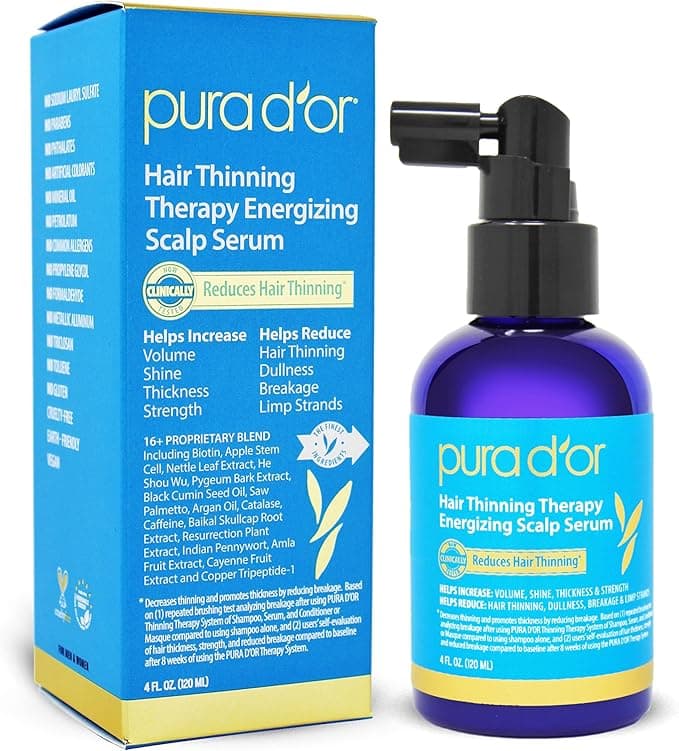
PURA D'OR Hair Thinning Therapy Energizing Scalp Serum
The comprehensive formula with copper tripeptide, caffeine, catalase, biotin, and rosemary in one product. I use this as a weekly intensive rather than daily, and it works well in that role. Good option if you want to consolidate multiple actives into one step. The caffeine gives a satisfying tingle that confirms it is absorbed.
VEGAMOUR GRO Hair Serum, The Vegan Pick
If you are vegan or prefer to avoid animal-derived ingredients, VEGAMOUR is the one to know. It uses phyto-actives from mung bean, curcumin, and red clover to support follicle health through a plant-based mechanism rather than peptides. The clinical results they cite are a 52% increase in hair density and 76% reduction in shedding after four months, measured in their own studies.
I tried the VEGAMOUR for four months and my results were more modest than their marketing suggests, but still real. Shedding in the shower went down noticeably by month two. I did not get the density improvement I got with the peptide serum, but I also have a strong hormonal component to my thinning that may respond better to growth-signal peptides than to the plant-based phyto-actives in this formula.
Where VEGAMOUR genuinely stands out: texture and feel. It goes on like water, absorbs in seconds, and leaves no residue whatsoever. If you have very fine hair that picks up every product molecule, or if you apply serums in the morning before styling, this is the best option for zero buildup and zero interference with how your hair looks.
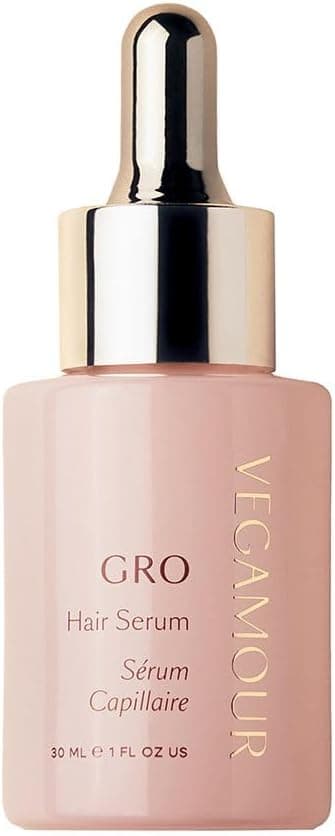
VEGAMOUR GRO Hair Serum for Thinning Hair
The vegan option and the lightest texture on this list. Plant-based phyto-actives from mung bean, curcumin, and red clover support follicle health without any animal-derived ingredients. Zero residue, absorbs instantly, no interference with styling. My top recommendation for fine hair or anyone who wants a morning application routine.
How I Actually Use These Together
For full transparency: I do not rotate between these randomly. I have a system.
Nightly, I use The Ordinary peptide serum on my scalp after showering. Twice a week (usually Sunday and Wednesday), I do a rosemary oil scalp massage before washing. Once a week, I apply the PURA D'OR serum after washing.
This sounds like a lot, but the nightly peptide serum is the foundation. Everything else is supporting or rotating in as I have time. If you are just starting out, start with the peptide serum alone, use it every night for ninety days, and add from there.
The other thing that made a real difference for my hair alongside the serums: bringing my biotin intake up through diet and supplementation, and addressing a ferritin level that was technically normal but on the low end of normal for hair health. Serums work on the outside; nutrition works from the inside. Both matter.
What Did Not Work for Me
For honesty's sake: I spent six months on a minoxidil foam before switching to serum-based approaches. I stopped because of scalp irritation, increased shedding in the adjustment phase that lasted longer than expected, and the realization that I would need to use it indefinitely or lose any gains. I am not saying minoxidil does not work. The evidence for it is strong, and for severe androgenetic alopecia it may be the most effective option. But for my particular situation, the combination of peptide serums, rosemary oil, and addressing nutrition produced comparable results without the side effects or the commitment to permanent use.
I also tried two expensive boutique serums with beautiful packaging that I will not name because their formulas change frequently. Neither produced any noticeable change in three months of consistent use. Fancy packaging is not correlated with efficacy. Look at the ingredient list, not the bottle.
Understanding the Hair Growth Cycle
If you are going to commit to scalp serums, understanding why they take time will help you stay consistent. Hair grows in three phases: anagen (active growth, lasting two to seven years), catagen (transition, a few weeks), and telogen (resting, about three months). Scalp serums primarily work by extending the anagen phase and pushing dormant follicles out of telogen.
This means the changes they produce are slow by design. You are not making your current hair thicker. You are encouraging the next cycle of growth to produce denser, longer strands. It takes ninety to one hundred twenty days just to begin seeing the results of a follicle that was triggered into the growth phase by the serum you applied three months ago. I write about more of the underlying mechanisms in what is hair porosity, which covers how follicle structure affects how these products absorb.
The serums that show results fastest are usually the ones that reduce shedding first, by calming inflammation and reducing DHT activity, before the new growth becomes visible. If your shedding goes down in the first month, that is the serum working, even if you cannot see new hairs yet.