Best Bond Repair Hair Treatments That Actually Work
The bond repair treatments that actually fixed my color-damaged hair, from K18 to Olaplex to Redken. An honest guide to rebuilding broken bonds at home.
I had a hair situation that I completely brought on myself. After years of going to the same colorist and getting highlights every eight weeks, I decided I could stretch appointments to twelve weeks, then four months, then found a cheaper salon that was less experienced with my texture. By the end of that year, the ends of my hair were snapping off between my fingers. Not shedding from the root, actually breaking mid-shaft. The elasticity was gone.
A friend who does color professionally sat me down and explained what was actually happening. She walked me through the difference between damage that just looks bad, the kind where your hair is dry and dull but structurally intact, and damage at the bond level, where the internal chains that give hair its strength are literally severed. What she said next changed how I think about hair care entirely.
Bond repair is not the same as a deep conditioner. A deep conditioner adds moisture and makes hair feel temporarily softer. Bond repair works at a structural level, reconnecting or reinforcing broken disulfide bonds and keratin chains inside the cortex of each strand. Treated hair behaves differently because it IS different, at a molecular level. It has more tensile strength, stretches without snapping, and processes more evenly under color.
The category exploded when Olaplex launched, but today several technologies compete in this space and they are not all doing the same thing the same way. After spending the last two years trying almost everything available, including some expensive salon visits to access professional-grade products, I have landed on four that I can personally vouch for.
What Bond Repair Actually Means
Before you spend the money, it is worth understanding what these products are doing. Hair is made of long chains of keratin proteins held together by several types of chemical bonds. Disulfide bonds give hair its shape and most of its strength, and they break during bleaching and chemical processing. Hydrogen bonds give hair its elasticity, and they break with heat and water. Salt bonds, also called ionic bonds, respond to pH changes.
Bond repair products target mainly the disulfide and peptide bonds. They cannot replace lost proteins the way a protein treatment can, and they cannot reverse mechanical damage from years of aggressive brushing or heat. What they can do is restore structural integrity to chemically compromised hair, which means less breakage, better elasticity, and color that holds more evenly between appointments.
The honest caveat: if your hair is severely damaged, bond repair is a treatment, not a cure. I had a stretch where I was using bond repair consistently but my hair was still deteriorating because I had not stopped the bleach. The products helped, but the cause was still present. Products are not going to outpace ongoing damage. Once I stabilized my color routine and used bond repair treatments correctly, the results came fast.
What to Look for Before You Buy
Two main technologies dominate this space right now.
The first is the bis-aminopropyl diglycol dimaleate technology that Olaplex pioneered. This small molecule seeks out broken disulfide bonds and creates a new bridge between the two severed ends, repairing them from the inside. It is the active ingredient that launched the bond repair category and that many brands have since tried to replicate. Because it works in a rinse-out format, it has time to penetrate the cortex before being washed away.
The second is the patented peptide biomimetic technology that K18 introduced. Their peptide is designed to reconnect broken keratin chains within the cortex, targeting a different structural element than disulfide bonds. Leave-in application means it is working continuously and not being rinsed before it finishes.
Knowing which approach suits your hair depends partly on the source of damage. For bleach and chemical services, both work well. For heat damage specifically, the K18 peptide approach has been more effective for me personally.
K18 Leave-In Molecular Repair Hair Mask
This is the product that genuinely surprised me. I expected the hype to be overblown because the price is high and the marketing is very confident. My colorist friend gave me the trial size with instructions to follow them exactly: apply to clean, towel-dried hair before any other product, leave four minutes, do not rinse, then style as normal.
The K18 Leave-In Molecular Repair Hair Mask on the first use took hair that felt like straw and made it feel like actual hair again. Not soft in the conditioner-coated way, actually different in structure. Like the texture had changed at the level I could feel between my fingers. By the end of the first bottle I was breaking off significantly less at the ends, and my elasticity had visibly improved. A strand I stretched would spring back instead of just snapping.
The technique matters more than people realize. Apply it to sections evenly across the whole length, not just the ends, and wait the full four minutes. I set a timer. Using it quickly or casually gives casual results, and then people conclude the product does not work when really the application was the issue.
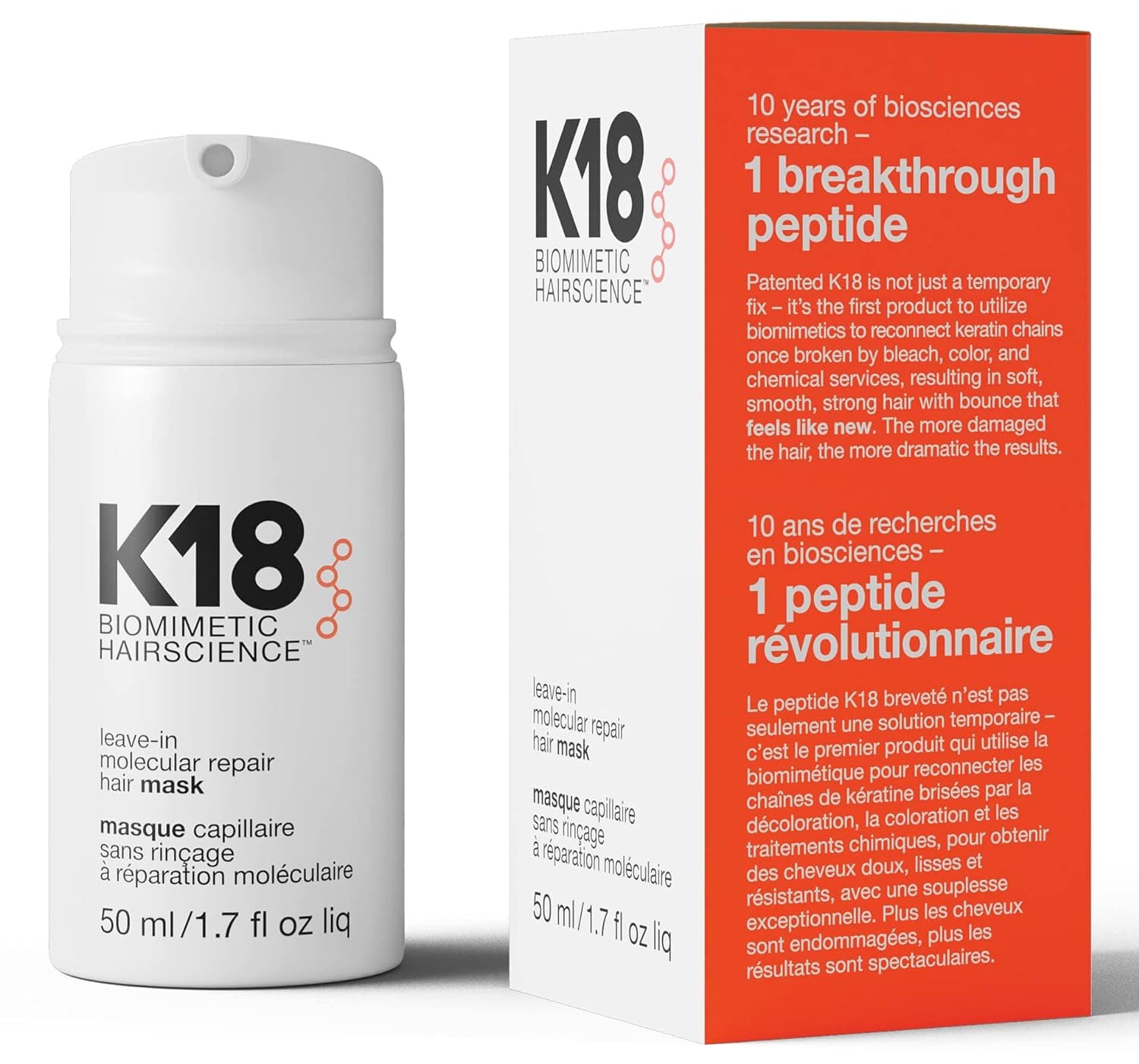
K18 Leave-In Molecular Repair Hair Mask
The patented peptide leave-in that visibly repairs broken keratin chains in four minutes with no rinse needed. Apply to clean damp hair before any other products. Use weekly or after every chemical service for cumulative results.
Olaplex N°.3PLUS Complete Repair Treatment
This is the original at-home bond repair product, and the fact that it is still the most recommended by colorists after all this time says something. I went through a period of dismissing it because I had tried older formulations and found the results underwhelming. The updated N°.3PLUS formula has citric acid and additional bond builders added, and it is noticeably more effective than what I remember. It is also down to a three-minute treatment window, which I appreciate.
I use Olaplex No.3PLUS the night before a big color appointment, when I want my hair in the best possible structural condition for the colorist to work with, and again the week after any chemical service when the strands are most vulnerable. The rinse-out format is actually an advantage here because you can apply it generously without worrying about buildup.
Where I will be honest about its limits: as a standalone treatment used once a week on severely damaged hair, it is not sufficient on its own. It works best as part of a full system, paired with bond-building shampoo and conditioner the rest of the week.
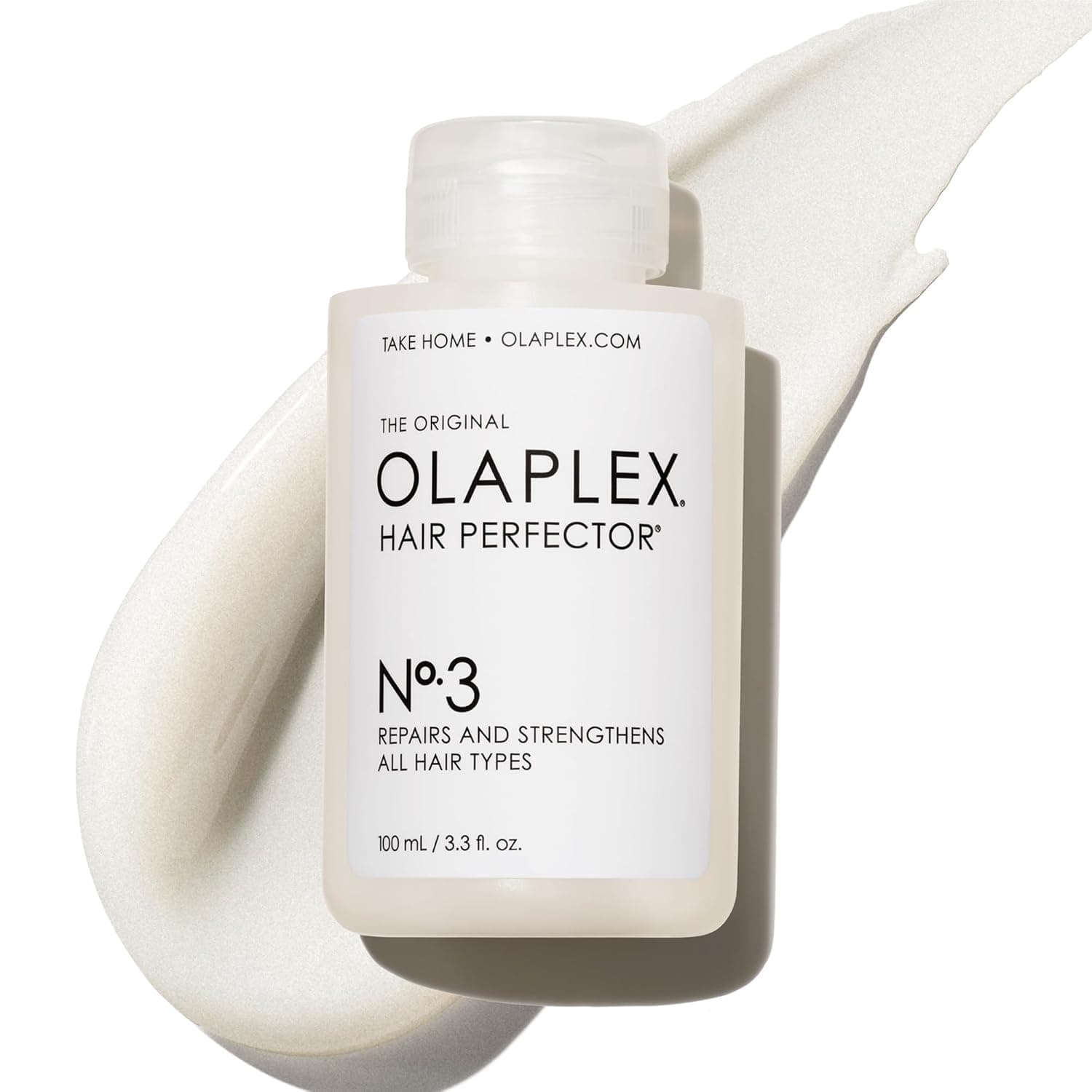
Olaplex N°.3PLUS Complete Repair Treatment
The updated three-minute pre-shampoo treatment that repairs disulfide bonds from the inside. The N°.3PLUS formula adds citric acid for improved cuticle sealing alongside the original bond builder. Rinse out after three minutes, shampoo, and condition as usual.
Redken Acidic Bonding Concentrate Intensive Treatment
This is the one I recommend when someone wants a salon-quality result on a more accessible budget than K18, or prefers a traditional treatment-in-a-jar format. The Redken Acidic Bonding Concentrate uses citric acid to close and seal the cuticle alongside internal bonding technology, which means it tackles the hair from two directions at once.
What I notice most distinctly with this treatment is the immediate surface effect. My hair comes out noticeably shinier after each use, partly because the acid seal smooths the cuticle flat, but also because structural improvement lets light reflect more evenly down the strand. It is the treatment I reach for when I need my hair to look good fast, not only feel better over time.
It is a five to ten minute rinse-out, applied after shampooing. I leave mine for the full ten minutes because I have thick hair and find the extended contact time makes a real difference. Fine hair should probably stick to five minutes to avoid any over-softening.
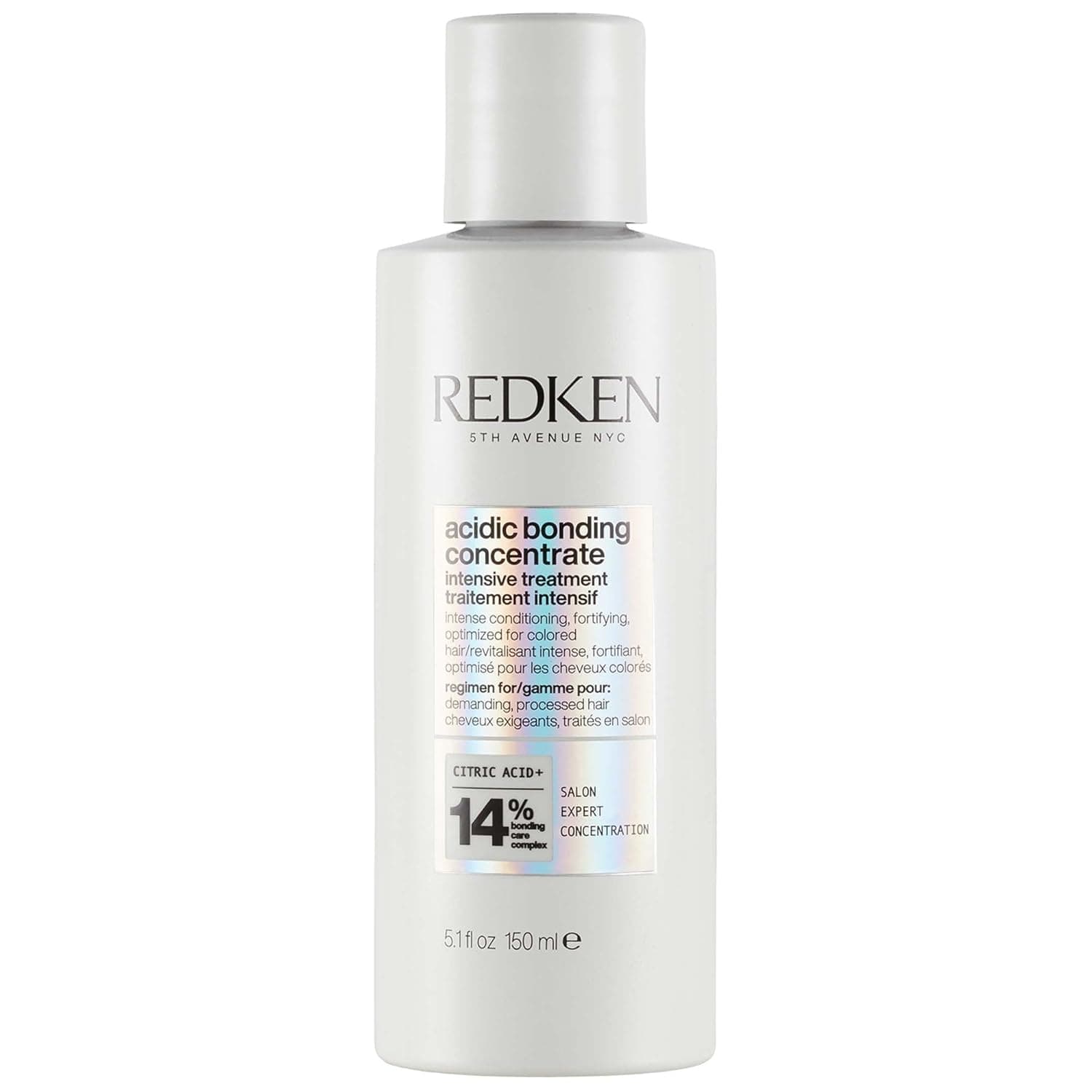
Redken Acidic Bonding Concentrate Treatment
A citric acid-based intensive treatment that seals the cuticle and repairs bonds in five to ten minutes. Delivers immediate visible shine alongside cumulative structural repair. Great for color-treated hair that needs both a fast cosmetic result and real strengthening.
amika The Kure Multi-Task Strength Repair Treatment
I want to be transparent that this one earned its spot by being genuinely good, not by being famous. The amika the kure is less talked about than K18 or Olaplex but has been in my rotation for over a year because it does something none of the others quite manage: it works as both a leave-in treatment and a detangling product, which means it fits into my routine even on non-intensive repair days without adding extra steps.
The formula combines a bond-building complex with proteins and ceramides, giving it a more conditioning texture than K18. For low porosity hair that tends to reject products, that extra slip actually helps the actives absorb. I also find it performs better for heat damage specifically, where the core issue is elasticity loss rather than bleach-based breakage.
The honest trade-off: the bond repair technology here is not as concentrated or cutting-edge as K18. If you have severe damage from multiple bleach sessions, treat this as a supporting product in your routine rather than the lead one. But as an everyday leave-in with real bond repair benefits built in, the multitasking is genuinely clever and worth the price.
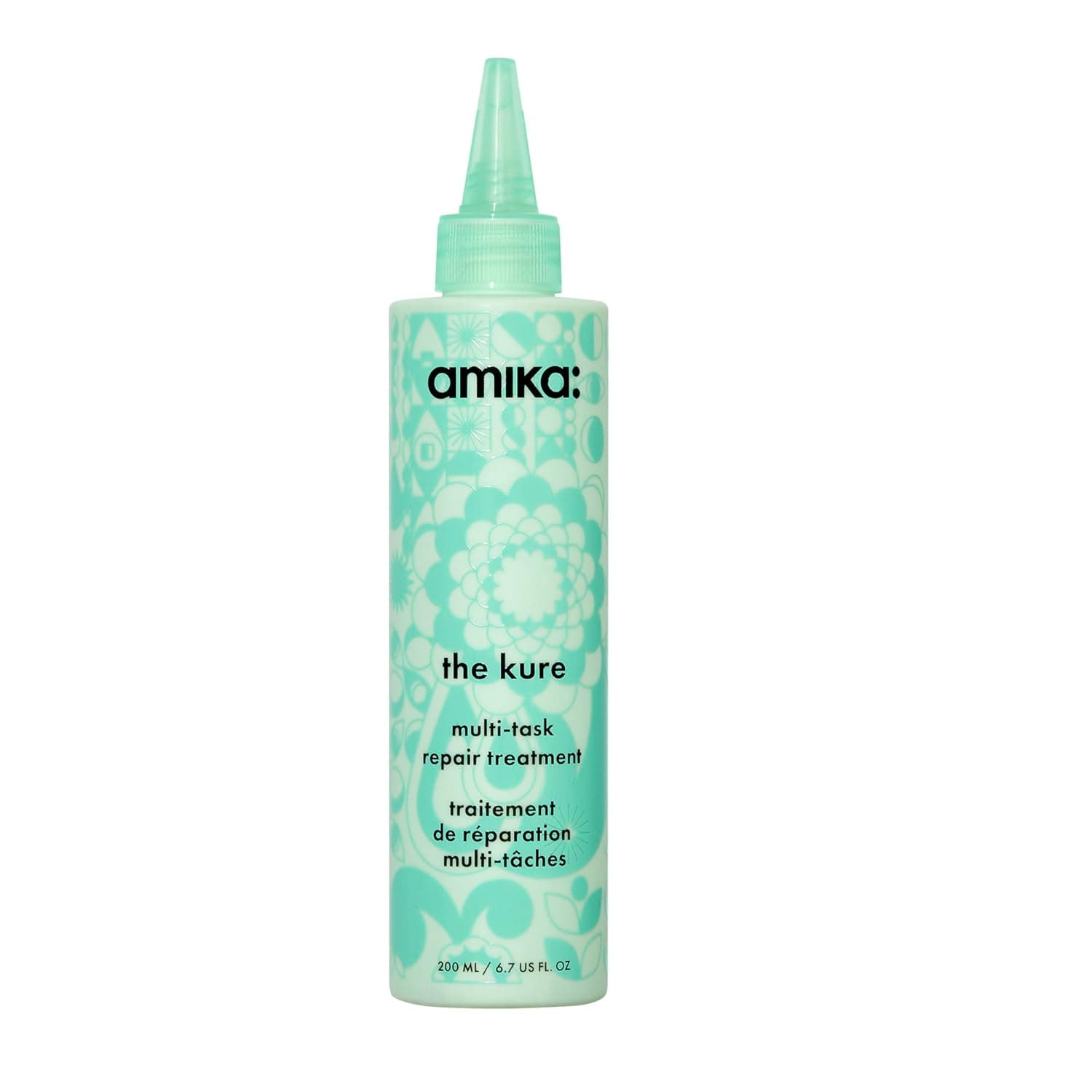
amika The Kure Multi-Task Strength Repair Treatment
A leave-in that combines bond repair with ceramides and proteins for a multi-benefit approach. Works as a detangler, frizz smoother, and daily repair treatment in one. Best for heat-damaged or low porosity hair that needs repair without heaviness.
How to Layer These Products in a Routine
Using bond repair products correctly matters as much as choosing the right one. The most common mistake is using them in the wrong order or too infrequently to notice a cumulative difference.
The framework that works for me: use the Olaplex or Redken intensive treatment as a pre-shampoo or post-shampoo treatment once a week. After washing and towel drying, apply K18 before anything else and let it process for four minutes. Then layer lighter products on top. The amika the kure can fill in as your daily leave-in on non-wash days or weeks when you are not doing K18.
Do not layer K18 with a separate leave-in conditioner in the same session. K18 needs direct contact with the hair cortex, and products layered between it and your hair reduce how effectively it bonds. This instruction took me the longest to actually follow because I wanted to add my other leave-ins on top, and dropping them was the thing that finally unlocked consistent results.
Frequency also matters more than most people expect. Bond repair is not an instant-fix treatment. The structural improvement builds across multiple sessions, which is why the common complaint that something did not work often comes from someone who used it two or three times and stopped.
Frequently Asked Questions
You'll Also Love
If you are rebuilding your hair health from the ground up, these posts cover what I use in the rest of my routine: