Best Seed Starting Supplies for Your Home Garden
The seed starting supplies that actually work, from sturdy trays to the right growing mix and a heat mat that changed my germination rate completely.

My first attempt at starting seeds indoors was, to put it charitably, a disaster. I used old yogurt cups with no drainage, potting mix I grabbed off the shelf at the hardware store without thinking, and a south-facing windowsill that I was convinced would be plenty of light. The seeds did germinate, barely, but the seedlings were pale, stretched, and falling over by the time they were two inches tall. I transplanted them into the garden in a fit of optimism. They died within a week.
I almost gave up on seed starting entirely. But I stuck with it, did a lot of reading, bought some things that actually worked, and tried again the following season. That second year I had pepper seedlings thick enough to share with neighbors and tomato plants with stems so sturdy I had to actually check the tag to confirm they were tomatoes. The difference was not skill. It was having the right setup.
If you are thinking about starting seeds this season, or if you have tried and struggled, I want to share the supplies that made the biggest difference for me. These are not fancy or complicated. They are just the right tools for what seeds actually need.
Why Starting From Seed Is Worth It
I grow a lot from transplants and I have zero shame about it. But seed starting has a few real advantages that have kept me coming back.
The variety selection is completely different. When you shop at a nursery, you get maybe five tomato varieties. When you start from seed, you can grow tomatoes that come in every color, shape, and flavor you can imagine, many of which you have never seen at a grocery store or garden center. I grow a purple paste tomato that I have never seen sold anywhere, and it is the best sauce I have ever made.
Cost is also a genuine factor. A packet of seeds with 25 to 50 plants in it often costs less than a single nursery transplant. Once you have the basic equipment set up, the per-plant cost drops to almost nothing.
And there is something genuinely satisfying about watching a plant go from seed to harvest. I started a jar of seeds on my kitchen table in February and ate tomatoes from those exact plants in August. That is the whole cycle in one season and it never stops feeling like a small miracle.
What Seeds Actually Need to Germinate
Before I get into the specific products, I want to explain what seeds need because it will make the product choices make more sense.
Seeds need moisture, warmth, and darkness to germinate. They do not need light until after they sprout. The moisture has to be consistent, not soggy. The warmth has to come from below, not just the ambient room temperature, because most vegetable seeds germinate best when the soil itself is between 70 and 85 degrees Fahrenheit. My kitchen is usually around 68 degrees, which sounds close but actually cuts germination rates and speed significantly.
Once they sprout, the rules change completely. Seedlings need a lot of light, much more than any window can provide reliably, and they need temperatures to stay consistent. They also need nutrients once they develop their first true leaves, since seed starting mix is intentionally low in nutrients to avoid burning delicate roots.
The supplies I recommend below each address one or more of these needs specifically.
Bootstrap Farmer 72-Cell Seed Starter Tray
The tray you use matters more than you might think. I have used the cheap six-packs from the dollar bin, those thin plastic trays that crack the first time you bend them to pop out a seedling, and I have used these Bootstrap Farmer trays. The difference is significant enough that I am not willing to go back.
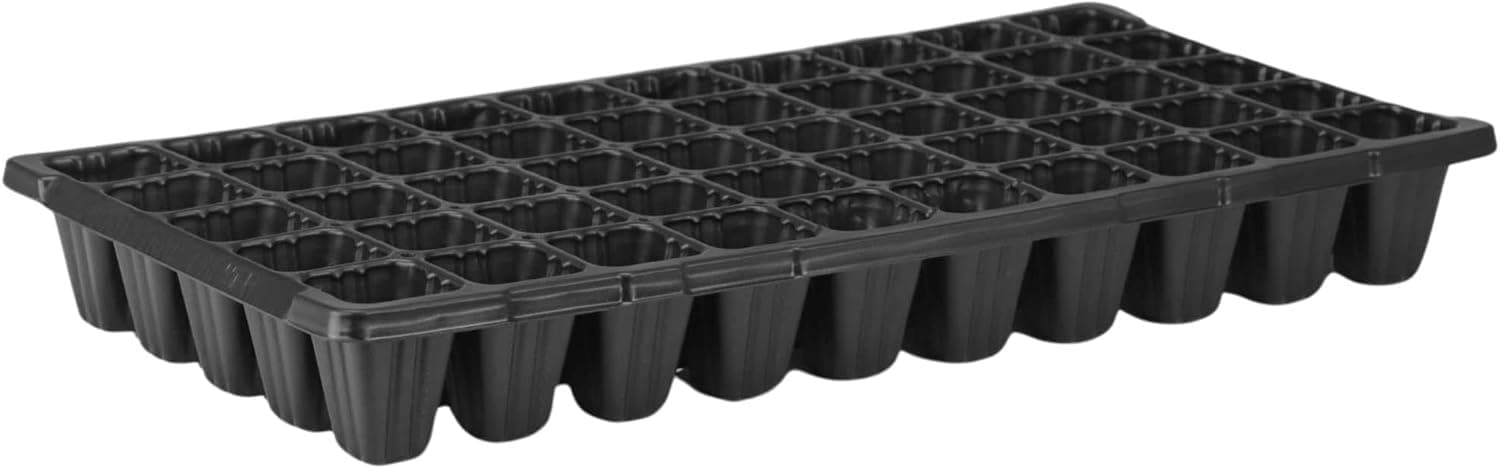
Bootstrap Farmer 72 Cell Seed Starter Tray
These are heavy-duty, reusable seed starting trays designed to last multiple seasons. The 72-cell layout gives you the right cell size for most vegetable and flower seeds, with enough room for roots to develop before transplanting. The thick plastic does not crack or warp, and the cells pop out cleanly without disturbing the root ball. I have a set I have been using for three seasons and they are still in perfect shape.
What I specifically love about these trays is how well the root balls hold together when it is time to transplant. With cheaper trays, the cells are often so flimsy that the soil falls apart when you try to get the seedling out, which stresses the roots. These have enough structure to keep the plug intact all the way to the planting hole.
The honest caveat: 72 cells per tray is a lot. If you are only starting a small number of plants, you might not fill the whole tray, and partially filled trays can dry out unevenly. I label mine by section and am careful about consistent watering when some cells are empty.
Burpee Organic Coconut Coir Seed Starting Mix
The growing medium you use is probably the most important variable in your whole setup. I learned this the hard way when I tried using regular potting mix and ended up with a bunch of seedlings with damping off, the fungal condition where they fall over at the soil line and die. Regular potting mix is too dense, retains too much moisture, and can carry pathogens that are fine for established plants but deadly for delicate seedlings.
Seed starting mix is specifically formulated to be light, well-draining, and sterile. The Burpee Organic Coconut Coir Seed Starting Mix has become my go-to because it checks all the right boxes without costing a fortune.
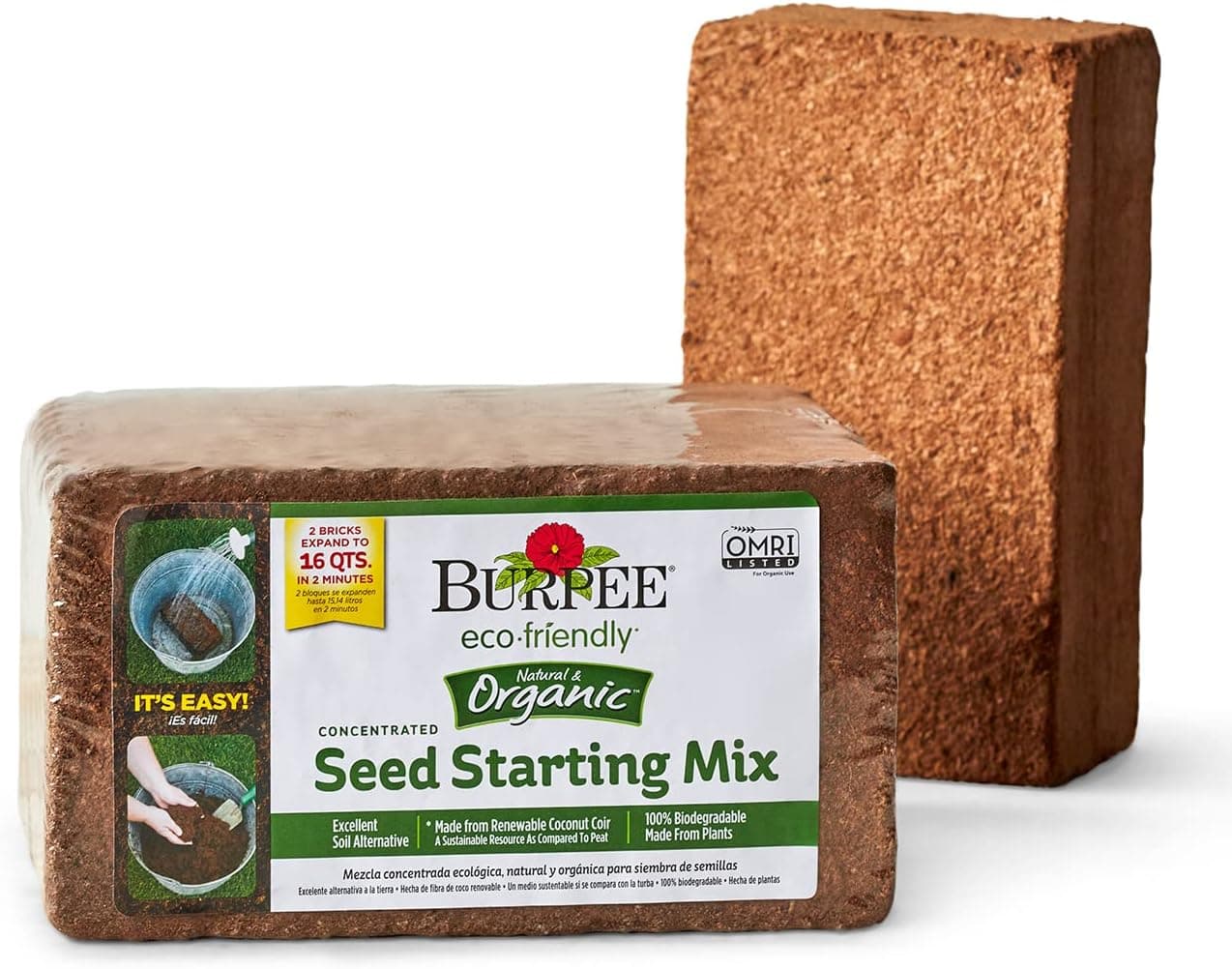
Burpee Organic Coconut Coir Concentrated Seed Starting Mix, 16 Quart
Coconut coir, made from the fibrous husks of coconuts, is an excellent seed starting medium because it holds moisture without becoming waterlogged and has a naturally neutral pH. This mix comes as compressed bricks that expand significantly when you add water, which means it takes up very little storage space. The 16-quart size is enough to fill multiple trays with room to spare. It is also OMRI listed for organic use, which matters to me since I grow food.
One thing to know about coir: it holds moisture differently than peat-based mixes. It stays evenly moist for longer, which is mostly a good thing, but it means you have to be more careful not to overwater early on. I check mine by pressing a finger into the surface rather than watering on a schedule. If it feels damp, I skip the watering.
Coir also has essentially zero nutrients, which is intentional for seed starting. Once your seedlings have their first true leaves, you will need to start a diluted liquid fertilizer routine.
VIVOSUN Seedling Heat Mat
This is the single purchase that most dramatically improved my germination rates. Before I had a VIVOSUN Seedling Heat Mat, I was starting peppers in my kitchen and getting maybe 40 percent germination, with seeds taking two to three weeks to show up. With the heat mat, I am getting 85 to 90 percent germination on the same pepper seeds in eight to ten days.
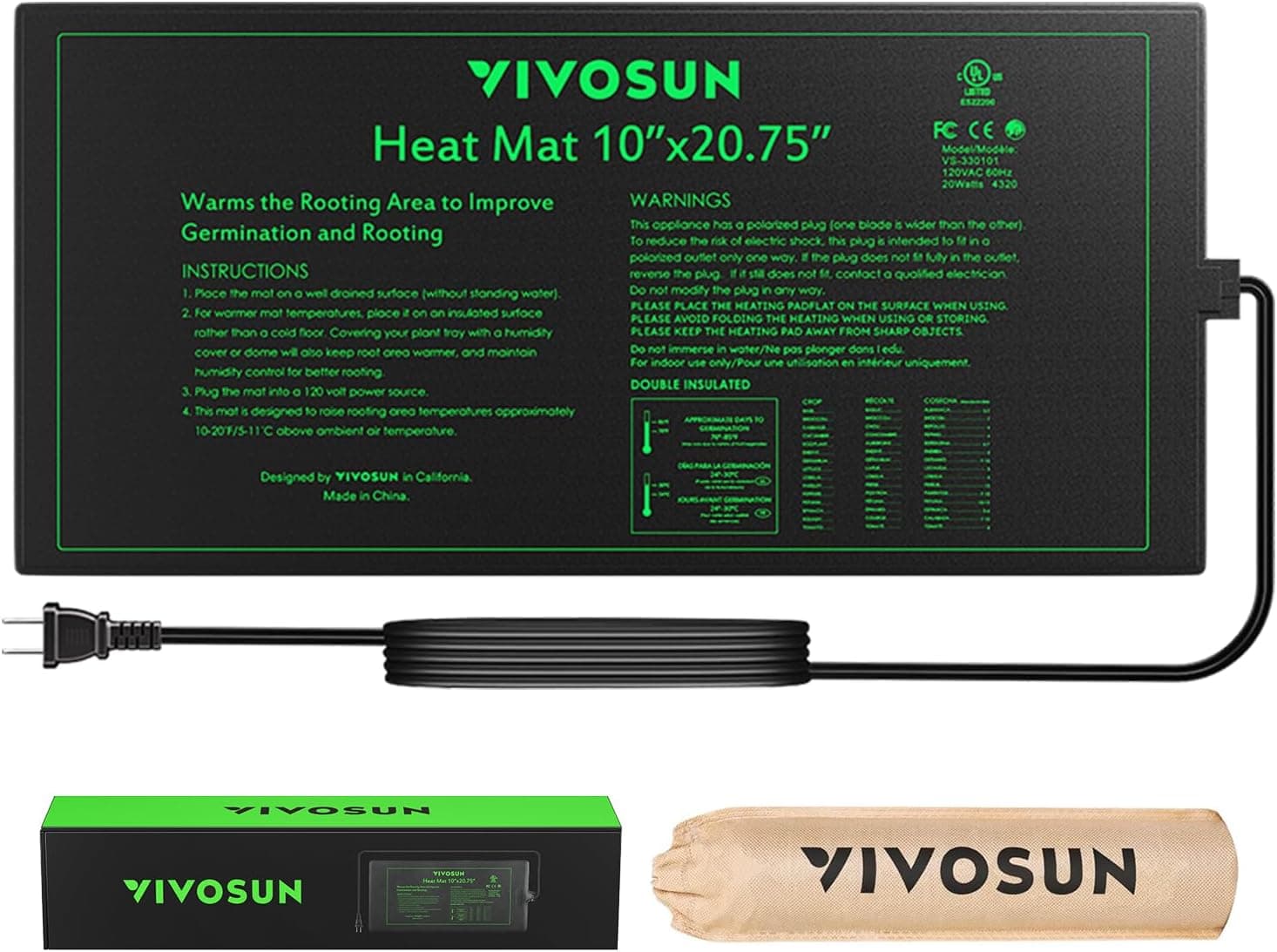
VIVOSUN Durable Waterproof Seedling Heat Mat
This heat mat raises the soil temperature in your trays by 10 to 20 degrees Fahrenheit above ambient room temperature, which puts it right in the sweet spot for germination for most vegetable seeds. It is waterproof, UL and MET certified, and sized to fit a standard 10x20 inch tray, which is the industry standard for seed starting. It runs at 17 to 19 watts, so it is inexpensive to operate, and it does not cycle on and off. It maintains a consistent gentle warmth. I leave mine on 24 hours a day during germination and unplug it once seedlings emerge.
A few things to know before you buy: the basic heat mat does not have a thermostat. It just runs at a fixed temperature differential above the room. For most home seed starting, this is perfectly fine. If you are starting temperature-sensitive crops or your house gets very cold, you may want to spend a bit more on the version with a digital thermostat that lets you dial in a specific temperature. But for the average home gardener, the basic mat works beautifully and has been more than reliable for me over four seasons.
The one thing it cannot do is replace light once your seeds germinate. Heat for germination, light for growth. You need both.
Barrina T5 Grow Lights
A south-facing window is not enough. I say this as someone who spent two seasons trying to make a south-facing window work and ending up with tall, pale, leggy seedlings that fell over by the time they were ready to transplant. Even in a sunny window, the light is coming from one direction and at angles that change constantly. Seedlings grown in a window will always reach and lean and weaken.
Grow lights solve this. They provide consistent, direct, overhead light for the exact number of hours you set them, and they work even on cloudy days and through the rain.
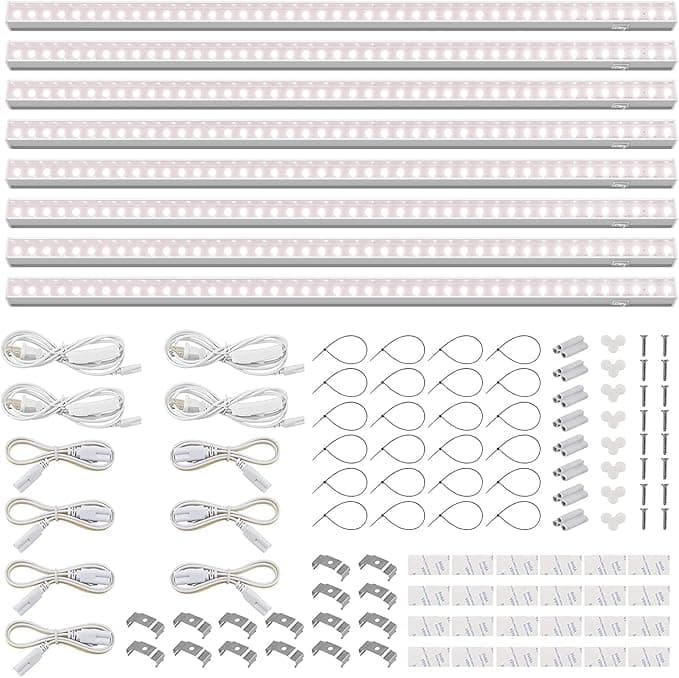
Barrina T5 Grow Lights, Full Spectrum LED, 2FT 80W (8-Pack)
These T5 LED grow lights are a workhorse for indoor seed starting. The 8-pack gives you enough coverage for a full shelving unit, and the full-spectrum light supports healthy germination and vegetative growth. They are thin, low-profile bars that link together with included connectors, and they come with everything you need to hang them. The pinkish-white color looks a little odd in your living room, but the plants genuinely do not care about the aesthetic. I run these on a 16-hour on, 8-hour off cycle using an inexpensive outlet timer.
Position your lights 2 to 4 inches above the tops of your seedlings and raise them as the plants grow. If your seedlings are still getting leggy with the grow lights on, they are probably too far away. I use a simple hook-and-chain system so I can adjust the height in small increments.
The honest downside to the Barrina lights is purely aesthetic: the pink-white color is not beautiful. If you are growing in your living room and care about how it looks, this might bother you. My seed starting shelf is in the basement and I genuinely do not care. The plants come out strong and healthy, which is all I am actually optimizing for.
Tips for Seed Starting Success
Even with good supplies, there are a few practices that separate thriving seedlings from struggling ones.
Water from the bottom. Once your seeds are in their trays, the best way to water is to pour water into the tray beneath the cells and let the mix wick it up from below. This keeps the surface drier, which reduces the risk of damping off. I pour about half an inch of water into the bottom tray and let the trays soak for 20 to 30 minutes, then drain any excess.
Label everything. This sounds obvious until you have six trays with three varieties each and you cannot remember which section you planted the early Girl tomatoes in. I use popsicle sticks and a permanent marker and write the variety name and the date I planted.
Harden off before transplanting. Seedlings grown indoors need to be gradually introduced to outdoor conditions before you plant them in the garden. Start by putting them outside in a sheltered spot for a few hours a day, then increase the time and sun exposure over one to two weeks. Skipping this step will shock even the healthiest seedlings.
Do not start too early. It is tempting to start seeds the moment seed catalogs arrive in January, but most vegetables do best when transplanted 6 to 8 weeks before your last frost date, not earlier. Oversized seedlings that sit in trays too long become root-bound and stressed. Look up your last frost date and count backward from there.
When Things Go Wrong
I want to be honest here because seed starting does not always go smoothly, even when you have the right supplies.
Damping off, where seedlings fall over and die at the soil line, is caused by a fungal pathogen. It is almost always related to overwatering or poor air circulation. If you see it happening, pull the affected seedlings immediately to prevent spread, let the tray dry out somewhat, and set up a small fan to create air movement. I lost an entire tray of basil to damping off last spring and it was genuinely sad.
If your seeds are not germinating after two weeks on the heat mat, check the seed viability. Old seeds have lower germination rates. A simple test is to place ten seeds between damp paper towels for a week. If fewer than seven germinate, your seeds may be past their prime.
Frequently Asked Questions
You'll Also Love
If this post helped you think through your seed starting setup, these might be useful next reads: