Composting for Beginners: Kitchen Scraps to Garden Gold
Everything you need to know about starting a compost system at home, bin vs pile, what to compost, green-to-brown ratios, and indoor composting options.
I'm going to tell you something that sounds weird but is absolutely true: composting changed how I think about waste. Once you start seeing banana peels, coffee grounds, and eggshells as future garden soil instead of garbage, you can't go back. You start looking at your trash can differently. You start feeling vaguely guilty about throwing away an apple core. It's a whole thing.
But beyond the shift in perspective, composting is also one of the most practical things you can do as a homesteader. It reduces your household waste significantly, produces incredible soil amendment for your garden (for free), and it's honestly not that complicated once you understand the basics.
If you've been meaning to start composting but keep putting it off because it seems messy or confusing, let me break it down for you.
Why Compost?
Before we get into the how, here's why composting is worth your time:
It reduces waste dramatically. About 30% of what the average household throws away is compostable. That's almost a third of your garbage that could be turned into something useful instead of rotting in a landfill.
Free soil amendment. Finished compost is sometimes called "black gold" for gardeners, and it earns that name. It adds nutrients back into your soil, improves soil structure, helps with water retention, and feeds the beneficial microorganisms that keep your garden healthy. You'd pay good money for this at a garden center.
It completes the cycle. When you grow food, eat it, compost the scraps, and use the compost to grow more food, you're closing a loop. There's something deeply satisfying about that.
Bin vs. Pile: Which Setup Is Right for You?
Open pile, The simplest option. Literally a pile on the ground in a corner of your yard. No structure needed. Pros: free, easy to turn, unlimited size. Cons: can look messy, may attract animals if not managed well, slower if you're not actively managing it.
Enclosed bin, A container (plastic, wood, or wire) that holds your compost in a defined space. This is what I'd recommend for most suburban homesteaders. It looks tidier, contains the pile, and helps retain heat and moisture. You can buy a ready-made bin or build one from pallets.
Tumbler, A sealed barrel on a frame that you rotate to turn the compost. Pros: easy to turn (just spin it), keeps animals out, relatively fast composting. Cons: limited capacity, can get heavy when full, more expensive than other options.
Worm bin (vermicomposting), A contained bin with red wiggler worms that eat your food scraps. This is the best option for indoor composting or if you have zero outdoor space. More on this below.
For most beginners with a yard, I'd recommend starting with a simple three-sided bin made from wooden pallets or a basic plastic compost bin. Either one works great and won't break the bank.
What to Compost (And What to Skip)
Composting is basically about feeding microorganisms the right diet. They need two types of material:
Greens (nitrogen-rich materials):
- Fruit and vegetable scraps
- Coffee grounds and tea bags (remove staples from tea bags)
- Fresh grass clippings
- Plant trimmings
- Eggshells (technically neutral, but great for adding calcium)
Browns (carbon-rich materials):
- Dried leaves
- Cardboard (torn into pieces, remove tape and glossy print)
- Newspaper (shredded)
- Straw or hay
- Sawdust (from untreated wood only)
- Dried plant stalks
- Paper towels and napkins (unbleached is better)
What NOT to compost:
- Meat, fish, bones, or dairy (attracts rodents and creates odor)
- Oils and greasy food
- Pet waste from dogs or cats (can contain harmful pathogens)
- Diseased plants (the disease can survive and spread)
- Treated or painted wood
- Weeds that have gone to seed (the seeds can survive composting)
- Anything with pesticides or herbicides on it
The Magic Ratio: Getting Greens and Browns Right
The ideal compost pile has roughly a 3:1 ratio of browns to greens by volume. Three parts dried leaves or cardboard to one part kitchen scraps and fresh material.
You don't need to be precise about this, composting is forgiving. But understanding the ratio helps you troubleshoot:
Too many greens (too much nitrogen)? Your pile will get slimy, smell bad, and attract flies. Add more browns. Shredded cardboard or dried leaves will fix this quickly.
Too many browns (too much carbon)? Your pile will just sit there doing nothing. It's decomposing incredibly slowly because the microorganisms don't have enough nitrogen to fuel their activity. Add more greens or a bit of water.
The sweet spot is when your pile is warm in the center (it should heat up to 130-150 degrees F during active composting, which you can check with a compost thermometer), smells earthy (not rotten), and breaks down steadily over time.
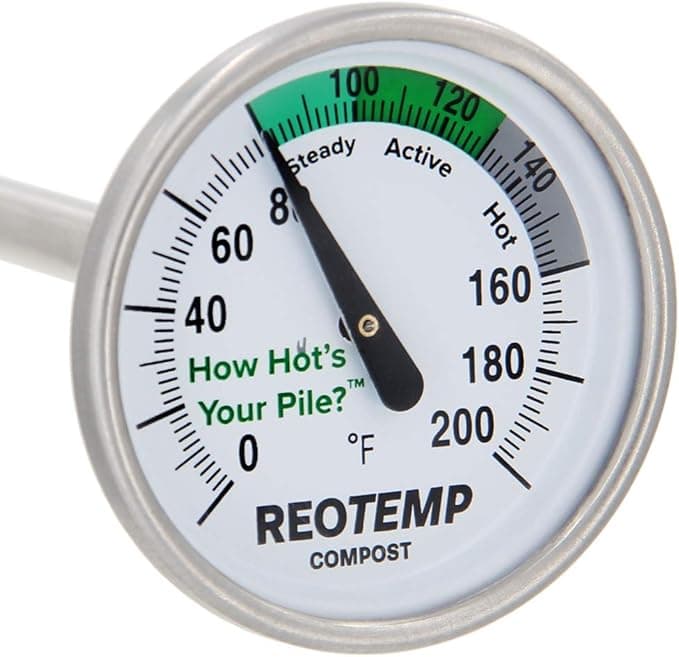
Compost Thermometer, 20-Inch Stainless Steel Probe with Easy-Read Dial
Knowing your pile's internal temperature takes the guesswork out of composting and tells you exactly when to turn it for the fastest results.
Building Your First Pile
Here's the process, simplified:
-
Choose your spot. A level area with some shade is ideal. Full sun dries the pile out too fast; full shade keeps it too cold. Put it somewhere convenient, if it's a pain to get to, you won't maintain it.
-
Start with a brown base. Lay down 4-6 inches of brown material, sticks, dried leaves, or straw. This helps with drainage and airflow at the bottom.
-
Add layers. Alternate layers of greens and browns. Kitchen scraps, then a layer of shredded leaves or cardboard. Kitchen scraps, more browns. Always cover fresh food scraps with browns to reduce odors and flies.
-
Keep it moist but not wet. Your compost pile should feel like a wrung-out sponge, damp but not dripping. If it's too dry, sprinkle some water. If it's too wet (usually from too many greens or heavy rain), add more browns.
-
Turn it occasionally. Turning your pile with a pitchfork or shovel every week or two introduces oxygen, which speeds up decomposition. The more you turn, the faster you get finished compost. If you never turn it, it'll still compost, just much more slowly.
-
Wait. Active, turned compost can be ready in 2-3 months. Passive, unturned piles might take 6-12 months. You'll know it's done when it looks like dark, crumbly soil and smells earthy, you shouldn't be able to identify any of the original materials.
Troubleshooting Common Problems
It smells terrible. Too many greens, too wet, or not enough airflow. Turn the pile thoroughly and add a bunch of browns.
Nothing is happening. Too many browns, too dry, or the pile is too small. A pile should be at least 3x3x3 feet to generate enough heat for active composting. Add greens, moisten if needed, and make sure the pile is big enough.
Fruit flies everywhere. Always bury food scraps under a layer of browns. Never leave kitchen scraps exposed on top of the pile. If flies are already a problem, a thick layer of shredded leaves on top usually solves it.
Animals are getting into it. Avoid composting meat, dairy, or cooked food. If raccoons or rodents are a problem, switch to an enclosed bin or tumbler with a secure lid.
It's attracting ants. This usually means the pile is too dry. Water it well and turn it. Ants will move on once conditions change.
Indoor Composting Options
No yard? No problem. You have two main options:
Vermicomposting (worm bin). A small bin of red wiggler worms that eat your food scraps and produce incredibly rich castings (worm poop, I know, but it's genuinely great fertilizer). You can keep a worm bin under your kitchen sink, in a closet, or on a balcony. It's odor-free when managed properly, and worms process food scraps faster than a traditional pile.
Bokashi. This Japanese method uses a sealed bucket and special bran inoculated with beneficial microbes to ferment food waste. It can handle things traditional composting can't (meat, dairy, cooked food). After 2 weeks of fermentation, you bury the pre-compost in soil or add it to an outdoor pile to finish decomposing.
Both options work well for apartment dwellers or anyone without outdoor space. If I had to choose one, I'd go with vermicomposting, the worms are surprisingly low-maintenance and the finished castings are incredibly nutrient-dense for houseplants or container gardens.
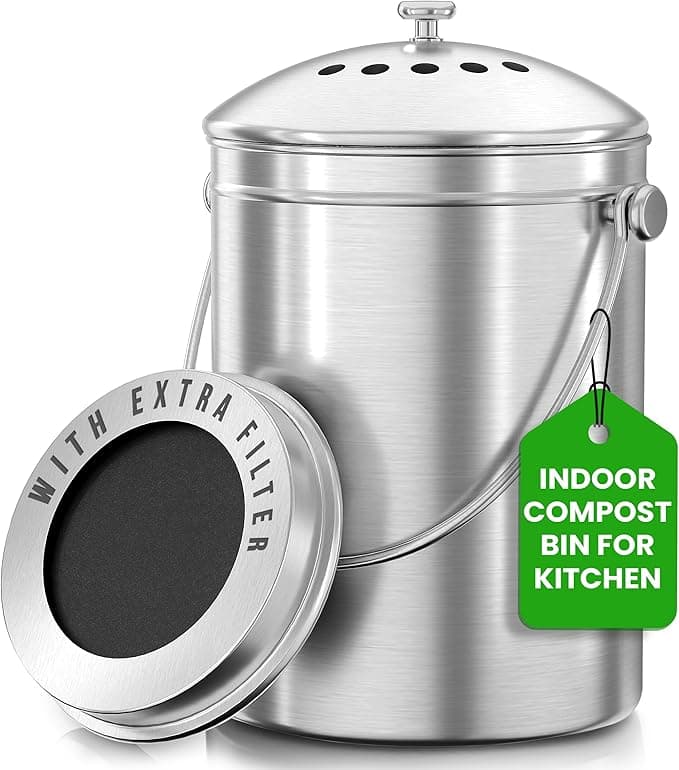
Utopia Kitchen Countertop Compost Bin, 1.3 Gallon Stainless Steel with Charcoal Filter
A sleek, odor-free kitchen compost bin that makes collecting scraps easy and keeps your counter looking clean while you build the composting habit.
Composting Is the Gateway
I've found that composting often becomes the gateway to deeper homesteading. Once you see how much waste you can divert from the trash, you start thinking about what else you could be doing differently. It naturally leads to gardening (you've got all this great compost, might as well grow something in it), which leads to preserving, which leads to... well, you get the idea.
Start a pile this weekend. Save your kitchen scraps for a week, rake up some leaves, and just start. It doesn't have to be perfect. Decomposition happens whether you're good at it or not, you're just helping it along.
How to Use Finished Compost
Once you've got that dark, crumbly, earthy-smelling finished compost, here's how to put it to work:
Mix it into garden beds before planting each season. Work 2-3 inches into the top layer of soil. This adds nutrients and improves soil structure every year.
Use it as top dressing around established plants during the growing season. Spread a half-inch layer around the base of plants (not touching the stems) as a nutrient boost.
Make compost tea by steeping a few scoops of finished compost in a bucket of water for 24-48 hours, then using the liquid to water plants. It's like a vitamin shot for your garden.
Start seedlings by mixing compost with perlite and peat moss for a nutrient-rich seed-starting mix.
The better your compost, the better your garden. And the better your garden, the more kitchen scraps you have for compost. It's the most satisfying cycle in homesteading.