Best Food Dehydrators for Home Use, Tested & Compared
The best food dehydrators for home use, from beginner-friendly budget picks to the Excalibur 9-tray, tested and compared for homesteaders and home cooks.
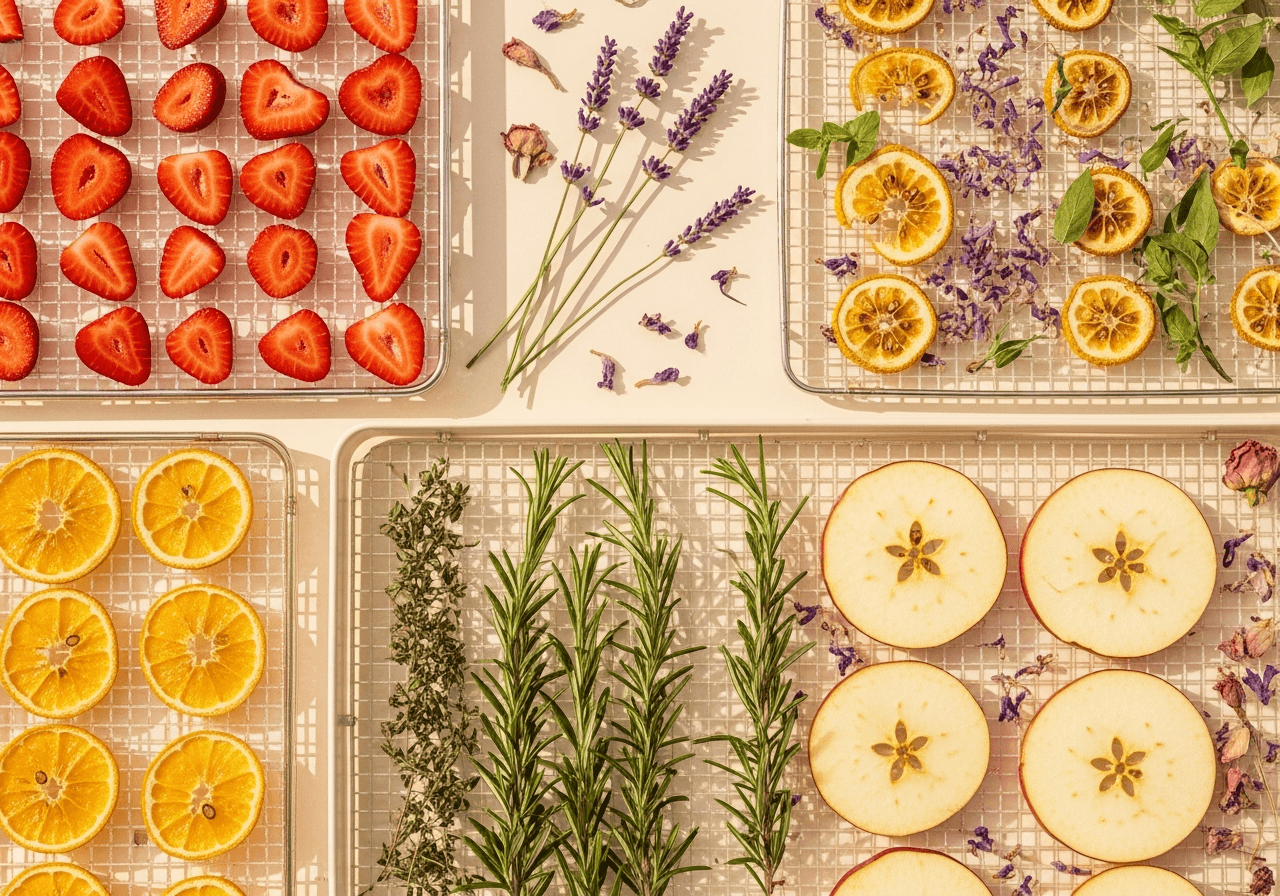
The summer I finally bought a food dehydrator was the summer my herb garden completely got out of control. I had planted thyme, rosemary, oregano, and basil fully expecting a modest little patch, and by July all four were so overgrown they were creeping into the tomatoes. I was gifting bags of fresh herbs to everyone I knew, and I still had more than I could use before they wilted.
A neighbor who has been homesteading for twenty years told me to dehydrate them. She made it sound simple. I bought the most affordable dehydrator I could find, filled four trays with rosemary and thyme, set the temperature, and walked away. Twelve hours later I had perfectly dried herbs that would last the rest of the year. It was one of those satisfying domestic moments that made me feel genuinely capable in a way that is hard to describe.
That was three years ago. Since then I have worked through four different machines, dehydrated everything from apple chips and beef jerky to zucchini slices and cherry tomatoes, and learned what actually matters when you are choosing a machine. The picks below are the ones I can honestly recommend, with notes on who each one is really for.
Why Dehydrating Is Worth Learning
Dehydrating is one of the most forgiving food preservation methods out there. Unlike canning, which requires precision around pH levels and processing times to be safe, dehydrating is primarily about removing enough moisture that bacteria cannot thrive. The margin for error is wider, and the equipment is simple enough that most people can start confidently on their very first try.
The other reason I keep coming back to it is the sheer variety. You can dehydrate fruit into snacks your family will actually eat instead of reaching for something packaged. You can make your own jerky, which saves a significant amount of money if you buy it regularly. You can preserve a garden surplus of tomatoes, zucchini, peppers, and herbs without the pantry space a canning setup requires. You can even make backpacking meals, trail mixes, and instant soup bases that are genuinely better than the commercial versions.
For anyone building a homestead pantry or trying to reduce food waste, a dehydrator pays for itself within the first season.
What to Think About Before You Buy
Tray capacity. More trays mean more food in a single run. If you are processing large garden harvests, a machine with at least six trays is practical. If you mostly want to make snacks in small batches, four to five trays is plenty.
Airflow direction. This is the most technical factor and the one that makes the biggest practical difference. Vertical-flow machines blow air up from the bottom and can cause uneven drying, which means you need to rotate trays partway through. Horizontal-flow machines push air from the back, distributing heat evenly across every tray without any need to rotate. If you want to set it and walk away, horizontal airflow is what you want.
Temperature range. A good range covers 95°F on the low end (for delicate herbs and flowers) up to 165°F on the high end (for jerky and meat). Machines that only reach 155°F may not meet USDA recommendations for safely dehydrating poultry and some cuts of pork.
Noise level. Most dehydrators run for eight to sixteen hours at a stretch. If the machine is in your kitchen or near a bedroom, noise matters more than people usually anticipate until they are trying to sleep through it.
Cleanup. Removable, dishwasher-safe trays make a real difference after a sticky fruit run. Some machines use mesh-lined plastic trays that warp in the dishwasher over time; stainless steel trays hold up much better and make the whole process feel less like a chore.
Presto 06300 Dehydro Electric Food Dehydrator
This is where I send everyone who wants to try dehydrating without committing to a big purchase first. The Presto Dehydro is the most affordable machine on this list and it delivers far more than the price suggests. I used one for a full season before upgrading, and I still recommend it to anyone who wants to find out if this habit will stick before spending more.
The trays stack vertically and the fan is bottom-mounted, which does mean rotating them halfway through longer runs. That is honestly not as tedious as it sounds. For herbs, apple slices, and basic fruit leather, I rarely noticed any unevenness even without rotating. The temperature dial is simple, the capacity is reasonable for small to medium batches, and cleanup is quick.
What I will be honest about: it is louder than the machines further up this list. Running it overnight for a twelve-hour jerky batch is not ideal if anyone in your house is a light sleeper. And if you find yourself dehydrating weekly in large quantities, you will probably outgrow it within a year. But as a first machine, it is one of the best decisions I made.
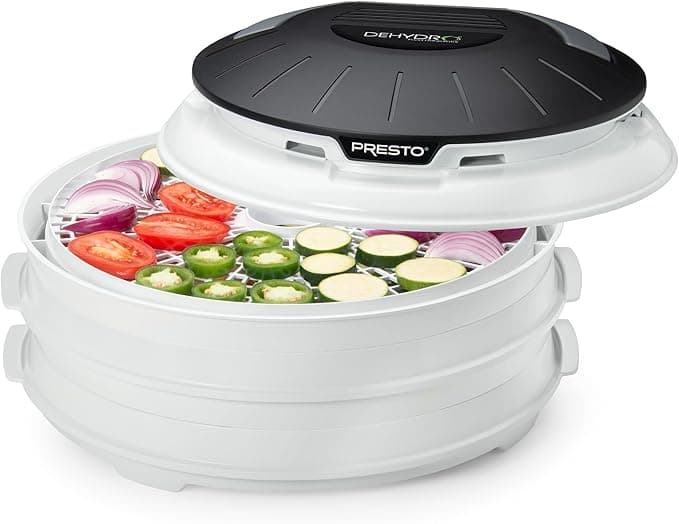
Presto 06300 Dehydro Electric Food Dehydrator, Standard
The friendliest entry point into food dehydrating. Handles herbs, fruit chips, and basic jerky well, and costs less than most kitchen gadgets you already own. Rotate the trays halfway through longer runs for even results.
NESCO FD-75A Snackmaster Pro Food Dehydrator
When I was ready to step up from the Presto, the Nesco was what I bought next. It uses a top-mounted fan with a patented Converga-Flow system that forces air down through a circular vent and outward over the trays. In practice, that means more even drying without rotating, which feels like a genuine upgrade the first time you pull out a batch of apple chips that are all at exactly the same level of crispness.
The Nesco Snackmaster Pro also runs noticeably quieter than the Presto, which mattered to me once I started dehydrating overnight regularly. The temperature range goes from 95°F to 160°F, covering everything except poultry for people following the USDA's full 165°F recommendation. For beef jerky at 160°F I have always been comfortable, but that distinction is worth knowing if meat is your main use case.
The tray system is expandable, which I found genuinely useful. You can add more trays as your needs grow without buying a new machine entirely. The plastic trays are not dishwasher-safe, which is the main frustration after a sticky fruit run, but hand washing takes only a few minutes.
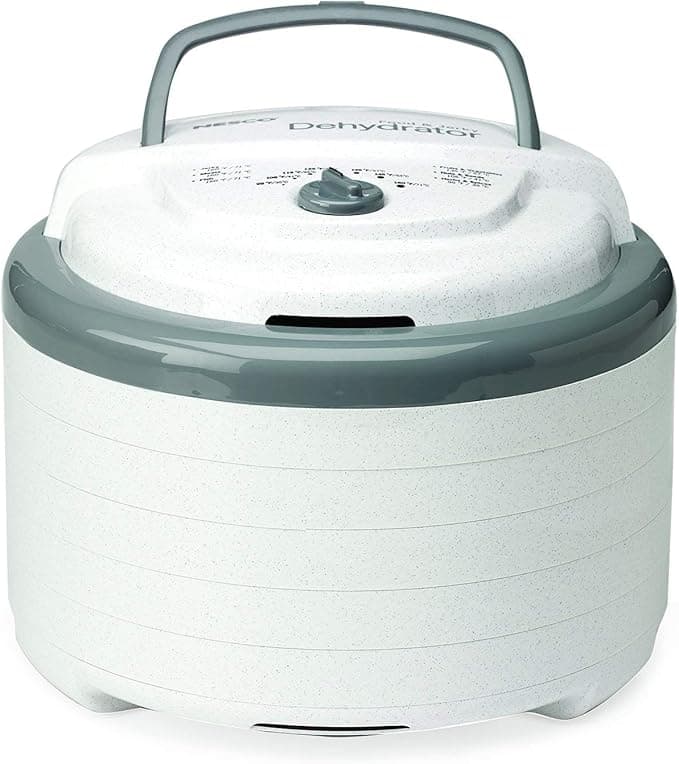
NESCO FD-75A Snackmaster Pro Food Dehydrator, For Snacks, Fruit, Beef Jerky, Gray
A meaningful step up from entry-level machines. The Converga-Flow fan eliminates tray rotation, and the expandable tray design lets you grow into it over time. Best for people doing regular small to mid-size batches of fruit, herbs, and jerky.
Cosori Food Dehydrator
The Cosori is the machine I reach for most often now, and it earns that spot by getting the combination of practical and genuinely good just right. The stainless steel trays were the first thing I noticed, because washing plastic trays after a batch of mango slices is one of those chores that gets slightly more annoying every time. The stainless trays go in the dishwasher. Done.
Six trays give me enough capacity for a full sheet's worth of sliced produce on each level, which matters when the cherry tomatoes are coming in faster than I can eat them. The machine holds temperature consistently at whatever I set it to, it runs at below 48 decibels (quiet enough that I forget it is running), and the horizontal airflow means I genuinely never rotate trays.
One thing that helps beginners a lot: the Cosori includes a built-in recipe book with temperatures and timing guides. Having that baseline removes one of the biggest sources of early uncertainty when you are dehydrating a new food for the first time.
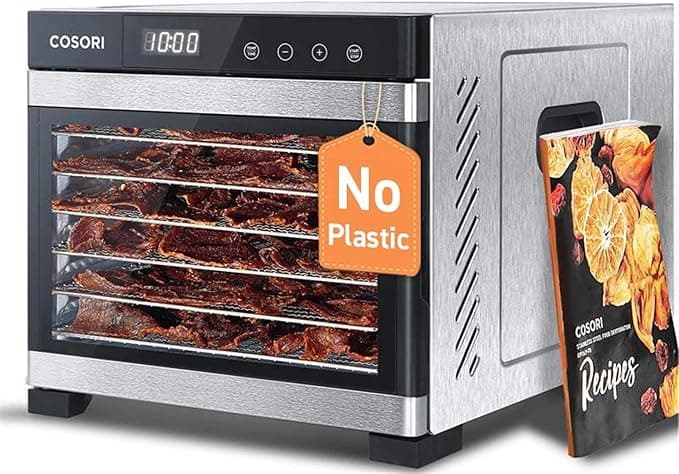
Cosori Food Dehydrator, Stainless Steel Trays, 600W, 165°F
The best all-around pick for regular home dehydrating. Dishwasher-safe stainless steel trays, quiet horizontal airflow for even drying without rotation, and a 165°F maximum for safely dehydrating all meat types. Includes a recipe guide to take the guesswork out of getting started.
Excalibur Electric Food Dehydrator Machine 9-Tray
If you process serious volumes of food, this is the only machine I would send you to. The Excalibur 9-Tray is what serious homesteaders, small farms, and long-term food storage enthusiasts have trusted for decades, because it is genuinely built for high-volume work. Fifteen square feet of drying space across nine trays means I can load an entire bushel of tomatoes in a single run. I have filled all nine trays simultaneously with different foods at different thickness levels and pulled consistent results from every single tray.
The horizontal Parallexx airflow system is what makes that possible. Air flows evenly from the back of the machine across every tray, so there is no hot spot or cool corner. A 26-hour timer handles the longest overnight runs without needing you to check on anything. The adjustable thermostat goes from 105°F to 165°F, covering every food category safely.
I want to be direct about the tradeoffs: the Excalibur is large, heavier than the others, and requires dedicated counter or shelf space. And the price is a real investment. This is not a beginner machine, and I do not recommend spending this much until you know dehydrating is going to be a consistent, high-volume part of your kitchen practice. But once it is, this machine does in one batch what would take three or four runs in a smaller machine.
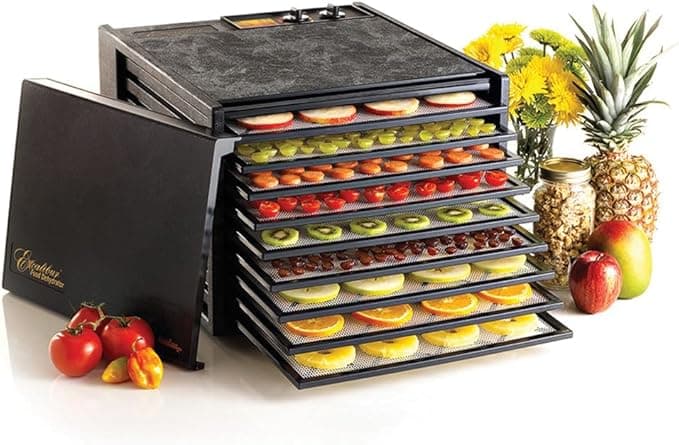
Excalibur Electric Food Dehydrator Machine 9-Tray with 26-Hour Timer
The gold standard for high-volume homestead dehydrating. Fifteen square feet of drying space, horizontal airflow with no tray rotation, and a 26-hour timer for long runs. Worth every penny once you are dehydrating large batches weekly.
What I Dehydrate the Most
Herbs are still my most-used category. Rosemary, thyme, oregano, and basil from my garden go into the machine at 95°F, and four to six hours later I have dried herbs that are noticeably better than anything from a grocery store jar. The flavor difference is not subtle at all.
Apple chips are what my family requests most. Thinly sliced, lightly tossed with cinnamon, dried at 135°F for eight to ten hours. They keep for months in a sealed jar and cost a fraction of what packaged versions run.
Cherry tomatoes are where a dehydrator changes how a garden surplus feels. Cut in half, dried at 130°F for twelve to fourteen hours, they shrink into intensely flavored little pieces I use in pasta, eggs, and soups all winter. Once I started doing this, I began intentionally planting more tomatoes knowing most of them would end up dehydrated.
Beef jerky is the category where having a higher-end machine proves its value. Temperature consistency matters for food safety, and larger tray capacity means making a meaningful batch rather than a few strips at a time.
Starting Out Without Overwhelm
My first dehydrating session was a mistake in ambition. I filled every tray with five different foods and tried to manage all of them at once. Some pieces were still soft while others were done, and I spent more time checking things than I needed to.
Start with one food. Herbs are the most forgiving and the most immediately useful. Slice everything to a consistent thickness, which is genuinely the most important technique tip in all of dehydrating. A mandoline makes a visible difference for fruit and vegetables. After that, set the machine, go live your day, and come back when the time is up.