Best Raised Garden Beds for Beginner Vegetable Gardens
The best raised garden beds for beginners, compared honestly by material, soil depth, and real price, so your first vegetable garden gets off the ground.
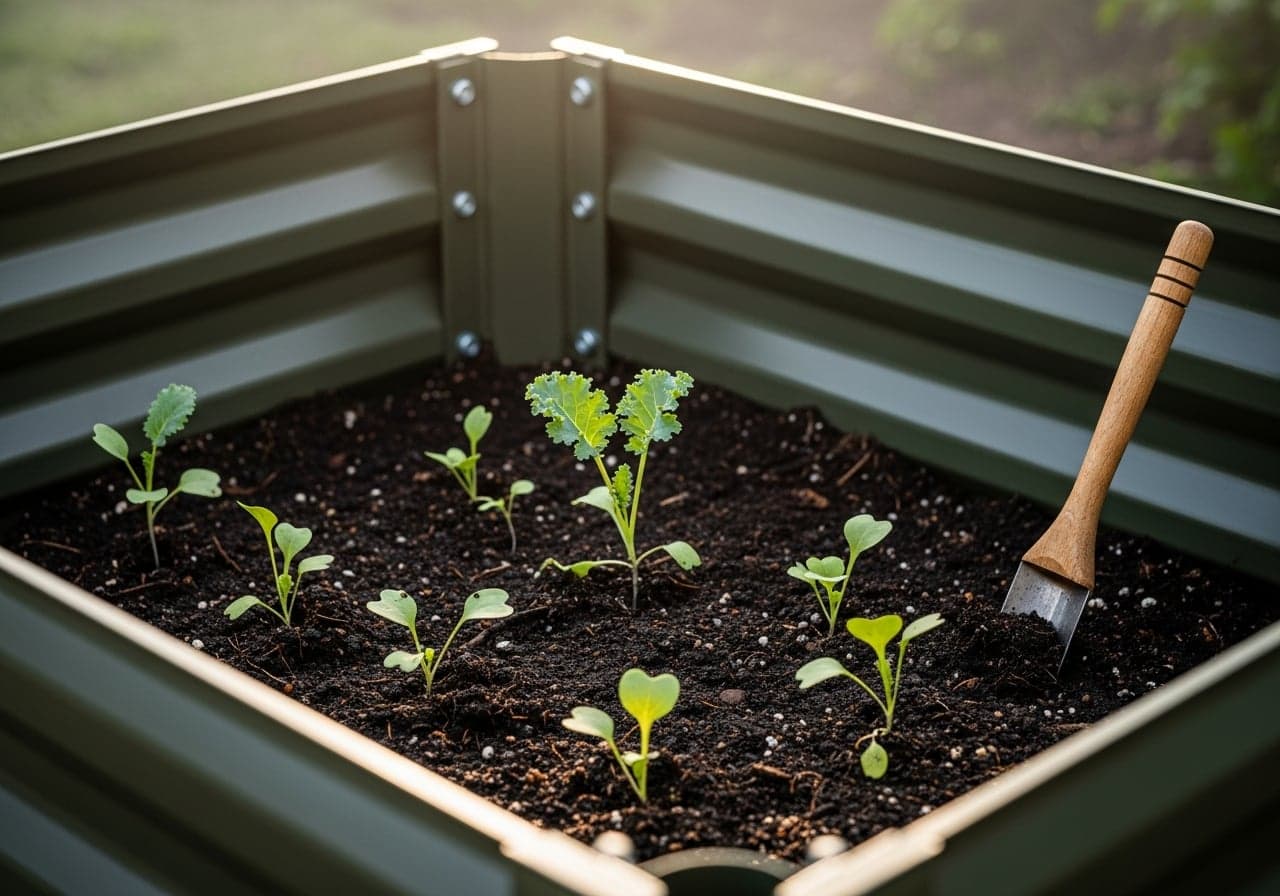
Our first vegetable garden here in Stafford was just rows dug straight into the ground, and it was a mess almost immediately. Virginia clay does not loosen up the way I expected, the paths between rows turned into mud after every rain, and my boys treated the whole thing like an obstacle course. By July I had more crushed squash vines than squash.
The next spring I put in raised beds instead, and it fixed nearly everything at once. The soil inside a raised bed is soil I actually chose, not whatever compacted clay was already there. The edges give the kids a boundary they mostly respect, mostly, and I am not on my knees in the mud trying to find where the carrots are supposed to be. It has become one of our regular homeschool mornings now, checking the beds before we start lessons, which is exactly the kind of slow, outside time I wanted more of.
Not every raised bed is the same, though, and I learned that the hard way with a cheap kit that bowed outward under wet soil by the second season. Material, height, and how the panels actually fasten together matter more than they look like they would from a product photo. These are the four I would point a beginner toward, based on what has actually held up in our yard and what I have watched other homeschool families use in their own.
What to Look For Before You Buy
Soil depth. Shallow greens like lettuce and herbs are fine in 6 to 8 inches of soil. Anything with a real root system, tomatoes, peppers, carrots, needs closer to 12 inches, and root vegetables like carrots specifically want depth without obstruction. This is the single most common mistake I see beginners make, buying a bed that looks big but is too shallow for what they actually want to grow.
Material. Metal beds, when coated properly, resist rot and last the longest. Composite boards made from recycled plastic and wood fiber do not splinter and hold up well to moisture. Untreated wood is the cheapest option up front but the one you will replace soonest. None of these are wrong, they just trade off differently between cost and longevity.
Modularity. Some kits let you reconfigure the same panels into different shapes and sizes as your garden grows or your needs change. This matters more than it sounds like it would. Our first bed was a fixed rectangle, and when we wanted to add an L-shaped extension the next year, we could not use any of the original pieces.
Drainage. Any bed you buy should either have a fully open bottom or explicit drainage features. Standing water around roots is one of the fastest ways to lose a season's plants, and it is worth checking before you order, not after.
At a Glance
| Pick | Best For | Material | Depth | Approx. Price |
|---|---|---|---|---|
| Vego Garden 6-in-1 | Best overall, most flexible | Aluzinc steel | 17 in | Mid |
| Frame It All 4x8 | Best insulated composite | HDPE + wood fiber | 11 in | High |
| Greenes Fence Elevated | Best for bad backs, patio | North American cedar | 31 in tall | Mid |
| KING BIRD Galvanized | Best budget, large footprint | Galvanized steel | 12 in | Under $70 |
Vego Garden 17" Tall 6-in-1 Modular Metal Raised Bed
This is the bed I would tell a beginner to start with if they can only buy one. The panels clip together into a 6-in-1 configuration, which means you are not locked into a single rectangle. When we wanted to reshape our garden footprint last year to fit around a new raised bed soil mix delivery, I was able to rearrange the same panels into a different shape without buying anything new.
The Aluzinc steel construction is rated for around 20 years of outdoor use without rusting through, which matters a lot in a climate like ours where the beds sit through humid Virginia summers and freezing winters. At 17 inches deep, it handles tomatoes, peppers, and root vegetables without the roots hitting a shallow floor partway through the season.
Assembly took my husband and me about forty minutes for the full configuration, using only the included hardware. No welding, no separate tools beyond a screwdriver.
Honest limitation: it is not the cheapest option here, and the corner brackets need to be checked and re-tightened once a season as the soil settles and shifts with freeze-thaw cycles. It is a five-minute check, but skipping it for a couple of years is how a panel starts to bow.
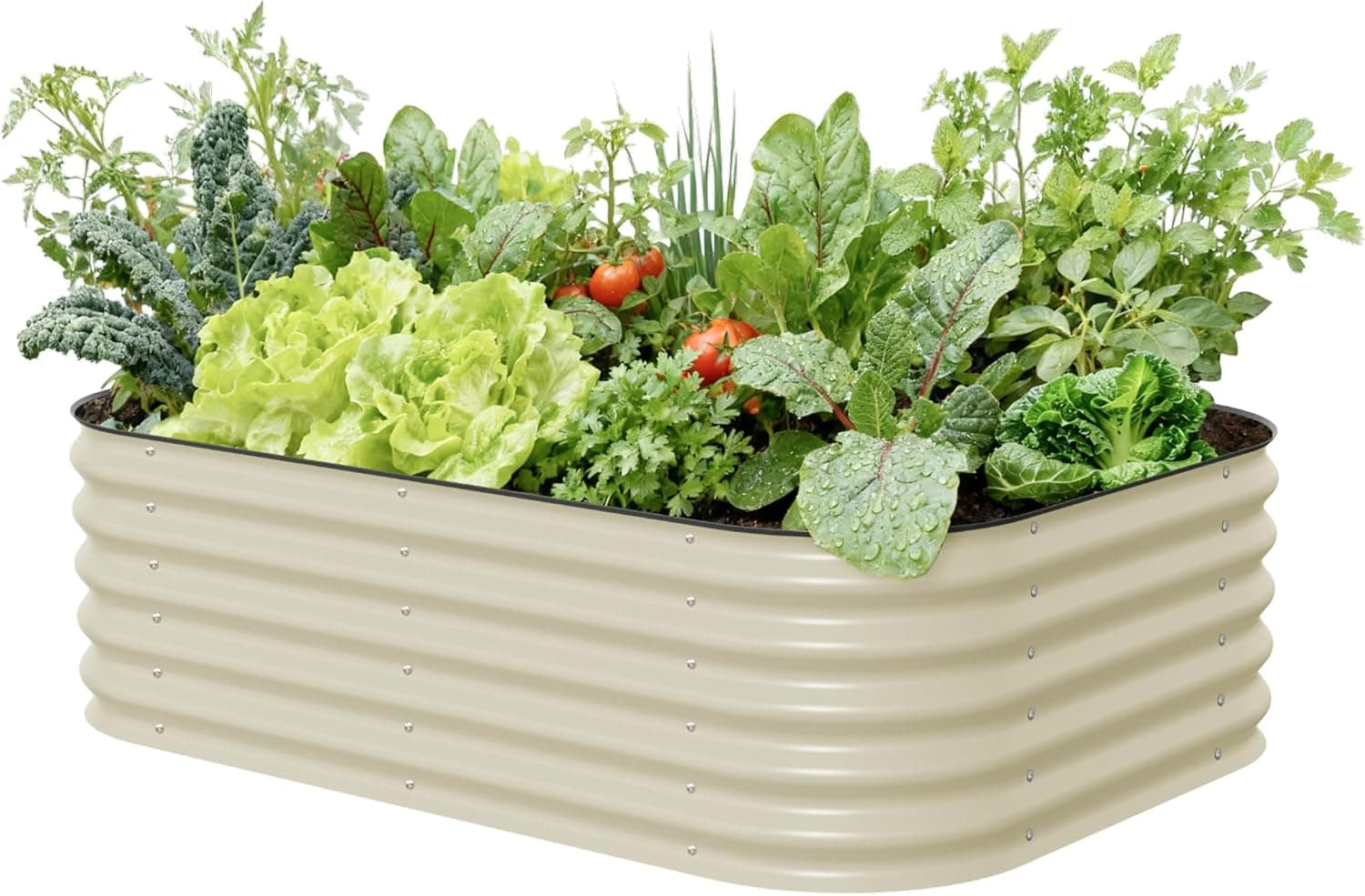
A 17 inch deep modular metal raised bed that reconfigures into six different layouts from the same panels. Aluzinc steel construction resists rust for roughly two decades outdoors. Handles deep-rooted vegetables without the shallow-soil problems smaller beds run into. The one I would recommend first if you only buy one bed.
Frame It All One Inch Series 4x8 Composite Raised Bed
This one is built from a composite of recycled HDPE plastic and sustainable hardwood fiber, and the boards themselves are hollow-profile rather than solid. That hollow channel actually functions as insulation, buffering the soil against fast temperature swings better than a thin metal wall does. On a hot Virginia afternoon, that difference is noticeable if you touch the inside wall of each bed side by side.
The Snap-Lock assembly system is genuinely tool-free. Boards click into vertical corner posts, and the whole 4x8 footprint went together faster than either metal option I have used. At 11 inches deep, it is enough for most vegetables but shallower than the Vego bed, so I would not plant anything with an aggressive taproot in this one without adding a soil mound.
Honest limitation: this is the most expensive bed on this list for the footprint you get, and the composite boards, while sturdy, do have some flex under a fully loaded, saturated bed that solid wood or metal does not. It has not been a functional problem for us, just something I noticed the first time I leaned on the edge to weed.
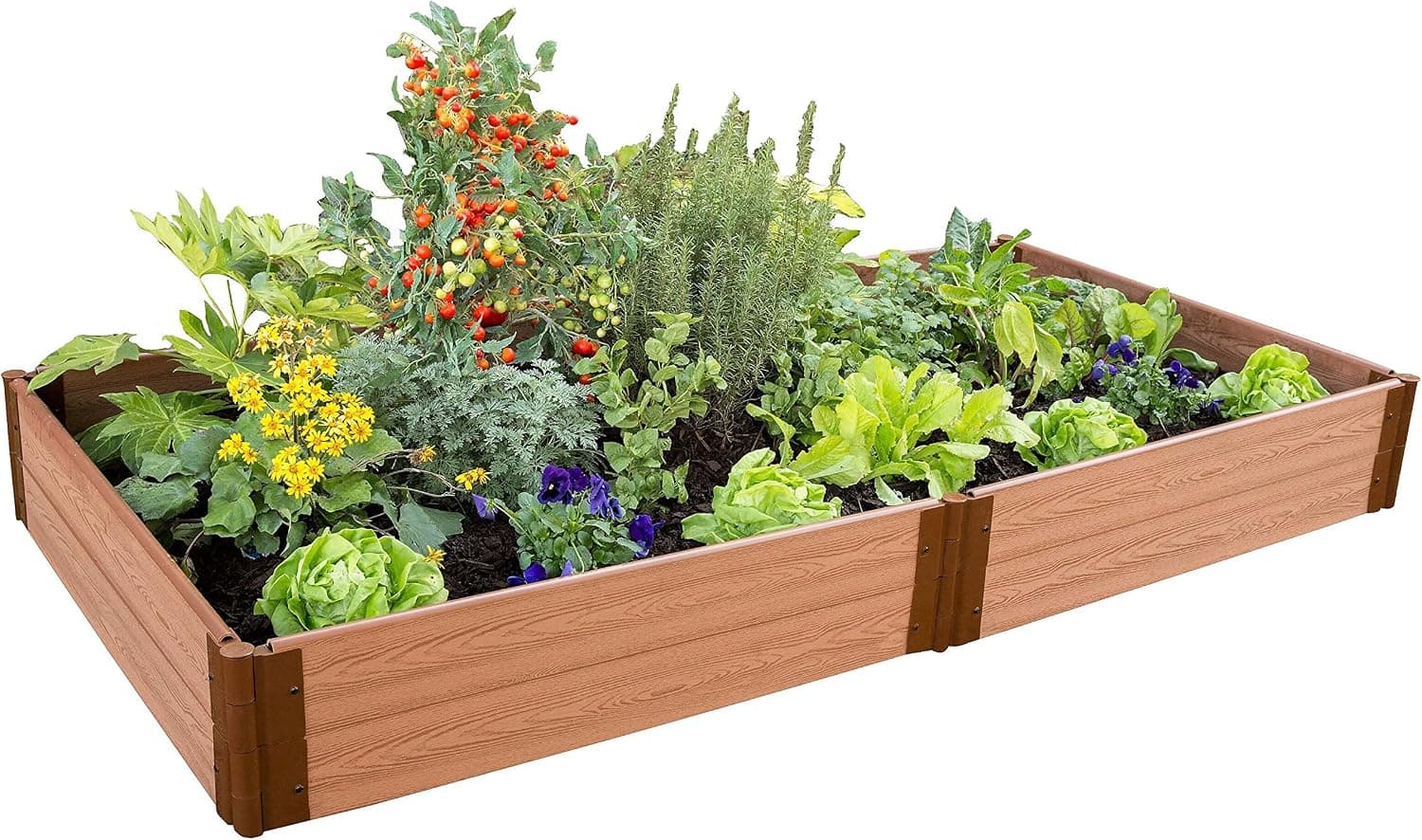
Frame It All One Inch Series 4 ft x 8 ft x 11 in Composite Raised Garden Bed Kit
A tool-free composite raised bed made from recycled HDPE plastic and sustainable hardwood fiber. Hollow-profile boards insulate soil against temperature swings better than thin metal. Snap-Lock assembly took us under twenty minutes for the full 4x8 footprint. The pick for anyone who wants an eco-conscious material without sacrificing durability.
Greenes Fence Premium Cedar Elevated Garden Bed
This is the bed I recommend to anyone gardening with a bad back or knees, or gardening on a patio or deck where an in-ground style bed is not an option. At 31 inches tall, it puts the entire growing surface at counter height, no bending or kneeling required. My mother-in-law switched to a bed like this a couple of summers ago after her knees started bothering her, and she has kept a full herb and lettuce garden going on her patio ever since.
The cedar is North American, milled to three-quarter-inch thickness, and made in the USA rather than imported. Cedar naturally resists rot and insects without chemical treatment, and it develops a soft silver-gray patina over a season or two outdoors that actually looks nice rather than worn out.
The footprint is smaller than the other beds here, 24 by 48 inches, which makes it a better fit for a smaller patio herb and salad green garden than a full vegetable plot. I would not expect to grow a serious tomato harvest in one of these, but it is exactly right for the kind of kitchen herbs I want within a few steps of my back door.
Honest limitation: cedar, even naturally rot-resistant cedar, has a shorter realistic lifespan than metal, somewhere around 10 to 15 years with good care versus 20-plus for coated steel. It is also the priciest per square foot of growing space, since you are paying for the leg structure as well as the bed itself.
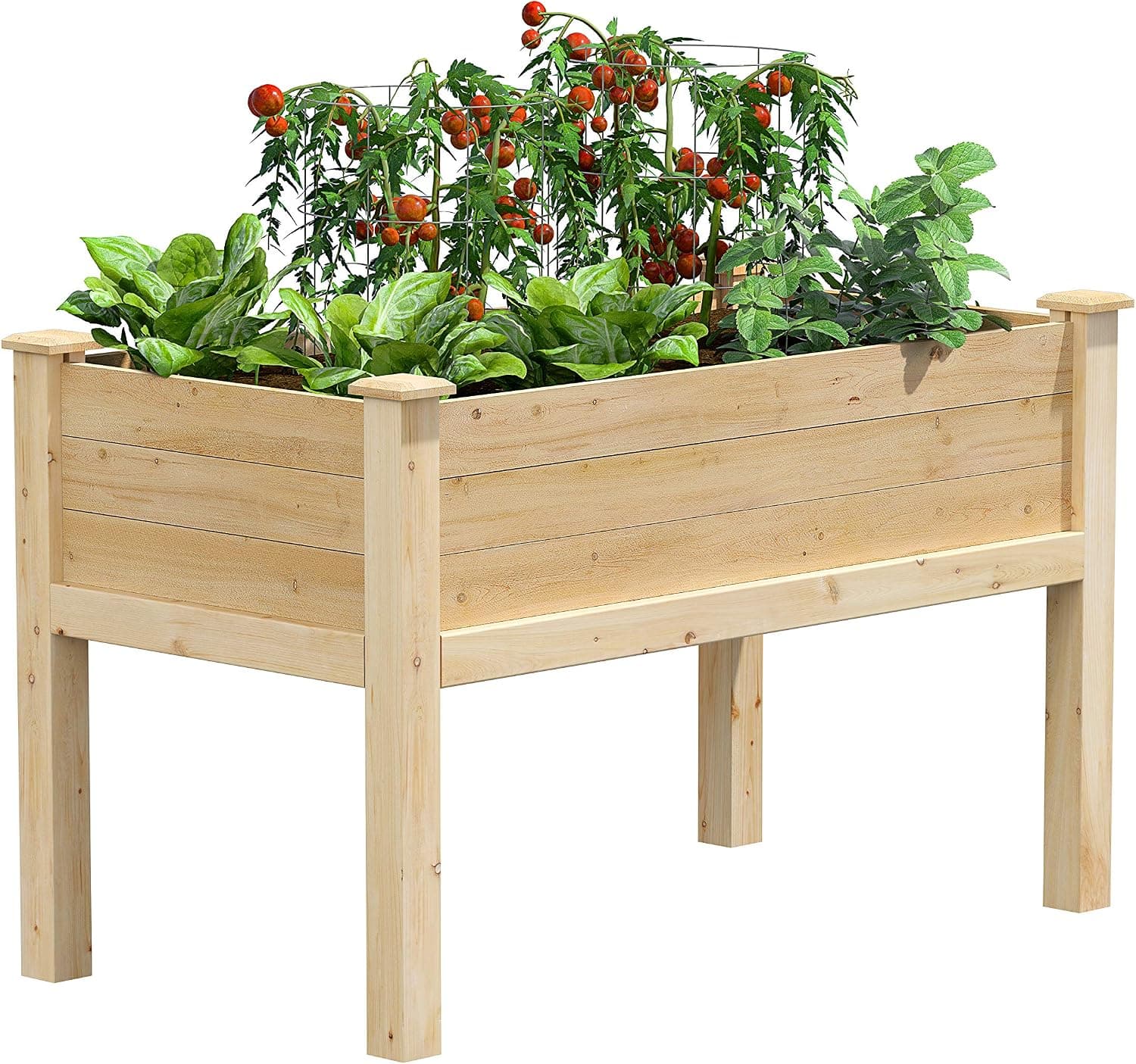
A counter-height cedar planter that eliminates bending and kneeling entirely. Made in the USA from three-quarter-inch North American cedar that resists rot and insects naturally. Best suited to herbs and salad greens rather than a full vegetable plot given its smaller footprint. The bed I point patio gardeners and anyone with knee or back trouble toward first.
KING BIRD Galvanized Raised Garden Bed
If budget is the deciding factor, this is the one. It is a straightforward galvanized steel bed at a fraction of the price of the modular metal options, with a large 68 by 36 inch footprint that gives you real growing space for the money. Another homeschool mom in our co-op picked one of these up for her first garden last spring, mostly because she was not ready to commit real money before knowing if she would keep it up, and she has been genuinely happy with it a full season later.
At 12 inches deep, it handles most vegetables without issue, and the galvanized coating has held up fine through a summer of watering and one Virginia winter so far. Assembly uses a simple panel-and-bracket system, no welding, though it does take two people to hold panels square while the corner brackets go on.
Honest limitation: this is a lighter-gauge steel than the premium modular options, and it will not have the same multi-decade lifespan. For a first raised bed, or a second bed you are adding just to expand growing space without a big investment, it is a genuinely reasonable trade-off.
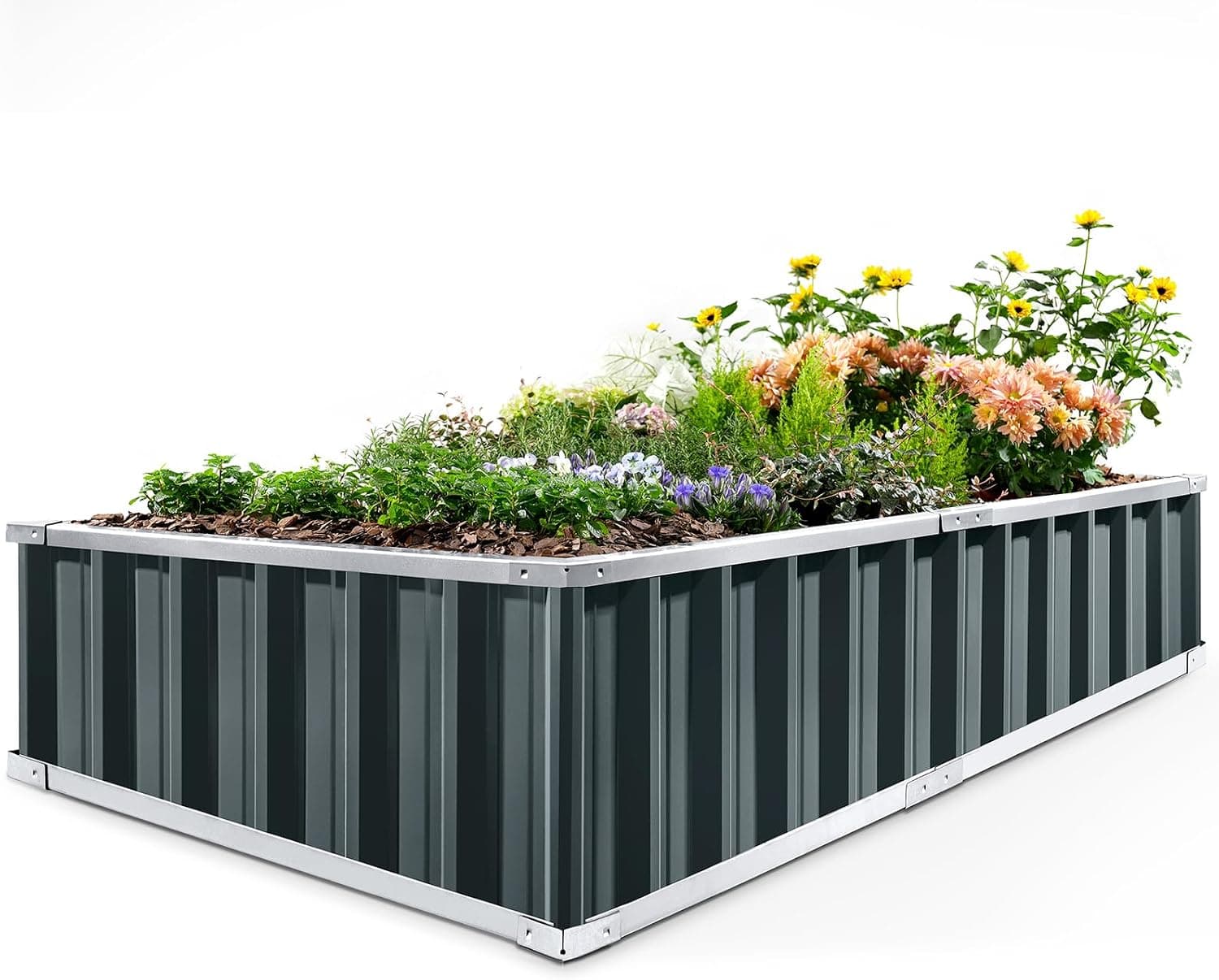
A large-footprint galvanized steel raised bed at the lowest price point here. 68 by 36 inches gives real growing space for a first garden without the cost of the modular metal options. Assembly is straightforward with a simple panel-and-bracket system. The pick for a first bed or for adding growing space on a tight budget.
Setting Up Your First Bed
A few things that would have saved me a season of trial and error.
Do not fill a raised bed with straight topsoil. Topsoil alone compacts hard inside a raised bed and drains poorly. A blend of topsoil, compost, and a coarse material like perlite or vermiculite drains and holds nutrients far better. Most garden soil amendments sold for raised beds specifically are formulated with this in mind.
Level the ground first. Even a slight slope means water pools on one side of the bed and drains too fast on the other. It takes ten extra minutes with a level to get the base right before you assemble anything.
Place beds where they will get at least six hours of direct sun. This sounds obvious until you watch the shadow line move across your yard for a full day before committing to a spot. We moved our second bed once already because a tree we did not think about cast shade on it by early afternoon.
Leave real paths between beds. At least 18 inches, ideally 24, so you can kneel or set a wheelbarrow down without stepping into the growing area itself. My boys need room to help without trampling, and that space also keeps you from compacting soil right at the bed's edge.
Match bed height to what you are actually growing. A shallow bed for lettuce and herbs does not need to be 17 inches deep, and you will spend less on soil filling a shallower bed for shallow-rooted crops.
Frequently Asked Questions
You'll Also Love
- How to Start a Vegetable Garden: Beginner's Guide: the full picture of what to plant and when, once your beds are in the ground.
- Best Seed Starting Supplies for Your Home Garden: get a head start on the season before you ever move seedlings into a raised bed.
- Growing Herbs at Home: A Complete Beginner's Guide: a good fit for a smaller elevated bed if a full vegetable garden feels like too much to start.