Best Microscopes for Homeschool Science That Kids Use
Four homeschool microscopes we've actually put in front of kids, from a stereo starter set to a real-glass-optics splurge, with honest notes on what each is good for.
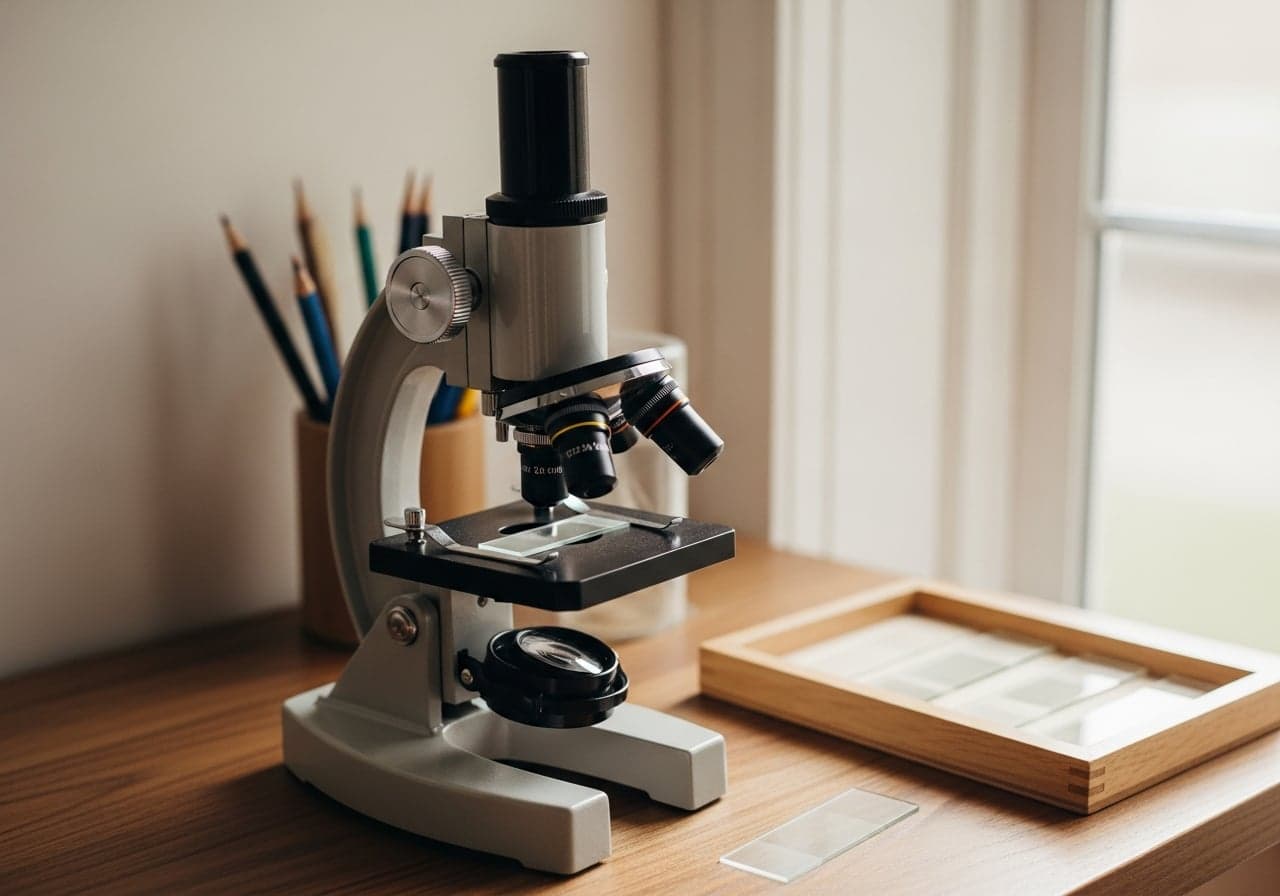
We added a microscope to our homeschool science shelf two years ago, mostly because my third boy kept asking what his own skin looked like up close. I did not expect it to become one of the most reached-for pieces of equipment in the house, but it has. It gets pulled out for onion cells during a biology unit, then again an hour later because someone found a dead bee on the porch and wants to see its wings.
What I did not expect was how much the specific microscope matters. My aunt gave us her old one from a garage sale a while back, and it sat in a closet for months because the focus knob was stiff and the image never came in clear. A microscope that fights you every time you use it just does not get used, no matter how good the intention was. Once we replaced it with one that actually focused smoothly and lit the specimen well, the whole thing clicked for my boys.
This list has one stereo microscope, two mid-range compound microscopes, and one higher-end pick with real glass optics, because different ages and different homeschool science goals call for different tools. None of these are professional lab equipment. They are built for kids, priced for a homeschool budget, and good enough to teach real biology basics without frustrating a seven-year-old on day one.
What to Look for in a Homeschool Microscope
Before the picks, here is what actually separates a microscope your kids will use from one that ends up in a closet.
Compound vs. stereo. A compound microscope is what most people picture: you put a thin slide under the lens and look through at high magnification, useful for cells, onion skin, and pond water. A stereo microscope sits objects on an open stage and lets you look at 3D things like rocks, bugs, and leaves at lower magnification. If your kids are younger or more interested in bugs and rocks than cell biology, start with stereo. If they are ready for actual slide-based biology, go compound.
Illumination that actually works. LED lighting from below (for slides) and from above (for solid objects) makes a bigger difference than magnification power. A microscope with weak or single-direction lighting produces dim, hard-to-see images no matter how many times you focus it. Dual LED illumination is worth prioritizing over an extra 200x of magnification you will rarely use.
Build quality of the focus mechanism. This is the detail that decides whether a microscope gets used or abandoned. A stiff, imprecise focus knob means a frustrated kid who gives up before the image comes in. Metal-bodied microscopes with smooth coarse and fine focus knobs are worth the extra cost over an all-plastic frame.
Real magnification vs. marketing magnification. Some kids microscopes advertise magnification numbers like 1200x or higher, but at that range the image often gets too dark and blurry to be useful without oil immersion, which home kits do not include. For most home biology, 40x to 400x covers everything interesting: onion cells, pond water organisms, hair, insect parts. Do not choose based on the highest number on the box.
At a Glance
| Pick | Best For | Type | Magnification | Approx. Price |
|---|---|---|---|---|
| National Geographic Ultimate Dual Microscope | Best for younger kids and 3D objects | Stereo | 20x, 50x | $80-$90 |
| AmScope 120X-1200X Beginner Kit | Best metal-body compound scope | Compound | 120x-1200x | $40-$50 |
| Celestron Kids Microscope Kit 44123 | Best budget starter scope | Compound | 100x-1200x | Under $20 |
| My First Lab Duo-Scope | Best optics, worth the splurge | Compound + Stereo | 40x-400x | $150+ |
National Geographic Ultimate Dual Microscope
This was the first microscope I bought specifically for the boys rather than inheriting one secondhand, and it is still the one my youngest reaches for. It is a stereo microscope, meaning you set an object directly on the stage rather than mounting it on a slide, and it has dual LED lighting, one light from below for translucent specimens and one from above for solid 3D objects like a geode or a dried flower.
The 20x and 50x magnification range sounds low compared to the compound scopes on this list, but for a kid who wants to look at a bug's leg or the texture of a leaf, it is exactly the right range. Higher magnification on a stereo scope would actually make it harder to see whole objects. My six-year-old can operate this one entirely on his own, which matters more at that age than raw magnifying power.
The kit comes with over 50 accessories, and honestly, more of them get used than I expected going in. The included geode specimen was a hit the first week, and my boys have since raided the yard for their own things to put under it, rocks, bark, a dead moth wing one of them found on the porch.
Honest limitation: this is not the microscope for looking at cells or anything that requires a thin slide and transmitted light through a specimen. If your homeschool science is heading toward actual biology (onion cells, pond water, blood smears), you will want a compound scope alongside this one, not instead of it. Think of this as the "hold anything up to it" scope and a compound scope as the "look inside things" scope.
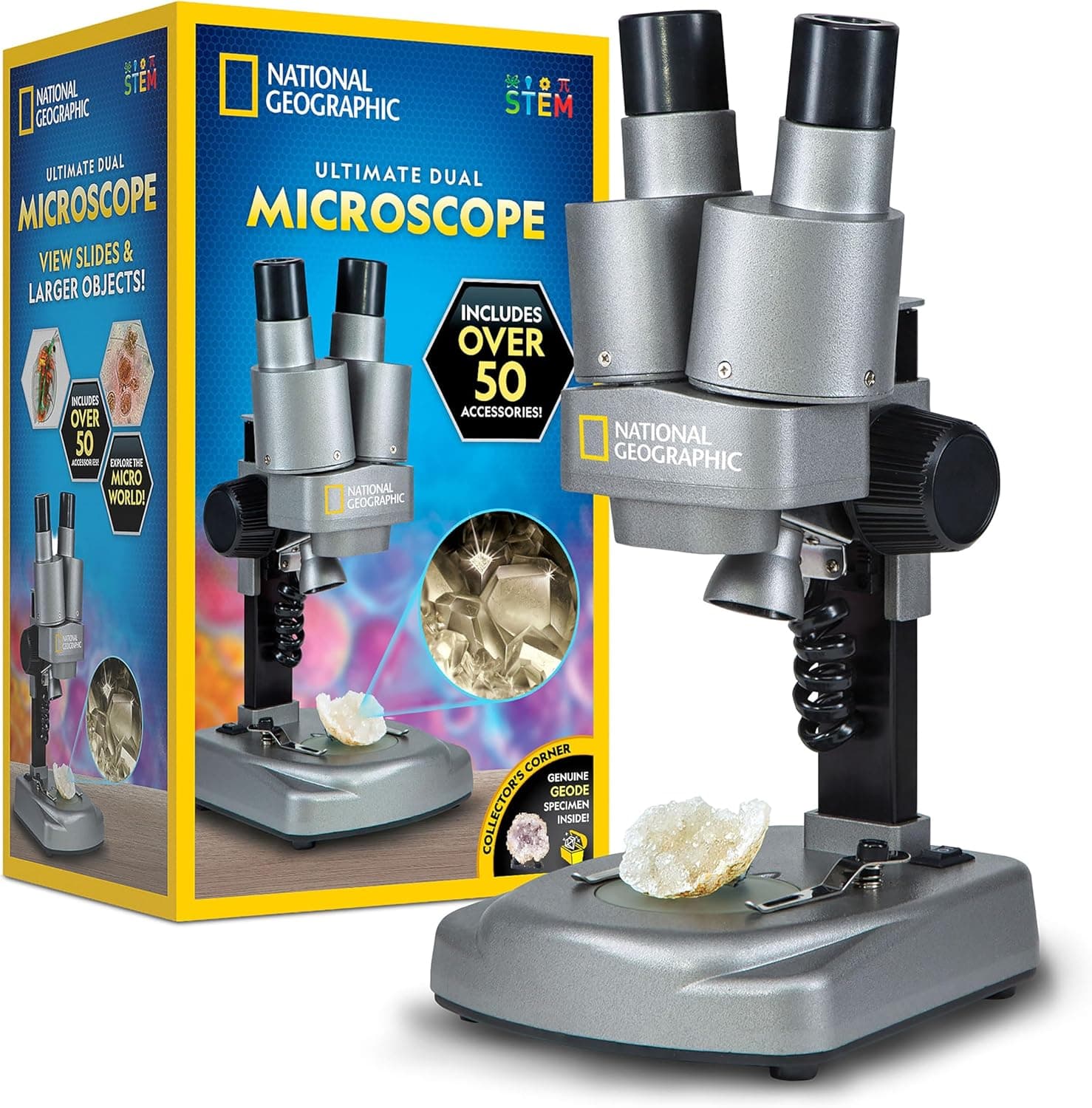
A stereo microscope with dual LED lighting for both slides and solid 3D objects, 20x and 50x magnification, and a 50-plus piece accessory kit including a genuine geode specimen. Best for younger kids who want to examine bugs, rocks, and leaves rather than cells.
AmScope 120X-1200X Beginner Microscope STEM Kit
Once my oldest was ready for actual biology, this is the compound microscope we landed on. It has a metal body rather than the all-plastic construction you find on the cheapest kids microscopes, and the difference shows up in the focus knobs. They turn smoothly and hold their position, which sounds minor until you have used a microscope where the image drifts out of focus every time you touch the stage.
The kit includes six magnification settings from 120x up through 1200x, achieved by combining three objective lenses with the eyepiece. In practice, we use the lower settings, 120x and 300x, for the vast majority of what we look at. Onion cells, thread fibers, and salt crystals all show up clearly at those levels. We have used 1200x a handful of times out of curiosity, but the image gets dim and requires very careful focusing to get anything useful out of it.
The 52-piece accessory set includes plastic slides, a brine shrimp hatchery kit, and a hard-sided case that keeps everything together between uses. My boys have hatched the brine shrimp eggs twice now and watched them develop under the scope, which turned into an actual multi-day observation project rather than a one-off activity.
Honest limitation: the included slides are plastic, not glass, which means you cannot make your own wet-mount slides with this kit the way you can with a proper glass-slide setup. If you want to do more advanced prep, like actually cutting a thin section of an onion and staining it yourself, you will need to buy glass slides and cover slips separately.
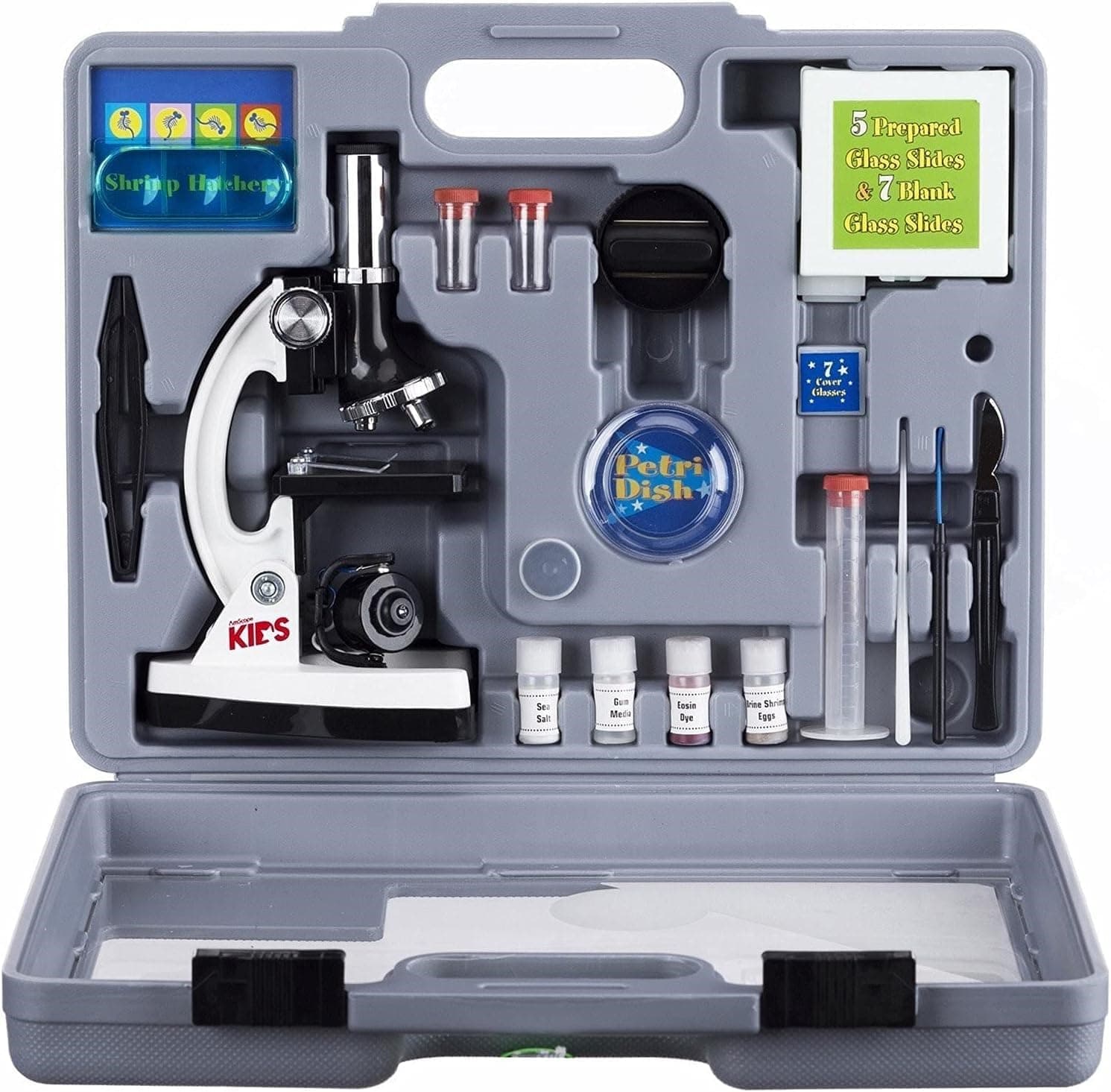
A metal-bodied compound microscope with six magnification settings from 120x to 1200x, LED and mirror illumination, and a 52-piece kit including a brine shrimp hatchery. Smooth, precise focus knobs make this a solid step up from all-plastic beginner scopes.
Celestron Kids Microscope Kit 44123
This is the one I would recommend if you are not sure yet whether microscopes are going to stick as an interest, or if you are outfitting more than one kid and do not want to spend much per scope. It is a genuine compound microscope, not a toy that just looks like one, with three real objective lenses and prepared slides included in the box.
What surprised me is how usable it actually is at this price. The image is not as bright or crisp as the AmScope, and the focus knob has a bit more play in it, but it works, and it gets my second boy through actual slide observation without complaint. We keep this one at the kitchen table for quick look-and-go moments rather than longer structured lessons, since it is light enough that it does not feel like a big production to pull out.
The included prepared slides are a nice touch for a kit at this price. They give kids something to look at on day one before you have figured out how to prepare your own specimens, which lowers the barrier to that very first "wow" moment that gets a kid hooked on wanting to look at more things.
Honest limitation: this is a lighter-duty microscope, and it shows if you are switching between it and something like the AmScope or My First Lab. The image quality gap is noticeable once you have used a better scope. For a first microscope, or a second one for a younger sibling who is still figuring out if they even like this, it does the job well enough.
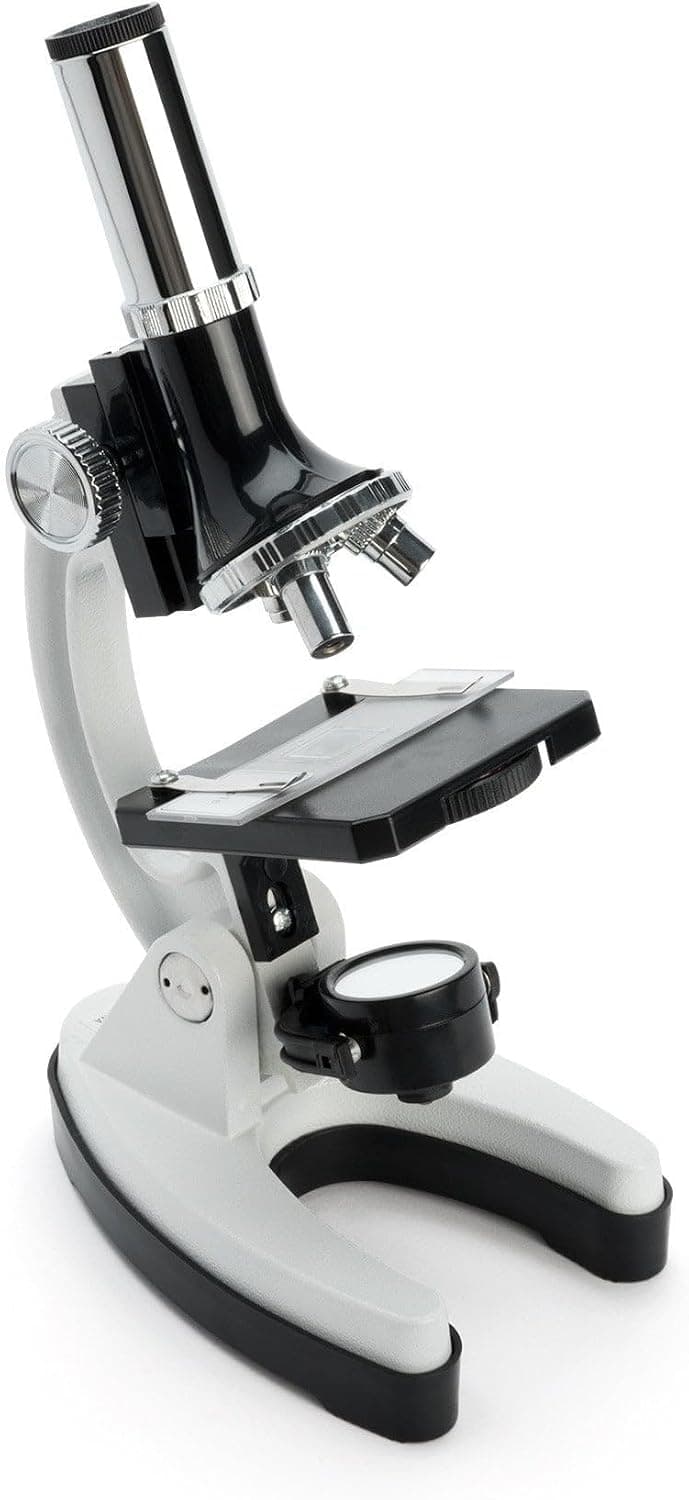
Celestron Kids Microscope Kit 44123
A genuine compound microscope with three objective lenses (100x to 1200x range) and prepared slides included, at the lowest price on this list. Good first scope or a budget second unit for a younger sibling still deciding if microscopes are their thing.
My First Lab Duo-Scope
This is the splurge, and I want to be upfront that it costs meaningfully more than the other three picks here. What you get for that is real glass optics rather than plastic lenses, which genuinely does produce a sharper, brighter image, and a design that functions as both a compound microscope for slides and a stereo microscope for solid objects in one unit.
We picked this up after my oldest had outgrown the novelty stage and wanted to actually study things properly, comparing what an onion cell looks like against a cheek cell, drawing what he saw, that kind of real observational work. The image clarity at 100x and 400x is noticeably better than either the AmScope or Celestron, especially around the edges of the field of view where cheaper lenses tend to blur.
The dual function is more useful in daily practice than it sounds on paper. Instead of needing a separate stereo scope for 3D objects and a compound scope for slides, one flip between modes handles both. That consolidation actually gets more total observation time out of the boys because there is only one thing to set up rather than two.
Honest limitation: the price is the price. If you are just testing whether your kids are interested in microscopy, do not start here. This is the microscope you buy after you already know the interest is real and durable, or if you want one high-quality shared scope for multiple kids rather than several cheaper ones.
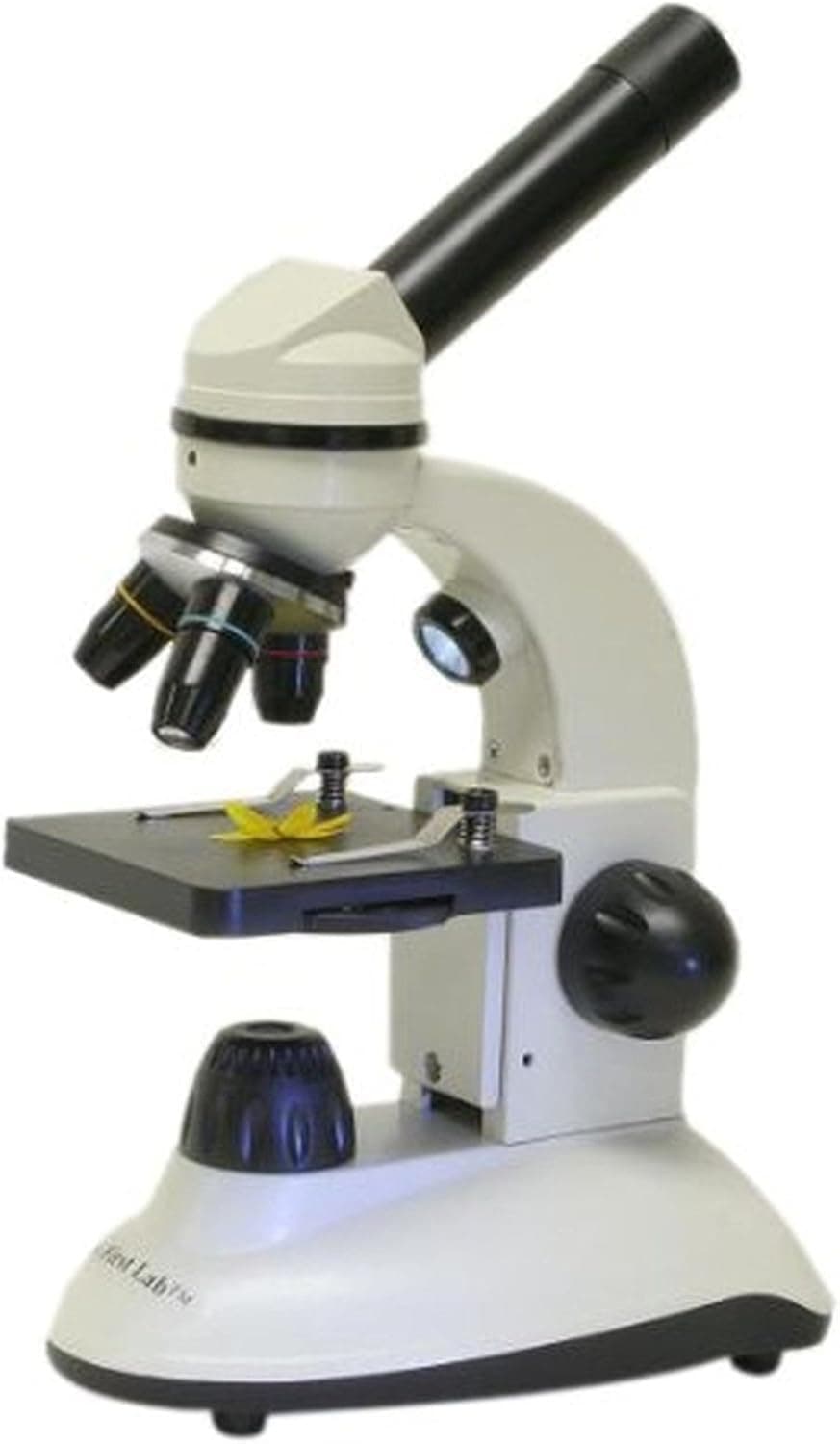
My First Lab Duo-Scope Stem Microscope with 50 Piece Accessory Kit
Real glass optics in a dual compound and stereo design, with 40x, 100x, and 400x total magnification. The clearest image on this list, at the highest price. Best for a kid with a proven, lasting interest, or as one shared high-quality scope for multiple children.
Making a Homeschool Microscope Actually Get Used
Buying the microscope is the easy part. Here is what has kept ours in regular rotation rather than gathering dust.
Keep a running list of things to look at. We tape an index card to the inside of the microscope case where anyone can jot down "check the ant from the driveway" or "look at feather." When we sit down for science, the list is already there instead of everyone standing around trying to think of something.
Pair it with a cheap set of prepared slide sets early on. Before your kids know how to prepare their own slides well, prepared sets give them a reason to use the scope without you having to be the one setting everything up each time.
Let the mess happen at a dedicated spot. We keep ours on a corner of the kitchen table rather than in a closet, because a microscope that has to be retrieved and set up every time gets used far less than one that is just sitting there, ready.
Do not correct their technique too early. My instinct the first few times was to jump in and adjust the focus for my boys the moment they struggled. Now I let them fumble with it for a minute before stepping in. The kids who learn to focus it themselves end up using it independently much sooner.