Best Outdoor Science Kits for Kids: 3 Worth Buying
Three outdoor science kits for kids that actually hold attention: a nature explorer set, a backyard experiment kit, and a gemstone dig kit. Honest picks.
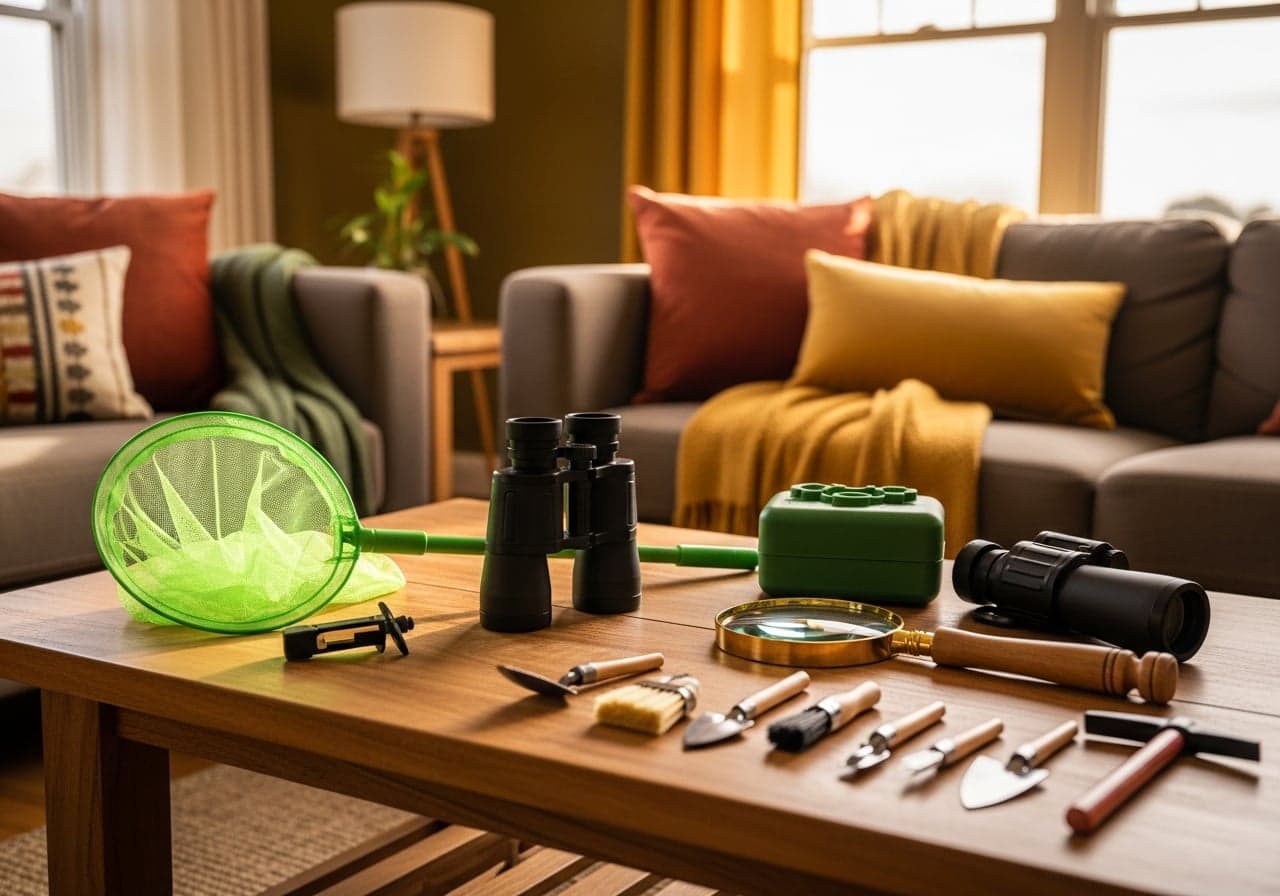
Summer in Stafford means my boys are outside from the time breakfast is cleared until I call them in. I love this in theory. In practice, what happens is that two of them disappear into the backyard with sticks, one finds a bug jar, and at least one wanders back inside within twenty minutes because he "ran out of things to do." I've learned that giving them something specific to work with changes everything.
This is where outdoor science kits come in. Not the kind that sit on a shelf and collect dust after the first afternoon. The kind that give kids a real thing to do, something they can hold and use and come back to over multiple sessions. Something that lines up with the curiosity they already have but gives it a shape.
We've been through several of these over the years as part of our homeschool summer rhythm. I look for kits that work for a range of ages since my boys span several years. I look for durability because they are rough on everything they own. And I look for genuine educational value, not just the appearance of it. These three have held up to all of that.
What to Look for in Outdoor Science Kits
Before I get into the picks, here is what actually matters when choosing.
Age range and engagement level. Some kits are designed for very young kids and are mostly handled by parents. Others genuinely engage independent learners at upper elementary age. The best kits fall in the sweet spot where kids can do most of the work themselves with some initial guidance. If a kit requires constant adult oversight, it becomes more work than fun for everyone.
Durability. Binoculars that fog up after one dewy morning, bug catchers that crack when set down on concrete, magnifying glasses that scratch within a week. These are real problems with outdoor kits. Look for rubberized grips, sturdy closures, and materials that can handle being dragged around a yard. Anything that comes in a bag or case rather than a cardboard box holds up better over time.
Variety within the kit. A kit that gives kids three different things to explore will stay interesting longer than one that does a single activity. A butterfly net and a bug catcher and a magnifying glass is more useful than three magnifying glasses of different sizes.
Honest educational value. Kits that pair hands-on activity with some kind of reference guide or actual information teach kids something real. The best outdoor science kits are not just toys with a STEM label on the box. They connect what kids are doing outside to actual science in a way that is age-appropriate and not dry.
At a Glance
| Pick | Best For | Projects / Pieces | Age Range | Approx. Price |
|---|---|---|---|---|
| KAQINU 24-Piece Explorer Kit | Best all-around nature explorer set | 24 pieces | 3-12 | $15-$20 |
| Be Amazing! Backyard Science | Best for experiments and hands-on projects | 50+ projects, 32 pieces | 8-12 | $25-$35 |
| NatGeo Mega Gemstone Dig Kit | Best single-activity dig experience | 15 real gems | 6+ | $15-$20 |
KAQINU 24 Pcs Kids Explorer Kit & Bug Catcher Kit
This is the kit I reach for first with younger kids or when I want something versatile enough that multiple boys can each grab a piece and do something with it. The 24 pieces include binoculars, a compass, a butterfly net, a bug catcher container with a magnifier lid, a magnifying glass, tweezers, a whistle, and more, all tucked into a drawstring bag.
What makes this one work is how varied the tools are. One of my boys would spend an entire morning cataloging bugs with the bug catcher and magnifier lid while another was using the binoculars to watch birds in the back corner of the yard. The compass got pulled out on a walk where we practiced basic navigation, which turned into a longer conversation about how explorers used to find their way before GPS. That is the kind of learning I want in summer, the kind that does not feel like school.
The binoculars surprised me most. On kids explorer kits at this price, binoculars are usually decorative. These actually work. They are not going to replace real optics, but for watching a bird twenty yards away or spotting a frog at the edge of our garden, they do the job. My ten-year-old used them for a solid week without complaining that he could not see anything.
The KAQINU explorer kit comes in a drawstring bag that is genuinely useful. Everything stays together and can be grabbed on the way out the door. After a lot of outdoor toys that migrate into three different corners of the yard and never get collected, having one bag that holds everything is a small detail that makes a real difference.
Honest limitation: the quality is proportional to the price. This is not professional-grade gear. The compass is functional but not precise. The butterfly net is appropriate for yard catching but not for anything more serious. For what it is, at this price, it delivers well. If you want something more durable for a serious young naturalist, individual tools will outperform the combo kit. But for general outdoor play and early science curiosity, this is excellent.
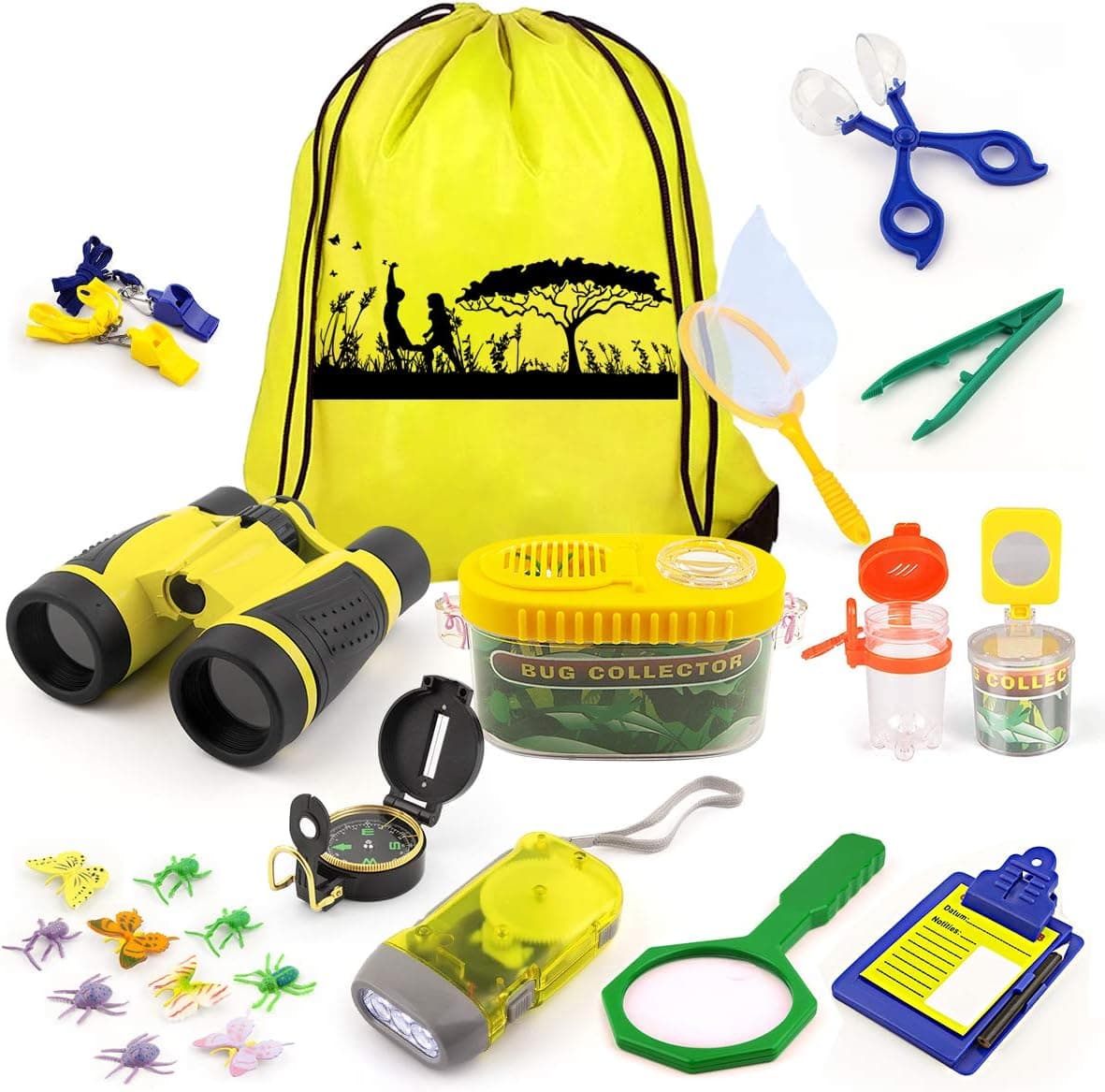
The most versatile kit on this list. Twenty-four tools including binoculars, a compass, butterfly net, bug catcher with magnifier lid, and magnifying glass, all in a drawstring bag. Functional enough to keep older kids genuinely engaged, accessible enough for kids as young as three with some guidance. A good default choice for families with kids at different ages.
Be Amazing! Toys Big Bag of Backyard Science
This kit is for the kid who wants to know why things work, not just what they look like. Designed for ages eight and up, it includes over 50 backyard experiments across six science categories: physics, chemistry, botany, biology, entomology, and ornithology. The 32-piece kit comes in a tote bag and includes enough materials to run the experiments.
What sets this one apart from the others on this list is that it is genuinely experiment-driven. Rather than tools for observation, it gives kids a framework for asking questions and testing answers outside. The experiments use ordinary backyard materials alongside what is included in the kit, so kids are working with their actual environment rather than a controlled indoor setup.
One thing I appreciate is how the categories are structured. My oldest, who leans toward the why-does-this-happen side of things, worked through the chemistry and physics sections first. My second boy was more interested in the entomology section and spent two afternoons building a simple bug observation setup and recording what he found. The kit gave each of them an entry point that matched what they were already curious about.
The bag format means the kit does not fall apart after the first use. Loose experiment kits that come in cardboard boxes are usually a disaster by week two. The tote holds everything and goes wherever the kids go.
Honest limitation: this kit is genuinely for ages eight and up. I tried to get my six-year-old involved and he lost interest quickly because the activities require more patience and sustained focus than he has right now. If you are buying for a mixed-age group, plan to do the younger kids' activities separately and save this one for the older set. The age rating is accurate.
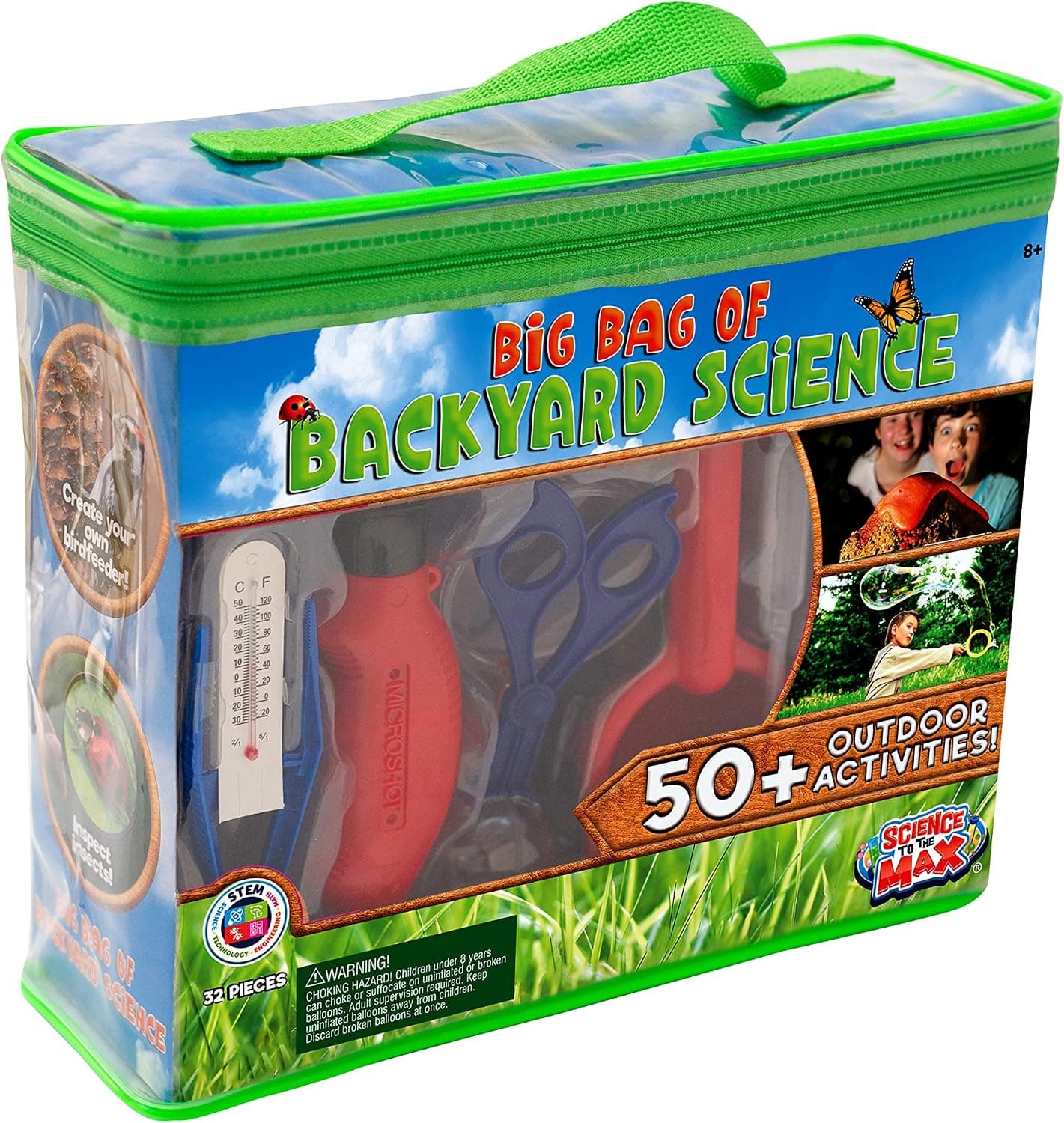
Be Amazing! Toys Big Bag of Backyard Science - 50+ Projects, STEM Science Kit for Kids 8+
The most experiment-intensive kit on this list. Fifty-plus backyard science projects across six categories including chemistry, botany, and entomology, with a 32-piece supply kit in a tote bag. Best for curious kids eight and up who want to understand how things work rather than just observe them. The multi-subject structure gives it a long runway past the first session.
NATIONAL GEOGRAPHIC Mega Gemstone Dig Kit
This one is the clear winner for single-activity immersion. You get a large excavation block filled with 15 real gemstones and crystals, along with a digging tool, a brush, and a gemstone identification guide. The goal is simple: dig out the gems, identify them, and build a collection.
My boys had strong opinions about this kit, all positive. There is something about digging into a block and not knowing what you are going to pull out that is inherently compelling to kids. My youngest at six worked on it for a full morning with me nearby helping identify what he found. My older boys picked it up independently once they saw how it worked and competed over who would find the most impressive stone.
The gemstone identification guide is a genuine asset here. Rather than just handing kids some pretty rocks, the kit gives them real names, information about how each stone forms, and visual comparisons to help them identify what they found. My ten-year-old came away knowing what aventurine and tiger's eye are and why they look the way they do. That is not something he was going to learn from a toy without some substance behind it.
This is a one-time activity. Once the block is excavated, that experience is done. You can extend it by picking up additional gem digging kits and setting up a longer dig project, or by pairing this with a rock collection so kids have something to add the finds to. On its own, it usually takes between one and three sessions to complete, depending on how thorough the kid is being. Some of my boys rushed through and some stretched it out, making a sketch of where each gem was found before removing it.
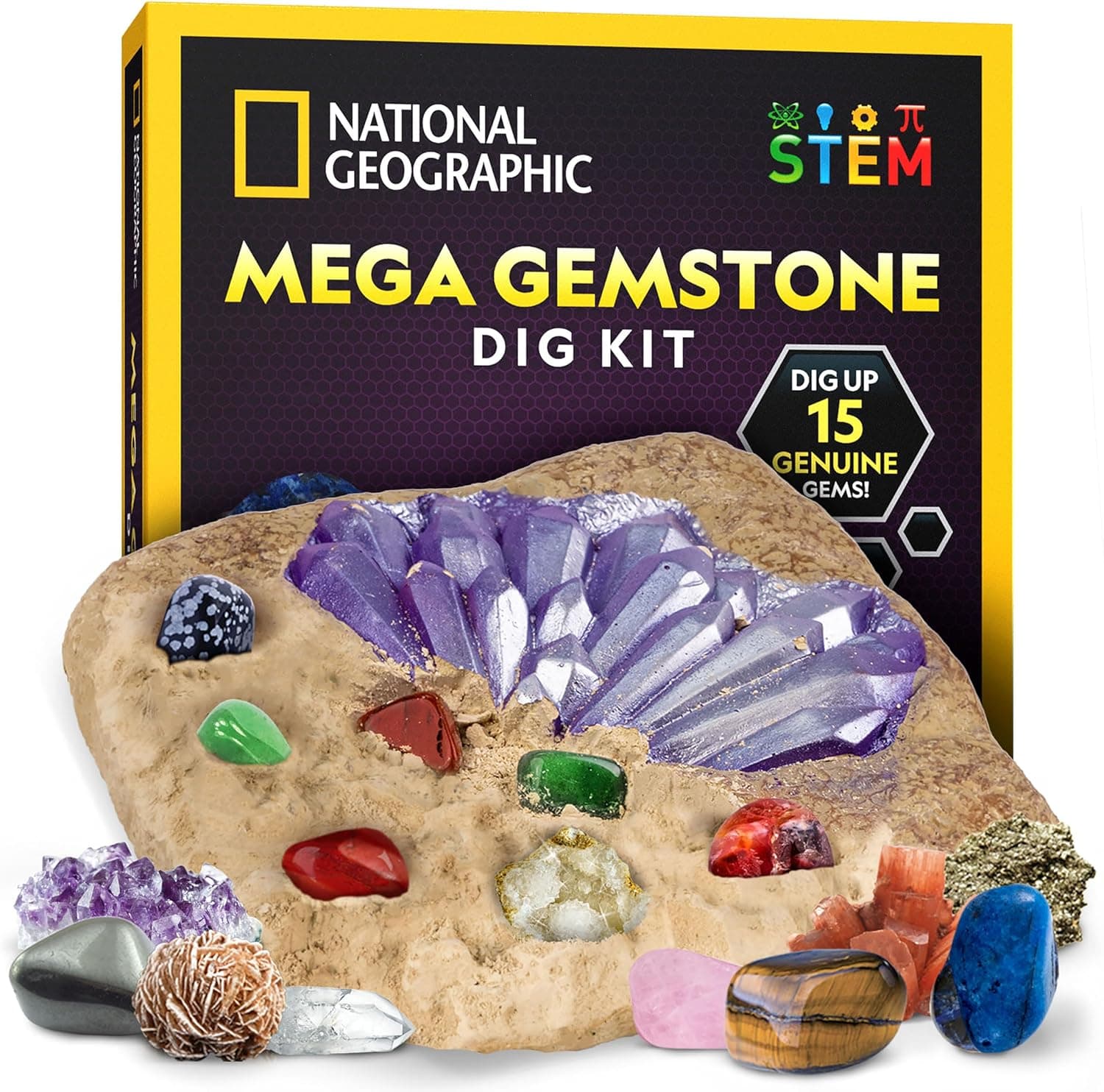
Fifteen real gemstones and crystals buried in a dig block, with a digging tool, brush, and illustrated identification guide. The most focused and immersive activity on this list. Kids dig, identify, and build a real collection of genuine stones. Best for kids six and up who love rocks, gems, or anything involving excavation. Limited to one dig but very high engagement while it lasts.
Making Science Kits Actually Last Through the Summer
The biggest mistake I have made with outdoor science kits is treating them like toys to be handed over and forgotten. They work much better when there is a little structure around them.
Store them accessibly. If the kit lives in a closet or has to be asked for, it does not get used. A low shelf in the mudroom or a hook by the back door means kids can grab it on the way outside without involving me every time. This doubles how often any of these kits actually make it into the yard.
Pair observation with recording. A simple composition notebook kept near the kit changes the activity from passive play to genuine science. Drawing a bug, sketching where a gem was found in the excavation block, writing down what a bird looked like before looking it up in a field guide. My boys are more willing to do this than I expected, probably because it is their choice rather than an assignment.
Rotate kits. I pull one kit out for a week and put the others away rather than making everything available at once. The anticipation of what comes next keeps interest higher than it would be if all three were permanently out.
Let them lead. The fastest way to kill interest is to turn the kit into a structured lesson. These work best when kids are following their own curiosity. I set the kit out and answer questions when asked, but I do not direct the activity.