Best Kids Gardening Tools for Backyard Summer Play
Three kids gardening tool sets worth buying this summer, from a 12-piece starter kit to a simple 7-tool set. What to look for and who each pick suits best.
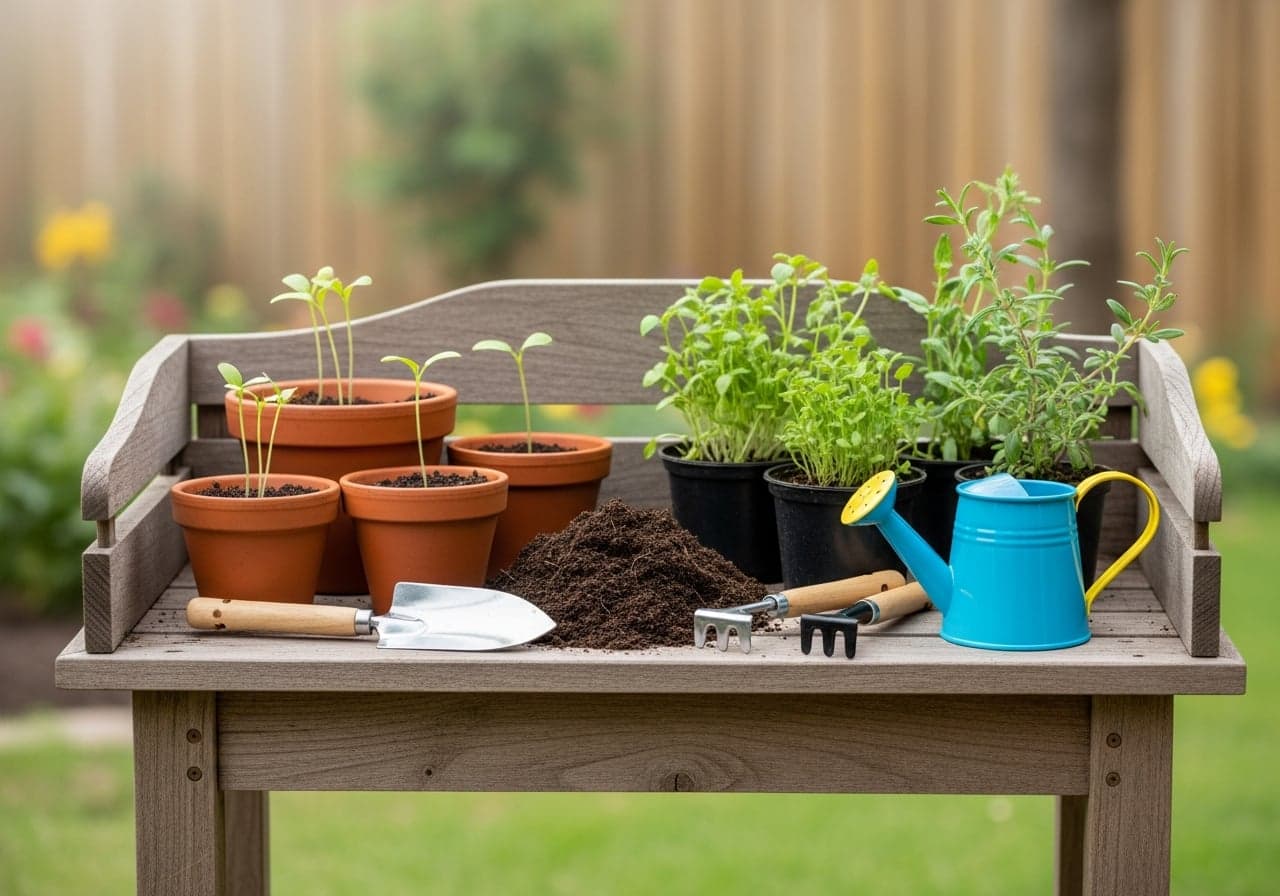
Getting my boys into the garden happened gradually, almost entirely by accident. I started seeds indoors in February and the older two kept wandering over to check on the trays, asking which ones had sprouted, why some looked leggy, when we were going to put them outside. Once spring arrived and we moved to the garden beds, there was no keeping them out. The problem was that my tools were mine, full-sized and heavy, and the plastic toy sets that came in bin bags at the dollar store cracked through real soil within a week.
I started looking for kids garden tools that were actually made to function in real dirt. Not so heavy they are exhausting for small hands, but not so flimsy they fold the moment a kid tries to dig through compacted ground. There is a real difference in quality between sets, and once I found ones that held up, the boys stopped treating gardening like something they dabbled in and started treating it like an actual job.
What helped most was giving each of them their own set. Something about having a Play22 kids gardening set rather than sharing one trowel among brothers changes the dynamic completely. They show more ownership over the beds and take the tasks more seriously when the tools are theirs.
What to Look For in Kids Gardening Tools
Before I get into the picks, a few things that actually matter when you are choosing.
Metal vs. plastic. This is the most important factor. Plastic tools look like garden tools but do not work like them. In anything other than very loose, sandy soil, plastic blades flex and crack rather than cutting in. Metal blades on kids sets are lighter than adult tools but sturdy enough to handle real digging. Every set on this list uses metal for the actual tool heads.
Handle material and grip. Wooden handles are the most common and they work well for outdoor use with dry hands. Look for smooth-finished wood without rough edges or splinters at the connection point where the handle meets the metal head, since that is where handles typically fail on cheaper sets. Some sets use coated composite handles, which are easier to clean and will not splinter, but can get slippery when wet.
Sizing. Kids tool sets are shorter and lighter than adult tools, which is the point. For ages three to six, shorter handles help with control. For older kids seven and up, you want something with a bit more length so they can actually leverage the tool rather than bending over the entire time.
What is included. The basic toolkit is a trowel, a hand rake, and some version of a cultivator or fork. Beyond that, some sets include watering cans, aprons, gloves, hats, and storage bags. Whether you want extras depends on what you already have and how much all-in-one convenience matters.
At a Glance
| Pick | Best For | Pieces | Key Extras | Approx. Price |
|---|---|---|---|---|
| Play22 12-Piece Set | Most complete starter kit | 12 | Watering can, apron, gloves, tote bag | $20-$30 |
| Duckura 7-Piece Set | Tools only, for older kids | 7 | None | $15-$20 |
| Grenebo Complete Set | Most accessories included | 8+ | Hat, apron, gloves, watering can, bag | $25-$35 |
Play22 Kids Gardening Tool Set (12 Pieces)
The Play22 set is the one I would recommend for anyone getting started with kids in the garden for the first time. The twelve pieces include a trowel, a rake, a fork, a cultivator, a watering can, an apron, gloves, a canvas tote bag, seedling pots, and garden placards. Everything except the dirt is in the box.
What I like most about this set is the completeness of it. My youngest at six had no idea what to bring into the garden when we started. Handing him a bag that had everything in it meant we could just go. He had a watering can for watering, gloves for when he did not want to get his hands dirty, and his own set of tools so he was not borrowing mine or waiting for a brother to finish.
The metal tool heads are solid for a kids set. They hold up against real soil, including the heavier clay we have in spots of our Stafford garden. The wooden handles are smooth and the connection between handle and head is tighter than on cheaper sets I have tried. We have had ours through a full growing season and the tools still look and work the same.
The canvas tote bag doubles as storage, which matters if you are not keeping tools in a shed. My boys can grab the bag off a hook by the back door and know their own set is ready to go.
Honest limitation: the watering can is small, sized for young kids, which is appropriate, but if you have older kids or a larger garden area, they will be making a lot of trips to refill. The gloves are lightweight and not made for heavy digging, more for the novelty of having gloves than serious hand protection.
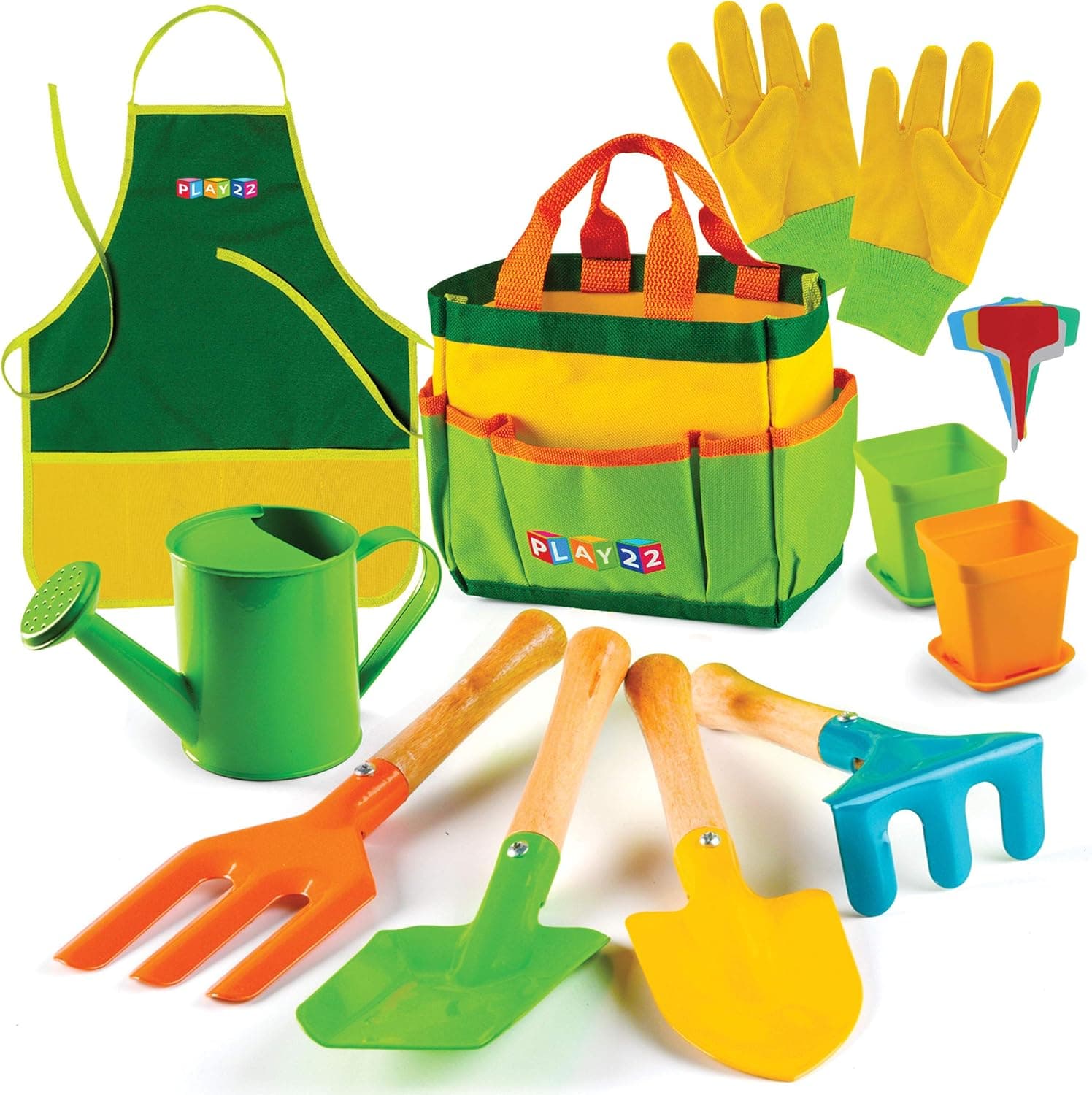
The most complete starter kit available. Twelve pieces including a trowel, rake, fork, watering can, apron, gloves, canvas tote, and seedling pots means everything is in one bag and ready to go. Solid metal tool heads hold up in real soil, wooden handles are smooth and sturdy. Best for young kids who need everything provided to feel set up for the garden.
Duckura Kids Gardening Tools Set (7 Pieces)
The Duckura set is for when you just want the tools. No apron, no watering can, no extras. Seven metal garden tools in child sizes, with bright-colored painted handles.
This is the set I would reach for if my boys were a little older and had been gardening long enough to know what they actually need. It includes a shovel, a hand rake, a hoe, and a leaf rake, along with a few other tools, all with metal heads and painted wooden handles. The construction is clean. Nothing loose, nothing flimsy.
The Duckura 7-piece set comes in bright primary colors that make the tools easy to identify in the garden and easy to find if they get set down in a bed. The handles are smooth and comfortable for small hands, and the tool heads are appropriately sized for kids in the three-to-eight range.
What makes this set stand out is how functional the tools actually feel. The hoe is a detail I appreciate. Most basic kids sets skip it, but a hoe is genuinely useful for breaking up soil between rows and loosening compacted spots, and kids can learn to use it effectively. The leaf rake is also something the full kids set market tends to skip.
Honest limitation: there are no accessories at all. No gloves, no storage bag, no watering can. If you want those things, you are buying them separately. For parents who already have kids garden gear and just need the tools themselves, that is fine. For a first-time starter kit, the Play22 is the better all-in-one option.
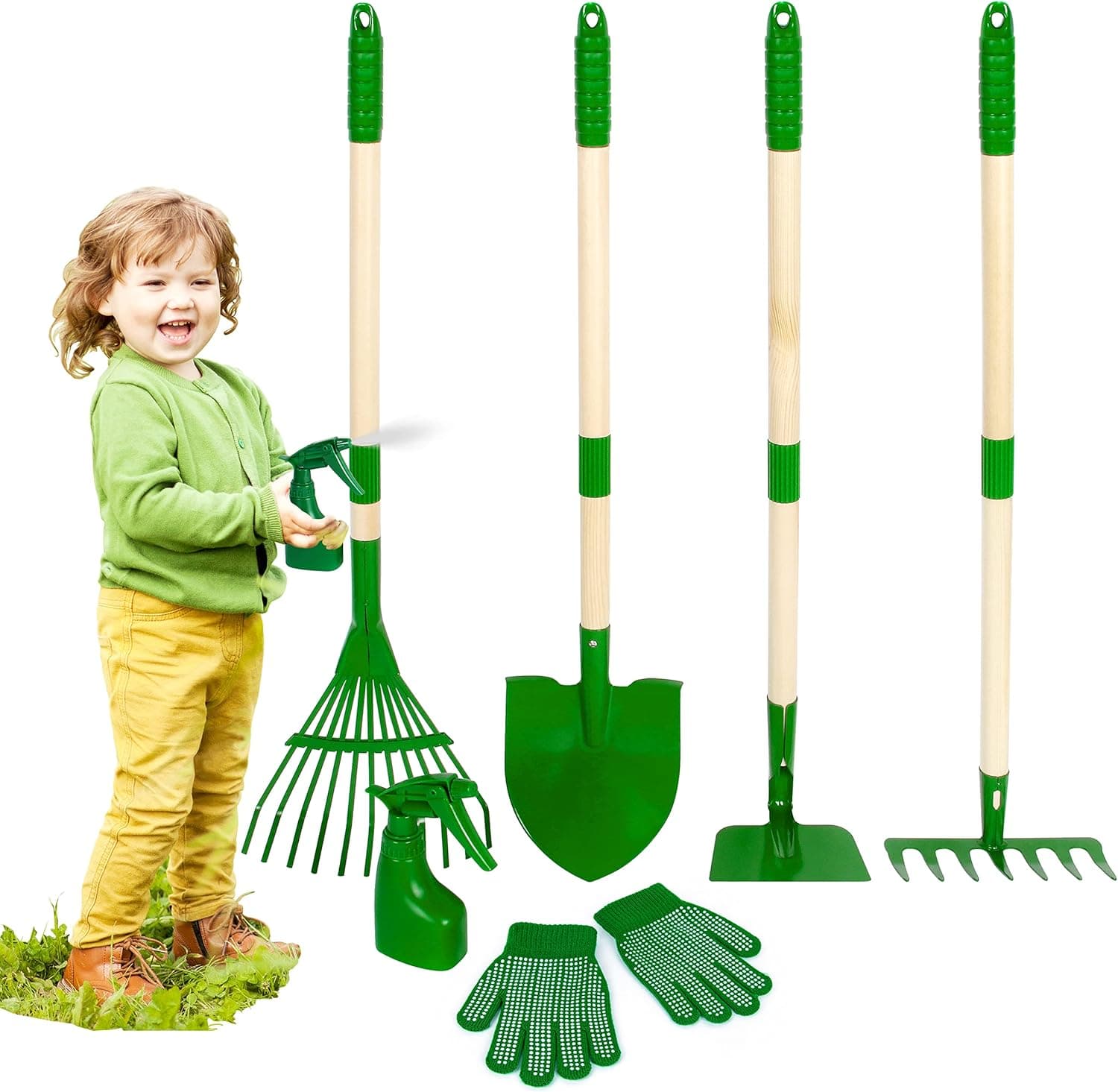
Duckura Kids Gardening Tools Set - 7pcs Garden Tool for Kids with Shovel, Rake, Hoe, Leaf Rake
A clean, no-frills tool set that actually works. Seven metal-headed garden tools in child sizes, with smooth brightly-colored wooden handles. Includes a hoe and leaf rake, which most beginner sets skip. No apron, bag, or watering can included. Best for kids who already have some garden experience and just need functional tools they can count on.
Grenebo Kids Gardening Set
The Grenebo set is the most accessory-heavy kit on this list. In addition to two shovels and a rake, it includes a garden hat, apron, gloves, a small watering can, and a tool storage bag. If the Play22 is the well-rounded starter kit, the Grenebo is the full-costume version.
The garden hat is the detail that makes this set different from the others. For outdoor gardening in summer, particularly in Virginia heat, having a hat that lives in the garden bag means kids are more likely to actually wear it. I try to build good sun habits with my boys, and a hat that is part of the kit and ready when they head outside helps more than one that has to be located separately.
The tools themselves are solid. Two shovels are included rather than one, which works well if you have two kids working together in the same raised bed, or if one shovel is for digging and one for moving soil. The apron and gloves are lightweight, similar to the Play22 extras.
The storage bag is soft-sided and not structured, so it holds the tools without organizing them. It works for keeping everything together but does not stand up on its own the way a tote does.
Honest limitation: having two shovels and no cultivator or fork means you are getting less variety in tool types. For serious planting work, a fork or cultivator would serve kids better than a second shovel. The set feels assembled with aesthetics in mind as much as function. That is fine for a gift or a first kit, but kids who garden every week will probably want to supplement with a cultivator over time.
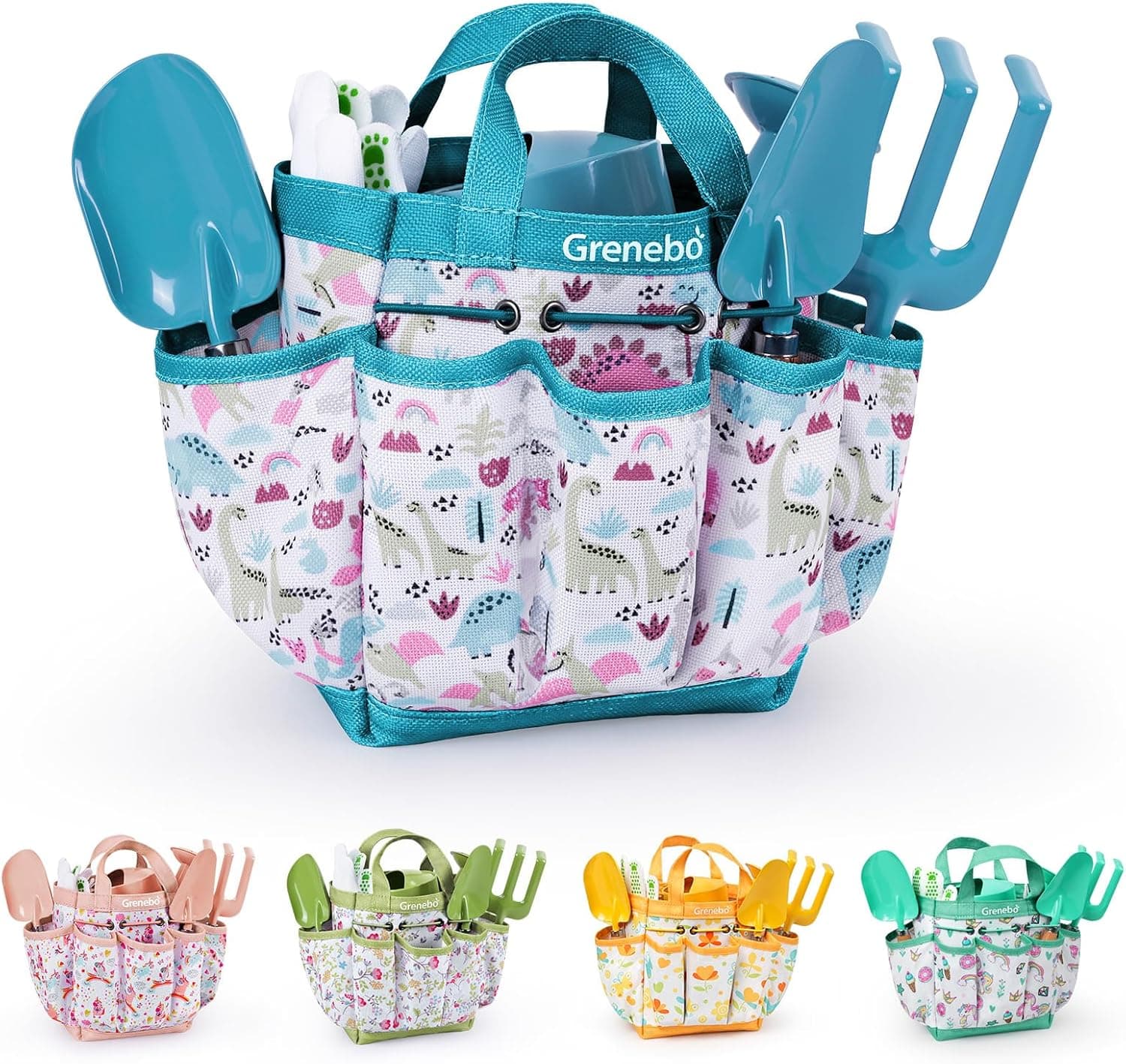
Grenebo Kids Gardening Set - Two Shovels, Garden Hat, Rake, Apron, Gloves, Watering Can and Tool Bag
The most accessory-complete kit, including a garden hat in addition to the usual apron, gloves, and watering can. Two child-sized shovels and a rake for the tools. Good for a gift or an all-in-one first kit, especially in a sunny climate where the hat is actually useful. Trade-off is less tool variety since two shovels replaces a cultivator or fork.
Getting Kids Excited About the Garden
The set matters less than the experience around it. A few things that have made gardening actually stick with my boys.
Give them a patch that is theirs. Even a small raised bed or a section of ground designated as their area makes a real difference. When there is a personal stake, kids tend to it. I let each of the older boys pick two or three things they wanted to grow, and those beds get the most attention without me having to say a word.
Start with fast growers. Radishes come up in about a week. Sunflowers are hard to kill and satisfying to a kid who planted a seed and watched it grow taller than he is. Slow starters like carrots and peppers try kids patience in a way that fast growers do not. Cherry tomatoes are also excellent because you can eat the reward directly off the vine, and that immediate payoff does something to a kid's willingness to keep watering.
Let them make mistakes. Overwatering, underwatering, planting too close together. I have watched my boys work through all of it and come out understanding things I could not have explained in a lesson. The failures are the learning and they stick.
Work alongside them. Not supervising, actually working next to them. Gardening with my boys on a Saturday morning while we talk about whatever they want to talk about is one of my favorite things about summer. Having their own tools means they are genuinely working, not just watching me.