Best Rain Barrels for Garden Watering: 4 Top Picks
Four rain barrels worth buying for garden watering, compared honestly by capacity, spigot quality, and price, from a budget collapsible tank to a decorative urn
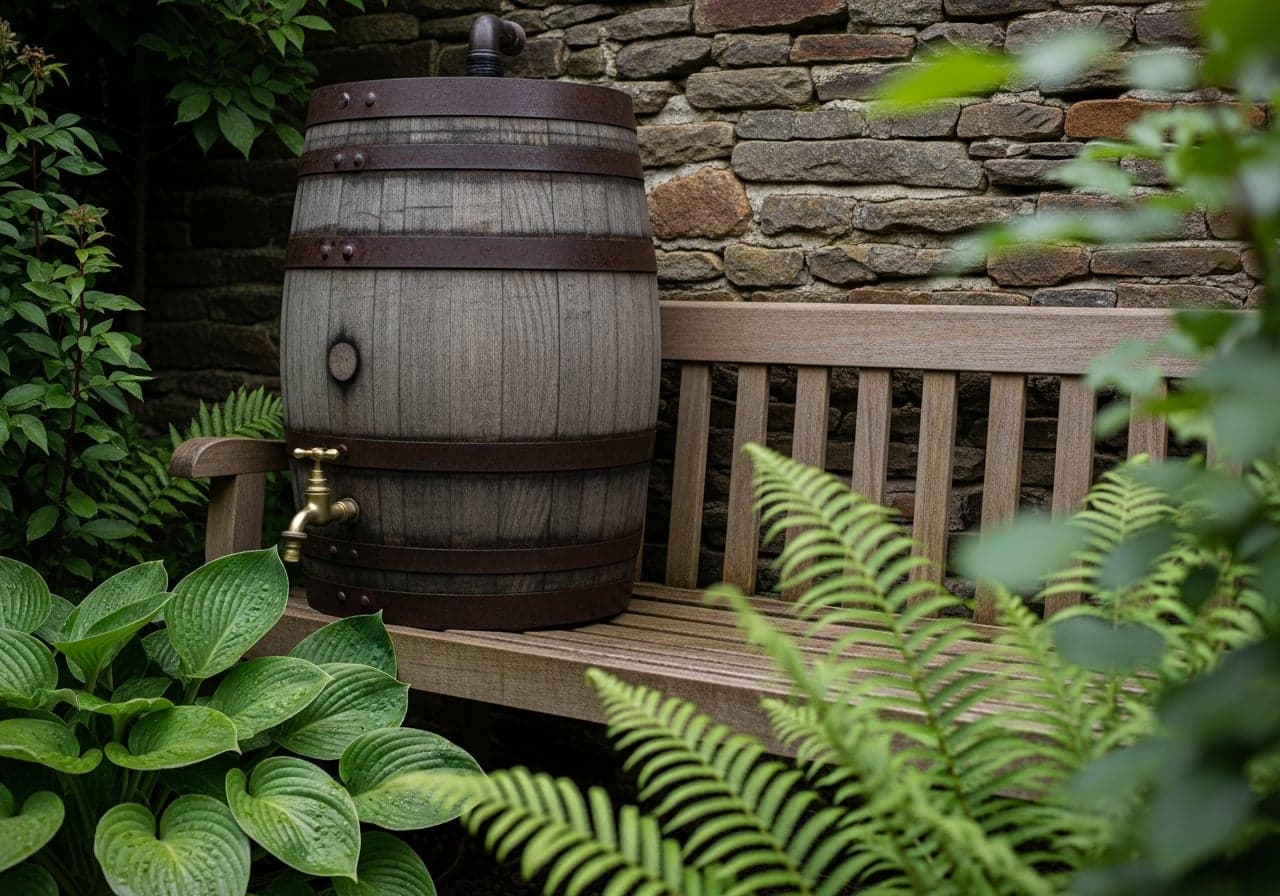
Our water bill jumps every summer the same way, right around the time the vegetable garden needs watering daily instead of every few days. Virginia summers are humid but they are not reliably rainy, and there is nothing like standing at the hose for twenty minutes while four boys ask when they can use the sprinkler to make you start doing math about how much that water actually costs.
A rain barrel fixed more of that than I expected. Ours sits under a downspout off the back corner of the house, and on a normal rainy week it fills faster than we can use it on the raised beds and the herb bed by the kitchen door. It is not a total replacement for the hose in a dry stretch, but on a wet week it can cover most of our watering without the spigot running once, and that adds up over a whole season.
Not every rain barrel is worth the money, though. I went through a cheap one the first year that cracked at the seam by its second winter, and I have watched a neighbor's collapsible model outlast mine because she stores hers flat over the winter instead of leaving it full outside. Capacity, spigot quality, and how the barrel actually connects to your downspout matter more than the marketing photos suggest. These are the four I would point a beginner toward.
What to Look For Before You Buy
Spigot material. A brass spigot lasts years longer than a plastic one and rarely leaks or cracks in freezing weather. Plastic spigots are fine for a season or two but tend to be the first thing to fail, usually right when you need water most.
Capacity versus your actual footprint. A 50-gallon barrel fills fast in a real storm and is plenty for a single raised bed or herb garden. If you are watering a bigger vegetable plot, look at models with a linking kit so you can connect a second barrel later instead of buying an oversized single tank up front.
Overflow management. Any barrel worth buying should direct excess water away from your foundation once it is full, either through a built-in overflow port or a diverter kit. Skipping this is how a full barrel during a heavy storm turns into standing water against your house.
Debris screening. A mesh screen over the inlet keeps leaves, mosquitoes, and roof grit out of the water before it ever gets close to your plants. It is a small feature that saves you from scooping sludge out of the bottom every spring.
At a Glance
| Pick | Best For | Capacity | Spigot | Approx. Price |
|---|---|---|---|---|
| RTS Home Accents Walnut | Best overall value | 50 gal | Brass | Mid |
| FCMP Raincatcher 4000 | Best for expanding later | 50 gal | Plastic, linkable | Mid |
| Good Ideas Rain Wizard Urn | Best decorative pick | 50 gal | Brass | High |
| VINGLI Collapsible | Best budget, portable | 66 gal | Plastic, zip-close | Low |
RTS Home Accents 50-Gallon Rain Barrel with Brass Spigot
This is the one I would tell a beginner to start with. The flat back sits flush against the house under a downspout, which keeps it from tipping outward the way a round barrel can once it is full and heavy. The brass spigot is the detail that actually matters here. After watching a plastic spigot on my first barrel crack in a hard freeze, I will not buy a rain barrel without one anymore.
It is made from recycled polyethylene, which means it will not crack under UV exposure the way a cheaper plastic can after a couple of summers baking in full sun. The overflow port on top connects to a standard garden hose, so you can direct excess water away from the foundation during a heavy storm instead of letting it pool.
Setup took me about fifteen minutes once the downspout was cut to the right height, and filling a watering can from the spigot is fast enough that I do not think twice about using it instead of the hose for the raised beds.
Honest limitation: at 50 gallons, it fills up fast in a real downpour and empties just as fast once you start watering daily in a dry stretch. If you have a bigger garden, plan on the linking kit sooner rather than later.
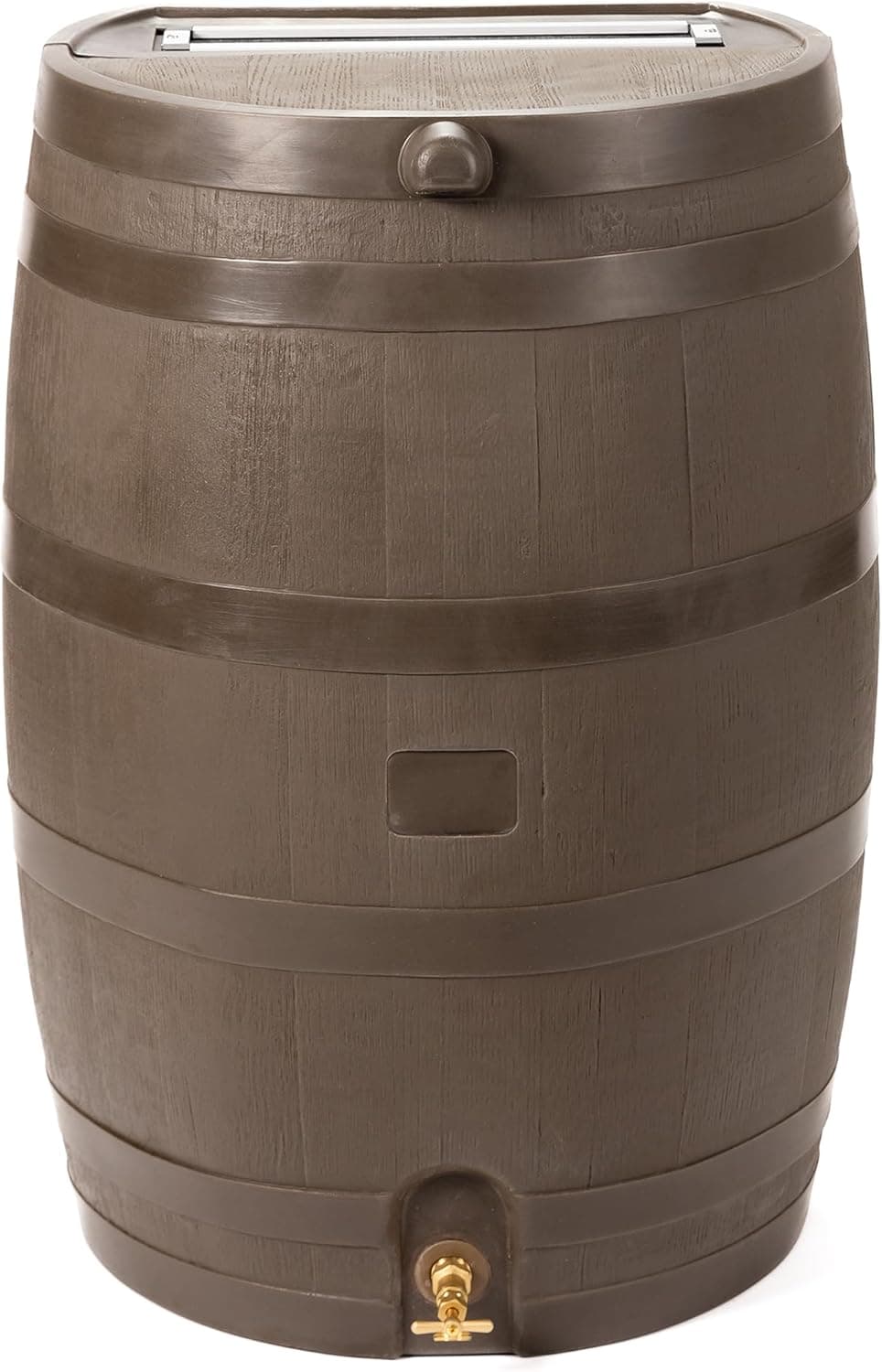
A flat-back 50-gallon rain barrel made from recycled polyethylene with a brass spigot that holds up through freezing winters. Sits flush against the house under a downspout. The pick I would tell a beginner to start with.
FCMP Outdoor Raincatcher 4000
This is the one to buy if you already know you will want more than one barrel eventually. The side spigots are built specifically for linking multiple Raincatcher barrels together with a hose, so you can start with one this year and add a second next spring without replacing anything or buying a separate adapter kit.
The aluminum mesh debris screen across the wide top opening is genuinely effective. I have not had to scoop leaf sludge out of the bottom of this one the way I did with an old open-top barrel years ago. The spoke-and-wheel grate pattern on top also keeps curious hands and paws out, which matters with four boys who treat every outdoor container as a potential science experiment.
The included overflow hose directs excess water well away from the house during a heavy rain, which is worth setting up correctly the first time rather than leaving it to drain straight down the side of the barrel.
Honest limitation: the spigots on this one are plastic rather than brass, so they are the part most likely to need replacing down the road, especially somewhere with harsh winters. It has held up fine for us so far, but I would keep an eye on it after a few years.
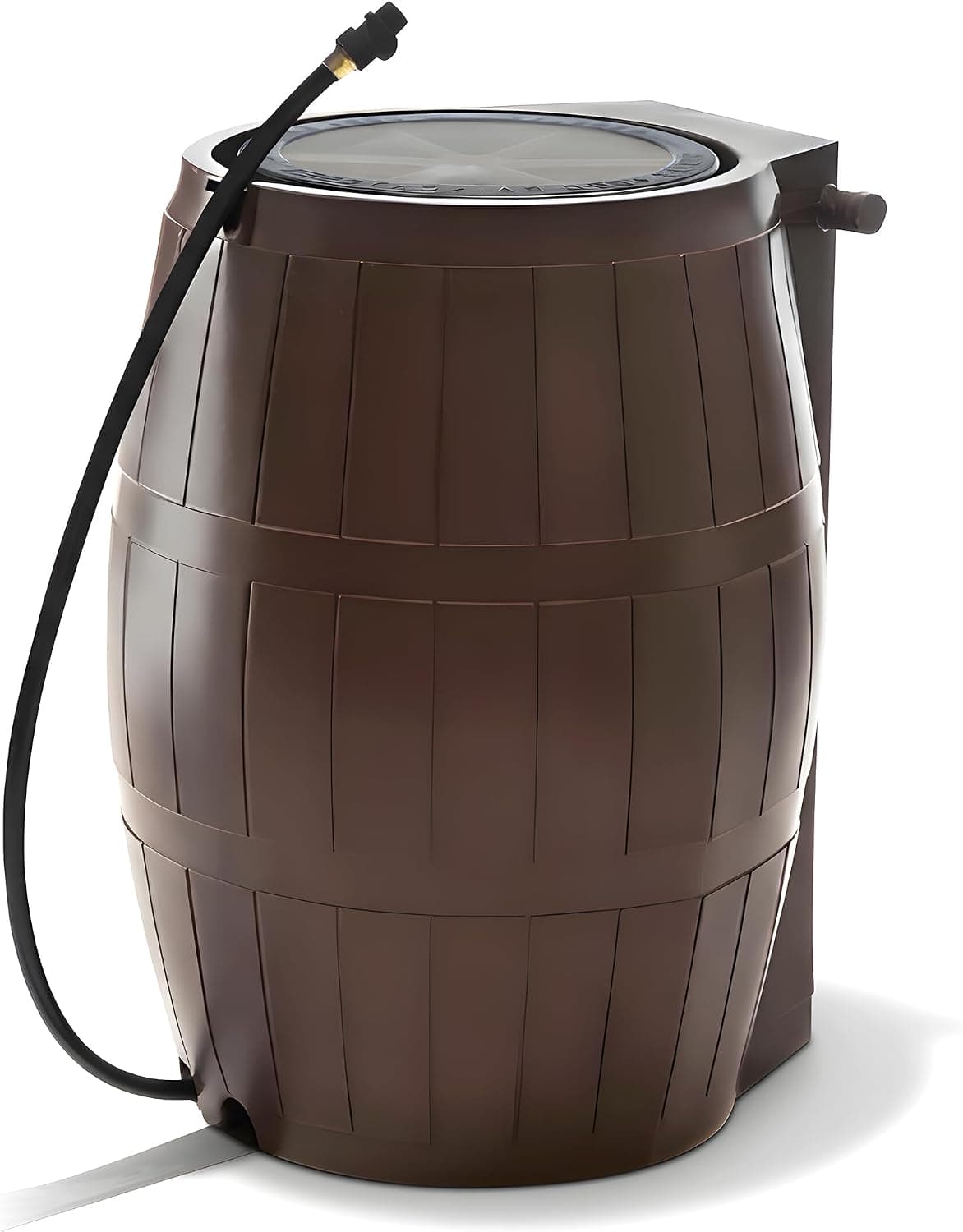
A flat-back 50-gallon barrel built to link with additional Raincatcher barrels using side spigots. Aluminum mesh screen keeps debris out of the water. The pick for anyone planning to expand their rainwater collection over time.
Good Ideas Rain Wizard Urn Shaped Rain Barrel
My aunt has one of these on her patio in California, and I genuinely did not clock it as a rain barrel the first time I saw it. It is shaped like a classic garden urn, with a self-draining planter top that holds a small trailing plant, so it reads as a decorative piece rather than a utility barrel sitting against the wall.
Underneath the styling, it is still a full 50-gallon rain barrel with two brass spigots, one at the front for filling a watering can and a second on the side for topping off taller buckets. The fine mesh screen under the planter top keeps mosquitoes and debris out the same way the more utilitarian options do.
If you live somewhere with an HOA or a visible side yard where a plain plastic barrel would stand out, this is the one that solves that problem without asking you to give up the function.
Honest limitation: it costs meaningfully more than a plain barrel of the same capacity, and the planter top means slightly less usable water storage than a fully open-top design of the same size. You are paying for the look, and if that is not a priority for you, one of the plainer options here does the job for less.
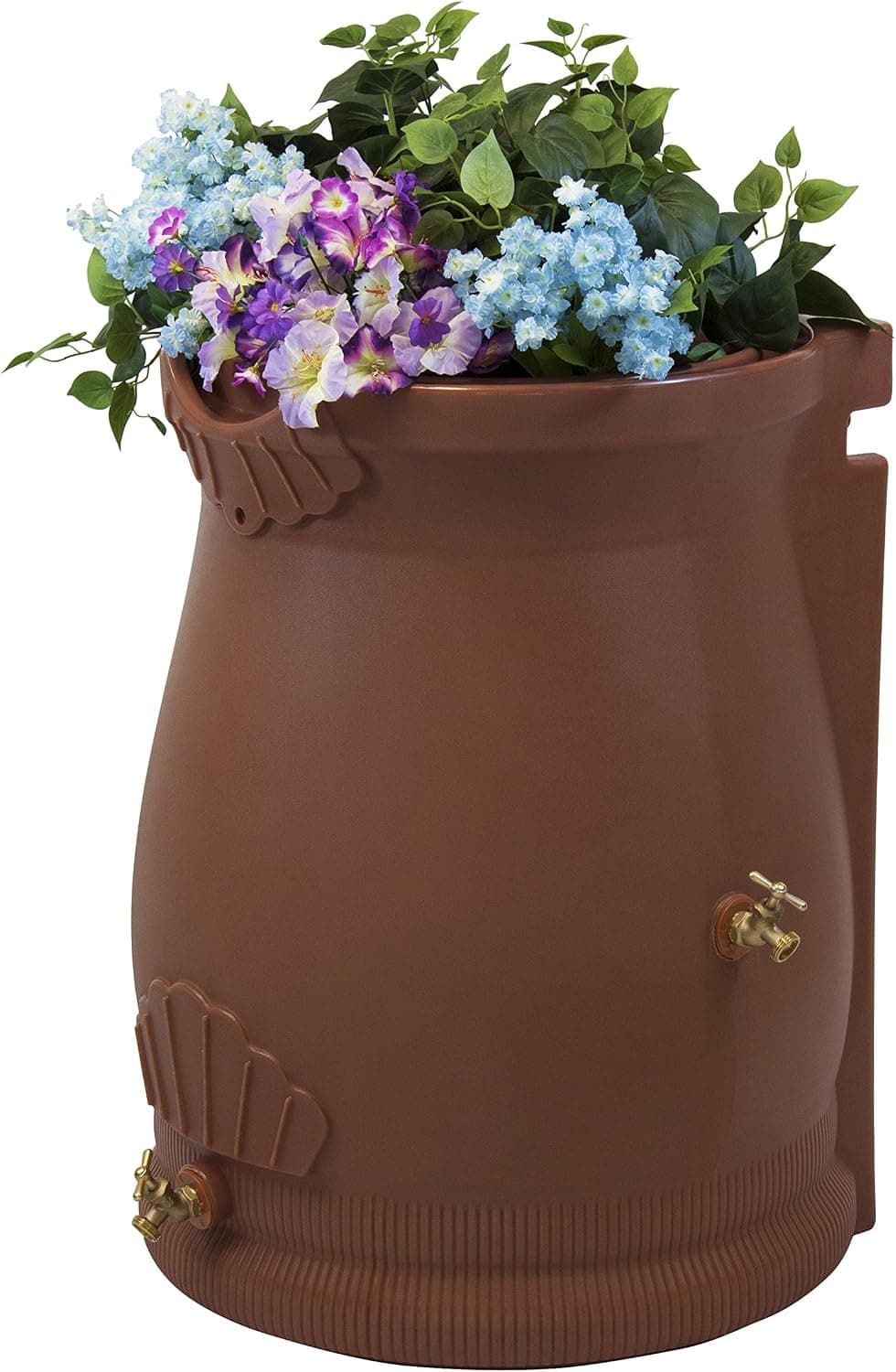
A 50-gallon rain barrel shaped like a decorative garden urn, with a self-draining planter top and two brass spigots. Reads as a patio accent rather than a utility barrel. The pick for a visible side yard or an HOA that would flag a plain plastic tank.
VINGLI Collapsible Rain Barrel
This is the one I would tell someone to buy if they want to try rainwater collection before committing to a rigid barrel taking up permanent yard space. It is built from a PVC frame with anti-corrosion mesh fabric rather than solid plastic, so when the season ends you can drain it, fold it down, and store it flat in the garage instead of it sitting empty and in the way all winter.
Setup is genuinely fast, closer to ten minutes than the half hour a rigid barrel can take once you factor in leveling the ground underneath. The included filter spigot and overflow kit covers the same basics as the rigid options, and at 66 gallons it actually holds more water than any of the other three here.
A neighbor who tried this one before I did uses it mainly for a container garden on her patio, and says the fold-flat storage is the entire reason she picked it over a hard-sided barrel that would have needed a permanent spot.
Honest limitation: fabric and PVC frame construction will not last as long as a rigid polyethylene barrel, realistically more like 3 to 5 years of regular use versus a decade or more for the rigid options. For the price and the flexibility of not committing yard space year-round, that trade felt reasonable to me.
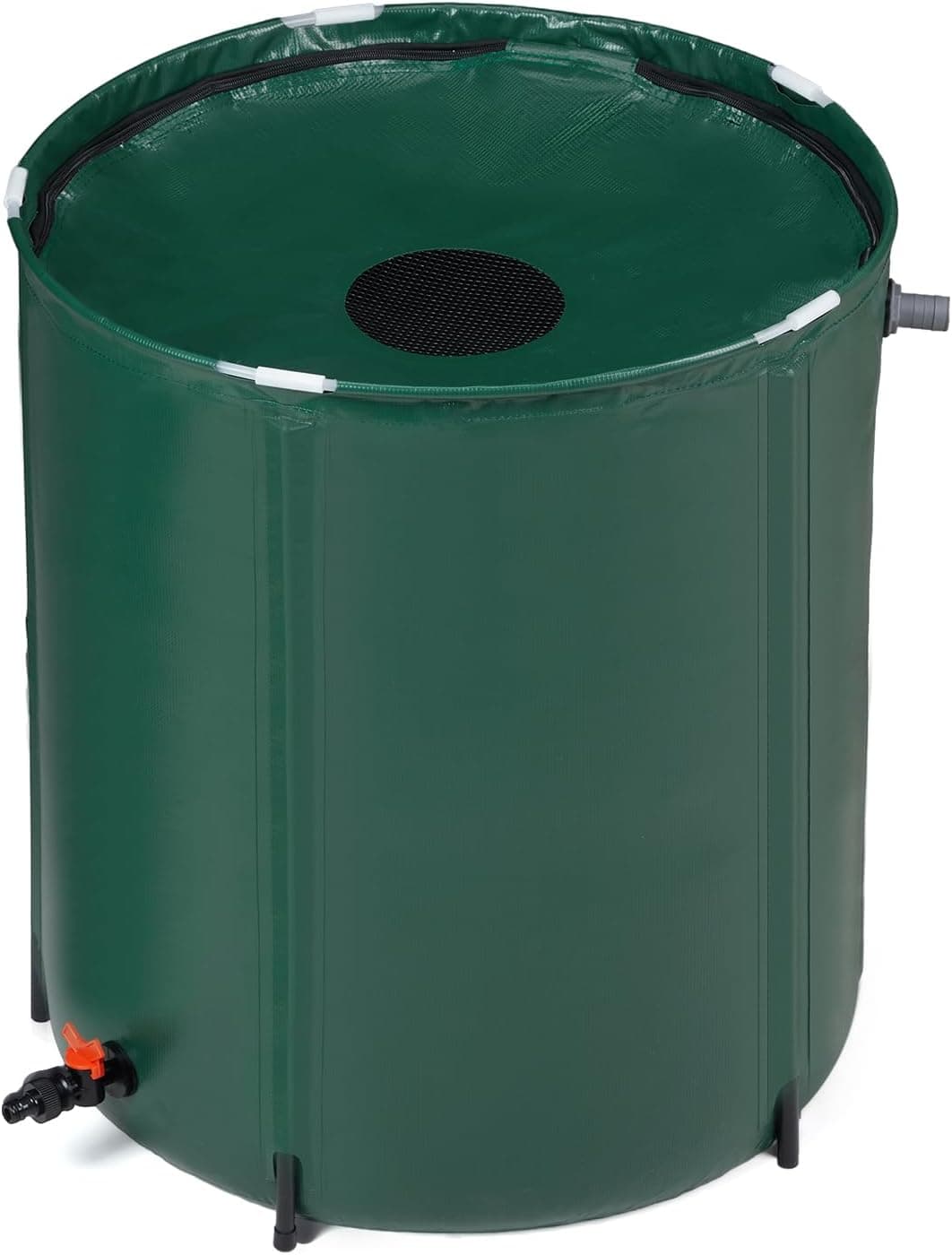
A fold-flat collapsible rain barrel with a PVC frame and anti-corrosion mesh fabric, holding 66 gallons. Sets up in about ten minutes and stores flat over the winter. The pick for testing rainwater collection before committing yard space to a rigid barrel.
Getting the Most Out of Your Rain Barrel
Set it up before the rainy season starts, not after. It sounds obvious, but I put ours off for almost a month my first year and missed several good storms I could have been collecting from the whole time.
Elevate the barrel a few inches on blocks or a stand if you want gravity-fed pressure through a hose attachment instead of just filling a watering can. Even six inches of height makes a real difference in how far the water reaches.
Check and clean the debris screen every few weeks during a season with a lot of tree cover overhead. A clogged screen slows how fast the barrel fills and is the most common reason people think their barrel is not working.
Drain barrels fully before the first hard freeze if you are anywhere that gets real winter weather. Water expands as it freezes, and a barrel left full over a Stafford winter is how you end up with a cracked seam by spring.
Frequently Asked Questions
You'll Also Love
- Best Raised Garden Beds for Beginner Vegetable Gardens: the beds our rain barrel actually waters, compared honestly by material and depth.
- Growing Herbs at Home: A Complete Beginner's Guide: a good pairing if you are starting a smaller herb bed near your rain barrel setup.
- Composting for Beginners: Kitchen Scraps to Garden Gold: another low-cost way to cut down on what your garden actually needs from the store.