Best Fermentation Supplies for Beginners at Home
Starting to ferment at home? These are the fermentation supplies that actually worked for me as a beginner, from airlock lids to a stoneware crock.

The first time I tried to ferment vegetables, I used a mason jar with a cloth napkin rubber-banded over the top. I figured a loosely woven cloth would let gas escape while keeping air out. Three days later I confidently tasted my first batch of sauerkraut. It was mushy, mildly sour in a strange way, and had a faint off-flavor that made me genuinely uncertain whether I had fermented it or just let it rot.
I did not give up. I researched more carefully, bought proper equipment, and tried again. The second batch was genuinely good. The difference was not my technique, which was essentially the same. The difference was having the right tools, designed to create the anaerobic environment that fermentation actually requires.
If you are new to fermenting at home, or if you have tried and gotten inconsistent results, this post is about the supplies that made the biggest difference for me. I have kept it focused on what you actually need to get started rather than every fermentation gadget that exists.
Why Fermentation Is Worth Starting
Before I get into products, I want to say something about why I bother. Fermentation is not the fastest or most convenient way to preserve food. You can buy sauerkraut at the grocery store. You can buy kimchi. You can buy pickles. So why make your own?
For me, it comes down to three things. First, the flavor is genuinely different. Store-bought sauerkraut is almost always heat-pasteurized, which kills the live bacteria and creates a uniform sour flavor. Homemade lacto-fermented sauerkraut has layers of flavor, a pleasant tang that builds over weeks, and it tastes like actual fermented cabbage rather than vinegar-soaked cabbage.
Second, the cost over time is very low. A head of cabbage and some salt can produce enough sauerkraut to last a month. Once you have the equipment, the only ongoing cost is produce and salt.
One honest caveat: fermentation has a learning curve. Your first batch may not be great. The variables (salt ratio, temperature, how tightly you pack the vegetables, whether you keep them submerged) all affect the outcome. The right equipment eliminates most of the ways things can go wrong, but the skill still builds over time.
Masontops Complete Mason Jar Fermentation Kit
The Masontops Complete Fermentation Kit is where I wish I had started. It includes four Pickle Pipe airlock lids for wide-mouth mason jars, four Pickle Pebble glass weights, and a wooden Pickle Packer tamper, along with a recipe booklet. Everything you need to get going except the jars and the vegetables comes in one box.
The airlock lids are the most important piece. They are made from food-grade silicone and work by releasing carbon dioxide as the ferment produces it, while preventing oxygen from getting back in. You do not have to burp the lids or check the water level of a traditional airlock. You just put the lid on, press the vegetables down with the weight, and leave it alone. The simplicity of that process is genuinely what helped me go from inconsistent results to consistent ones.
The glass Pickle Pebble weights fit inside wide-mouth quart jars and keep vegetables submerged below the brine. This matters because anything above the brine is exposed to oxygen and can develop mold or kahm yeast. Keeping everything submerged is the single most important factor in safe, successful fermentation, and having a weight designed for the jar makes that easy.
The tamper is a small wooden tool shaped to fit the opening of a wide-mouth jar. You use it to pack shredded cabbage tightly enough that the liquid it releases (through osmosis from the salt) is enough to cover the vegetables. I underestimated how useful this was until I tried to pack a jar without it and ended up with bruised fingers and unevenly packed cabbage.
The kit fits wide-mouth mason jars specifically. It will not work with regular-mouth jars. If you only have regular-mouth jars, you will need to either buy wide-mouth jars or get a different lid system.
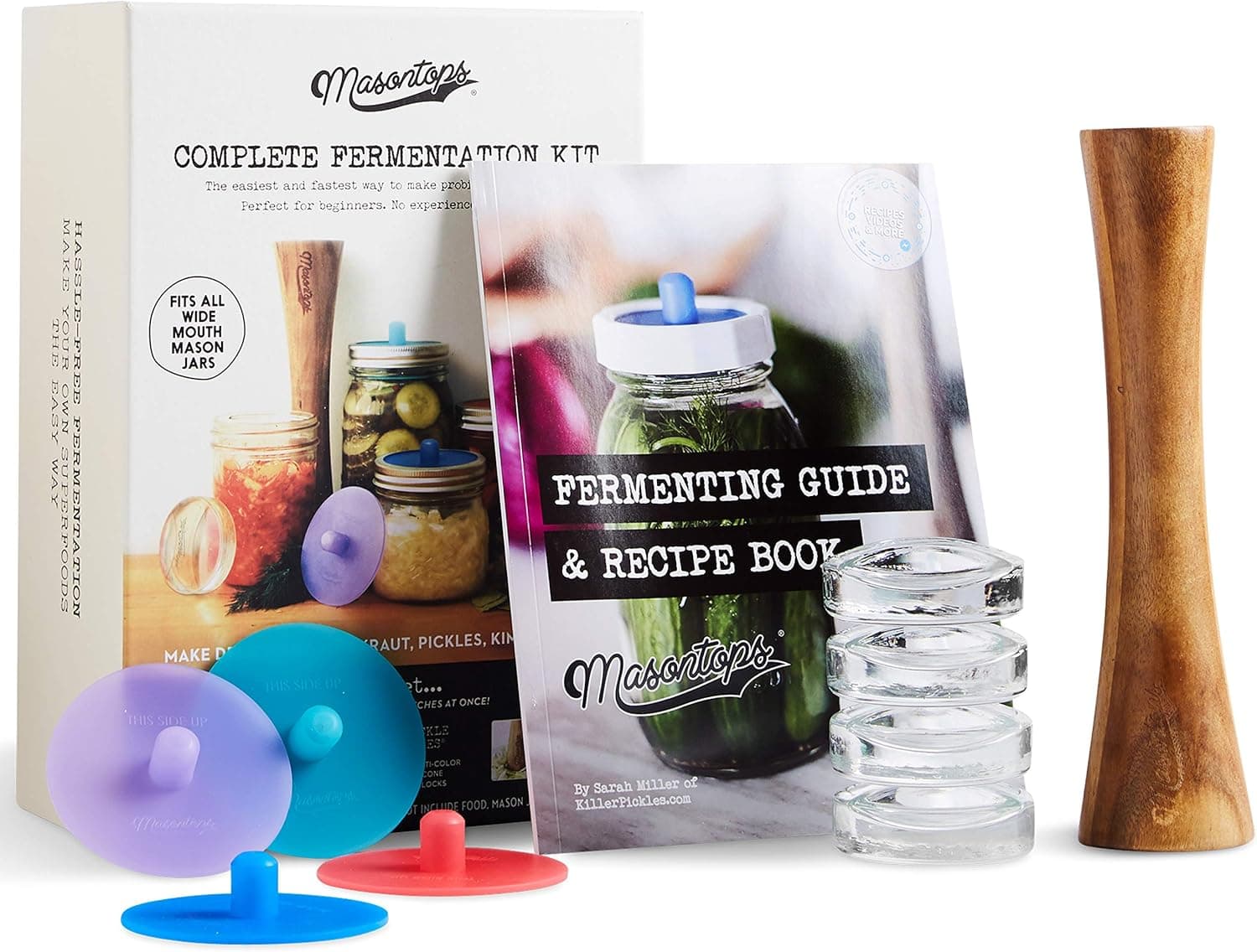
Masontops Complete Mason Jar Fermentation Kit
The complete beginner kit for mason jar fermentation. Includes four Pickle Pipe silicone airlock lids, four Pickle Pebble glass weights, a wooden tamper, and a recipe booklet. Everything except the jars and produce. The airlock lids are the most beginner-friendly design I have used, with no water to maintain and no daily burping needed. Fits wide-mouth mason jars only.
Nourished Essentials Easy Fermenter Kit
If you already have some wide-mouth mason jars and just need a reliable airlock lid system, the Nourished Essentials Easy Fermenter Kit is a strong alternative. It includes three fermenting lids, three glass weights, and an oxygen extractor pump that pulls air from the lid before you seal the jar.
The date dial built into each lid is the detail I appreciate most. You set the day and month you started the ferment right on the lid so you always know how long a jar has been going without relying on a label or trying to remember. I have six jars fermenting at different stages at any given time, and that dial has saved me from more than a few confused moments of wondering which jar was the one I started last week.
The pump is useful but optional. You use it to extract oxygen from the headspace of the jar before fermentation is fully active, which gives the beneficial bacteria a head start over any competing aerobic organisms. Whether this makes a measurable difference in outcome is something fermenters debate, but it does give me confidence that the environment is right from day one.
These lids are made from BPA-free plastic rather than silicone, which is a difference worth noting. They are still food-safe and durable, but they feel slightly different in the hand. I have been using a set for over a year with no issues.
The honest limitation here is that this kit does not include a tamper, so you will need to find another way to pack vegetables tightly. A wooden spoon handle works in a pinch, but if you are making a lot of sauerkraut, it gets tedious.
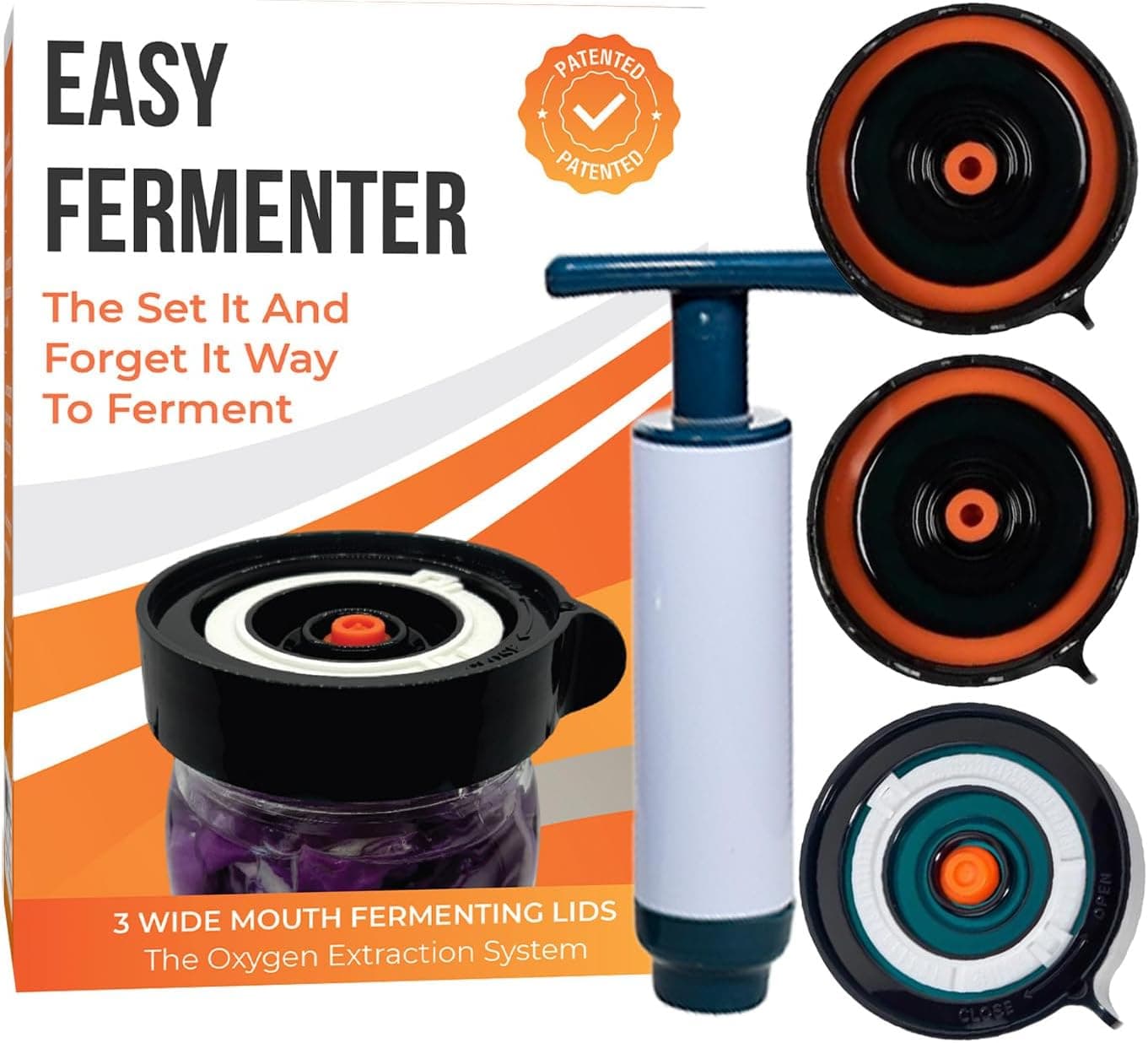
Nourished Essentials Easy Fermenter Kit - 3 Lids, Weights & Pump
A solid alternative to the Masontops kit, particularly if you already have wide-mouth mason jars. Includes three airlock fermentation lids with built-in date dials, three glass weights, and an oxygen extractor pump. The date tracking feature is genuinely useful when you have multiple ferments going at once. BPA-free plastic construction, no silicone. No tamper included.
Kenley Fermentation Crock
The Masontops and Easy Fermenter kits are great for small mason jar batches. But once you get comfortable with fermentation and start wanting to make larger quantities, a traditional stoneware crock changes everything.
The Kenley Fermentation Crock holds half a gallon (two liters) and comes with a lid, two semicircular weights, and a wooden pounder. It is made from food-safe glazed stoneware with no harmful coatings or chemicals. The design is a traditional German-style water-seal crock, meaning the rim of the crock has a channel that you fill with water. The lid sits inside this channel, creating an airlock that prevents oxygen from entering while letting carbon dioxide escape bubbling through the water.
This design has been used for centuries and works reliably without any special equipment or plastic components. I find it easier to use than mason jar airlock lids for large batches because the crock is purpose-built for this. You pack the vegetables, add the weights to keep everything submerged, fill the water channel, and put the lid on. That is the whole process.
The half-gallon size is ideal for a household of two to four people making one ferment at a time. It produces enough sauerkraut to last a few weeks when eaten as a regular condiment. If your family goes through fermented foods faster than that, the one-gallon Kenley crock would be the better choice.
The limitation of the crock is that you cannot see what is happening inside. With a mason jar, you can watch the brine level, check whether vegetables are submerged, and look for any visual signs of problems without opening anything. With a crock, you have to open it periodically to check. You also cannot see when fermentation is active through the bubbling the way you can with some airlock systems.
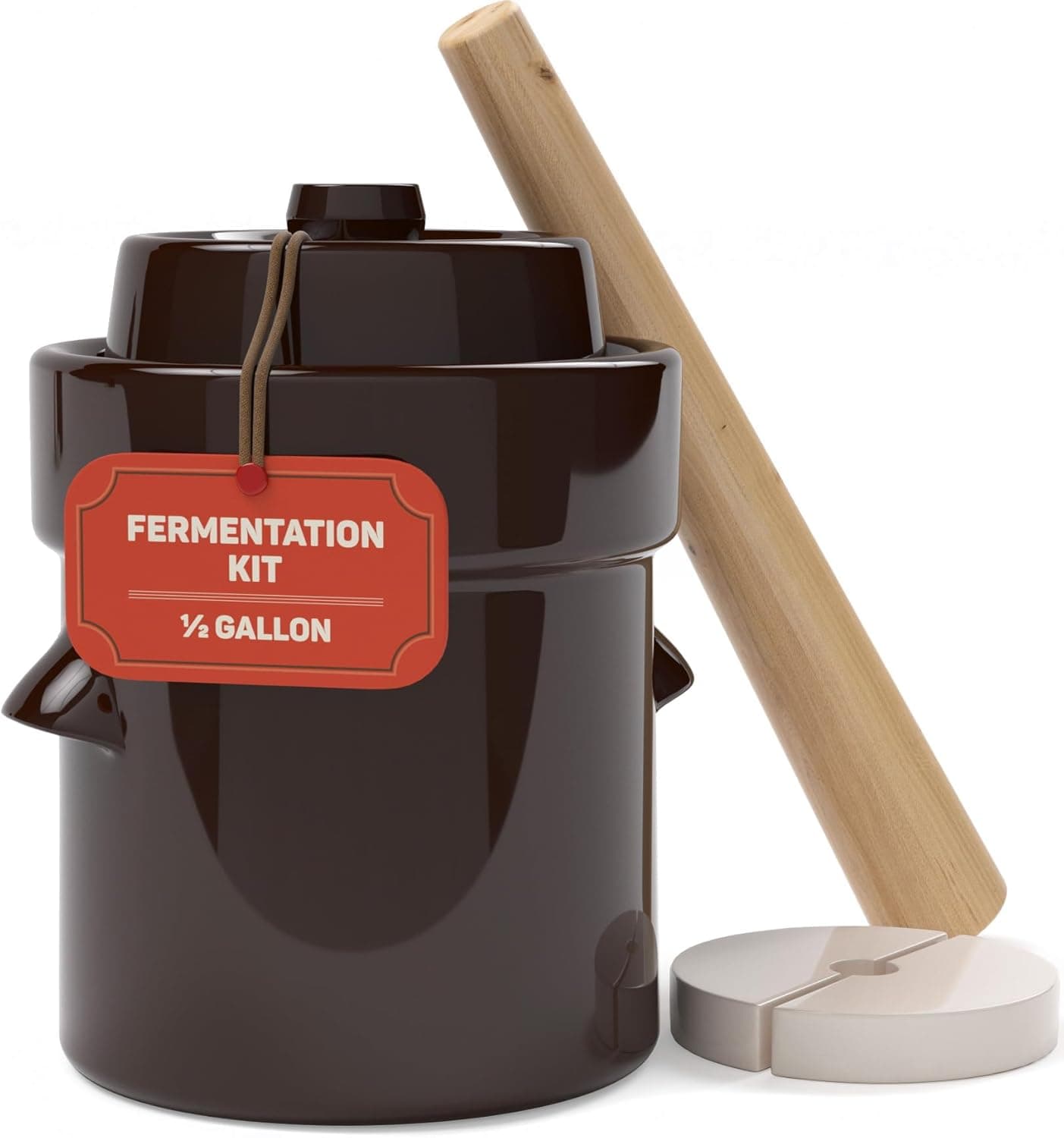
Kenley Fermentation Crock 1/2 Gallon with Lid, Weights & Pounder
A traditional German-style water-seal stoneware crock for larger fermentation batches. Holds half a gallon, includes two semicircular weights and a wooden pounder. The water-seal design creates a natural airlock without any plastic or silicone components. Excellent for regular sauerkraut, kimchi, and any ferment where you want a bigger yield. Better temperature stability than glass jars for kitchens with temperature variation.
What to Start Fermenting First
The easiest place to start is sauerkraut. You need only two ingredients (cabbage and salt), and it is difficult to get wrong with proper equipment. Slice a small head of green or purple cabbage thinly, weigh it, and add 2 percent of that weight in non-iodized salt. Massage the salt into the shreds for five to ten minutes until liquid releases. Pack it tightly into your jar, press the weight down, put on your airlock lid, and leave it at room temperature for seven to fourteen days.
Taste it at seven days. If it is pleasantly sour and has a good crunch, it is done. If you want a sharper flavor, let it go longer. Fermentation is forgiving in that way. Longer equals more sour.
Fermented garlic is another beginner-friendly option. Peel cloves, pack them into a jar, cover with a two percent salt brine (20 grams of salt per liter of water), and weigh them down. In two to four weeks you will have fermented garlic that is milder, slightly nutty, and excellent in sauces. The Nourished Essentials Easy Fermenter works especially well for garlic and carrots because they stay submerged without floating.
What Did Not Work for Me
I went through a phase of trying to ferment everything at once. I had six different jars going, plus the crock, and I was not paying enough attention to any of them. I got kahm yeast on two jars because I had not checked in a few days and the vegetables had risen above the brine level. Kahm yeast is not dangerous, but it has an unpleasant flavor and texture if it gets mixed into the ferment. I threw those jars out.
The lesson was that more ferments means more maintenance attention, not less. Each jar or crock needs periodic checking in the first week to confirm the vegetables are submerged and brine levels are correct.
I also tried fermenting tomatoes once, which looked great in theory. Fermented tomatoes collapse in texture and develop an intensely funky flavor that did not appeal to me at all. Not all vegetables ferment into something you will love.
Beets are another one I struggled with. The fermentation is so active in the first few days that I had brine seeping out from under a lid and staining my counter. I now ferment beets exclusively in the crock so the water-seal channel catches any overflow.
Keeping Things Simple
Fermentation rewards simplicity. Two or three ingredients, proper equipment, and patience produce better results than complicated recipes. The Masontops kit and a few wide-mouth mason jars are genuinely enough to make excellent fermented vegetables. The crock comes later, once you love the process enough to want larger batches.