How to Use Retinol with Rosacea-Prone Skin (Without Flaring)
How to use retinol with rosacea-prone skin without flaring, in plain language: the buffer method, twice a week, and the gentle formulas worth a try.

If you've ever opened a retinol bottle, used it the way the internet told you to, and watched your rosacea light up like a stoplight the next morning, this post is for you. You can have rosacea-prone skin and you can still get retinol's long-term benefits. You just can't do it the way most beauty blogs explain it. There's a slower, calmer way that works on reactive skin, and it's been part of my routine for a while without setting my face on fire.
This is a follow-up to my gentle rosacea routine, where I walked through the cleanse, the SPF, the Dr. Idriss trio, and the framing that changed how I think about my skin: even tone over perfect skin. If you haven't read it, the short version is that I'm 36, my skin runs sensitive and redness-prone, my main triggers are sun and harsh products, and my goal is calm and even rather than clear. Retinol is a piece of that, but a small, careful, twice-a-week piece.
Upfront the same way I always do: I'm not a dermatologist, this is what works for me, and if your skin is severely reactive or you've been through a recent flare, please loop your derm in before adding an active. With rosacea, slow is the whole game.
Why Retinol Usually Goes Wrong on Sensitive Skin
Most retinol horror stories on rosacea-prone skin come from the same place: too much, too fast, on a barrier that's already inflamed.
Retinol speeds up cell turnover. That's the whole point. The trade-off on reactive skin is that fast turnover can outrun your barrier. When the barrier gets thin, water leaves faster than it should, irritants get in easier, and the inflammation cascade that makes rosacea look angry has a wide-open door. That's where redness, stinging, peeling, and the classic "retinol-burn" look come from. Not the retinol exactly. The retinol on top of a barrier that wasn't ready.
For rosacea-prone skin there's an extra layer. The skin's acid mantle is already tetchier than average. Anything that strips it (foaming cleansers, alcohol-based toners, strong actives on bare skin) gives rosacea more permission to flare. Add a potent retinol straight to clean dry skin every night, and you're stacking small irritations on top of each other. Sensitive skin doesn't add those up linearly. It compounds them.
The fix isn't to avoid retinol. It's to put a buffer between your skin and the active, dial back on frequency, and pick a formula that respects how reactive your skin is.

The Buffer Method: Moisturizer First, Retinol on Top
This is the most important thing in this post, so I want to say it plainly. On retinol nights, I put my moisturizer on first, let it settle, and then I apply the retinol on top of it.
Most tutorials tell you the opposite: cleanse, treat with serums and actives, then seal with moisturizer. For most people that's fine. For rosacea-prone skin, that order delivers retinol straight to a still-thirsty barrier with nothing softening the entry. The buffer method flips the last two steps. Moisturizer goes on first, creating a thin protective layer of hydration and lipids. Retinol goes on top, and instead of hitting bare skin, it has to filter through the moisturizer to reach the surface. The dose your skin actually receives is gentler and slower-released, and the chance of a flare drops accordingly.
My retinol night looks like this:
- Two-step cleanse and the damp face-only towel (the foundation from my gentle routine).
- Any soothing serum I'm using.
- Moisturizer first. Let it absorb for a couple of minutes.
- A pea-sized amount of a sensitive-skin retinol on top. Patted on, not rubbed in.
That's it. The order is the trick. Some people call this the "sandwich method" if you also moisturize again after the retinol, but I don't bother with the second moisturizer. The first one is the buffer, and that's the part that matters for rosacea.
Two Nights a Week. That's It.
The other thing that quietly broke my skin every time I tried retinol in the past was frequency. Most product instructions say three or four nights a week working up to nightly. For rosacea-prone skin, that pace is too aggressive.
I use mine two nights a week, on the same nights every week so I don't have to think about it. That's enough to get the long-term benefits, the smoother texture, the even tone, the slow improvement in how skin reflects light, without giving my barrier more than it can recover from between doses. Two has been enough for me.
If you're brand new to retinol on rosacea-prone skin, start at one night a week for the first month and only move to two if your skin has stayed completely calm. Slow is not a dramatic gesture, it's the right speed for sensitive skin. The benefits of retinol are cumulative over months and years, not weeks. There's no reason to be in a hurry, and real reasons not to be.
What to Look For in a Sensitive-Skin Retinol
Not all retinols are built the same. For rosacea-prone skin, a few things move a formula from "this will hurt" to "this might actually work."
Lower percentages, especially to start. Look for 0.1 to 0.25 percent retinol, or its gentler cousin granactive retinoid at 2 percent. Those numbers sound small. On rosacea-prone skin they are exactly right. You can always go up later. You cannot easily un-do a flare.
Encapsulated retinol. Encapsulation wraps the retinol in a tiny carrier that releases it slowly into the skin. The same percentage delivered this way is meaningfully gentler. If a product says "encapsulated," "time-release," or "slow-release," that's what they mean.
Soothing co-formulants. Niacinamide, ceramides, squalane, glycerin, panthenol, allantoin, and centella asiatica (cica) are what makes a retinol tolerable when your skin runs reactive.
No fragrance, no alcohol denat high in the list, no menthol or eucalyptus. If a "soothing" retinol is fragranced, it isn't really soothing.
A texture that spreads. The buffer method works best when the retinol is in a lotion, emulsion, serum, or squalane base that spreads easily over a hydrated surface.
Product Picks Worth a Try
A short list of reasonable starting points for rosacea-prone or sensitive skin. I'm being honest about which ones I have direct links for and which I'm flagging by reputation. As always, patch-test on your jawline for a few nights before committing to your full face.
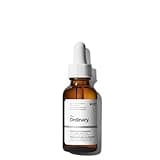
The Ordinary Retinol 0.2% in Squalane
A widely loved starter retinol. The squalane base is genuinely soothing, the percentage is low enough to be approachable, and the formulation is fragrance-free. It's also affordable, which makes the "start slow and see" approach much less intimidating. You can find it on Amazon here.
The Ordinary Retinol 0.2% in Squalane
Low-strength retinol in a squalane base, fragrance-free and minimalist. A gentle starting point for sensitive skin and a friendly intro to the buffer method. Available on Amazon for around $8–10.
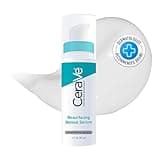
CeraVe Resurfacing Retinol Serum
This one earns its spot for a different reason. It uses encapsulated retinol formulated with ceramides, niacinamide, and licorice root extract, which is essentially a sensitive-skin support team built around the active. The ceramides reinforce the barrier, the niacinamide soothes, and the encapsulation slows the retinol's release. Originally formulated with post-acne marks in mind, but the gentleness translates well to rosacea-prone skin. Fragrance-free, non-comedogenic, and easy to find. Check the current price on Amazon.
CeraVe Resurfacing Retinol Serum
Encapsulated retinol with ceramides and niacinamide, fragrance-free. Built around a barrier-supportive base, which is exactly the kind of formula rosacea-prone skin tends to forgive.
Other names worth checking out
A couple more sensitive-skin retinols worth looking into, well-regarded by people with reactive skin. Confirm the current formulation and your retailer of choice before buying:
- First Aid Beauty FAB Skin Lab Retinol Serum (0.25 percent strength) is often recommended for sensitive skin because of its short, soothing ingredient list.
- La Roche-Posay Pure Retinol B3 Serum combines a gradual-release retinol with niacinamide (B3), specifically positioned for sensitive skin.
I keep recommendations conservative on purpose. The goal is the formulas with the highest chance of behaving well on rosacea-prone skin, not the latest trending launch.
Signs You're Going Too Fast
Even with the buffer method and twice-a-week frequency, your skin will tell you if it's taking on more than it can handle. The signs are easier to back off from before they become a full flare:
- Stinging that doesn't fade within a minute or two of application. A faint warmth is normal. Lingering stinging is a no.
- New redness, especially across the cheeks and around the nose. If your baseline redness has gotten louder and stayed that way, the retinol is winning the negotiation.
- Flaking, tightness, or that "papery" feeling. Your barrier is asking for a break.
- Bumps or roughness that aren't part of your normal pattern. Sensitive skin sometimes responds to too much active with little textured patches that look like clogged pores but are actually irritation.
- A flare that's slower to calm down than your usual flares. This is the loudest signal for me. If my skin doesn't bounce back the way it normally does, the retinol gets paused immediately.
When I see any of those, the protocol is simple. Skip the next retinol night, maybe the one after too. Lean into the supportive parts of your routine: gentle cleanse, hydrating layers, ceramide-rich moisturizer, plenty of SPF. Resume only when your skin is fully calm again, and consider dropping to once a week or extending the buffer.
Retinol should never be the loudest thing in a rosacea routine. If it is, the right move is always to do less for a while.

How This Fits Into the Wider Rosacea Routine
If you read my gentle rosacea routine, this slots in at the end of an evening on retinol nights only:
Retinol night, evening:
- Two-step cleanse: micellar water, then a gentle facial cleanser.
- Damp, face-only towel to wipe off cleanser residue. Clean slate.
- Soothing serum if you use one. For me that's the Dr. Idriss Left Un-Red Reducer Serum (10% azelaic acid complex, my OTC hero for redness).
- Moisturizer first. Let it absorb for a minute or two.
- A pea-sized amount of a sensitive-skin retinol, patted on top.
Non-retinol nights: the same, but stop at step 4.
Mornings (always): rinse with cool water, pat dry on the face-only towel, apply a tinted mineral SPF. No actives. Sun is my biggest trigger and I treat it like the first commandment of this routine. The morning after a retinol night, I'm extra strict about SPF, because freshly turned-over skin is more photo-sensitive.
If you take one thing from this post: if you're using retinol, you're using SPF every morning. They're a pair, not optional in either direction.
Frequently Asked Questions
The Short Version
Retinol does not have to be off-limits when you have rosacea. It just has to be approached the way you'd approach anything else with reactive skin: slowly, gently, and with the barrier in mind.
Use the buffer method. Moisturizer goes on first. Retinol goes on top, in a small dose, two nights a week. Pick a low-percentage, encapsulated formula with soothing co-formulants. Watch your skin and back off the moment it tells you to. Wear SPF every morning. And let the results happen on a months-and-years timeline, not a six-week one.
If you've tried retinol before and felt like it wasn't built for skin like yours, it might have been the method, not the molecule. A different order, a lower frequency, and a gentler formula can change the whole experience. Calm beats fast. Steady beats dramatic. Even, again, beats erased.
If you haven't already, the rosacea routine post sets the foundation this one builds on. Start there, get the cleanse, SPF, and soothing layers locked in, then add retinol the way I've described it here. Your skin will thank you for the patience.
This post is a personal share, not medical advice. If your rosacea is severe, painful, or changing, please patch-test on a small area first and consult your dermatologist before adding any active ingredient (including retinol). What works for my skin may not work for yours, especially if you're managing a chronic condition like rosacea.