A Gentle Rosacea Routine: Even Tone Over Perfect Skin
A gentle rosacea routine built around even tone: a calming two-step cleanse, morning Reducer Serum + CalmBack vitamin C cream + SPF, and the OTC azelaic acid serum worth trusting when the prescription path isn't the right fit.
I'm 36, my skin runs sensitive and flushes easily, and I've finally made peace with what I'm actually trying to do every morning at the bathroom mirror. I am not chasing clear skin. I am not chasing perfect skin. I am chasing an even tone, because an even tone is what reads as a clean face. That's the whole thesis of this routine, and once I gave myself permission to want that instead of the airbrushed thing the internet keeps promising, my skin and my mood both got better. My mornings now are three simple layers: the Reducer Serum, CalmBack Cream, and the tinted SPF that's been my ride-or-die for years.
If you're new here, this is going to be a practical, honest walk through what I actually do, what I tried that didn't work, and the small handful of products that earned a permanent spot on my vanity. I don't have rosacea myself, but my skin is reactive and redness-prone enough that I've landed on the same gentle, barrier-first approach dermatologists recommend for rosacea, so if that's what you're managing, this routine is built for your skin too. I'm not a dermatologist. I'm sharing what works for me, and I'll say upfront: if you want medical guidance, please go see your own derm. Skin is personal, and what calms mine might not calm yours.
The Goal: Even Tone, Not "Clear Skin"
Here's the reframe that changed everything for me. For years I thought my redness was a problem I had to solve. Make the redness go away, make the bumps disappear, make my face look like the before-and-after on a beauty ad. That mindset put me on a treadmill of products, frustration, and disappointment. And if you have rosacea, the trap is even deeper, because rosacea is a chronic condition, not a project with a finish line.
What actually moved the needle was lowering the bar to something honest and achievable: an even skin tone. When my face is the same color across my cheeks, nose, forehead, and jawline, my whole look reads as cleaner. The redness can still be there, the texture can still be there, but the overall impression people get is calm and finished, not flushed and patchy. That's a goal I can actually reach. So that's the goal I work toward.
Even tone. Not perfect. Calm, not erased.
My Two Triggers (And They're Boring)
I'll save you the suspense. After years of paying attention, my skin has two main redness triggers, and neither of them is exciting:
Sun. This is the big one. Sun exposure is, by a wide margin, my number one redness driver. Even fifteen unprotected minutes in the garden in May will leave my cheeks lit up by the time I come back inside. If I had to pick one thing that calms my skin more than anything else, it's daily sun protection. Not occasional. Not "if I'm going to be at the beach." Daily. Every single morning.
The wrong products. Anything stripping, fragranced, foamy in a harsh way, or full of actives my skin can't tolerate will make me redder, not better. Reactive, redness-prone skin doesn't need more, it needs gentler. I've learned to read ingredient lists for what's missing as much as what's in there.
That's it. I'm not telling you those are the only triggers in the world (heat, spice, stress, alcohol, certain skincare ingredients, and a long list of other things flare other people), but those are mine, honestly. Knowing that has let me build a routine around exactly two things: protect from the sun, and don't put anything harsh on my face.
The Two-Step Cleanse: My Clean Slate Before the Routine
This is the part I want you to actually take with you, even if you skip the rest of the post. The single most important thing I do for my skin is the way I clean it at night. I call this my "clean slate before the routine," because nothing else I put on my face matters if my skin isn't actually clean to start with.
It's a two-step cleanse, and it ends with a small ritual that makes a bigger difference than it has any right to.
Step 1: Micellar Water
I start with micellar water on a cotton round. This lifts off the day, the SPF I had on all morning, any tinted moisturizer, garden dust, the after-effects of a long homeschool day with four boys, all of it. Micellar water is gentle by design, and it pulls oil-based grime off without me having to scrub. For rosacea-prone skin, no scrubbing is the whole point.
I'm not naming a brand here because I want you to pick one your skin agrees with, but a few that are commonly recommended for sensitive and rosacea-prone skin are options worth considering: Bioderma Sensibio H2O, La Roche-Posay Toleriane Dermo-Cleanser, or Garnier Micellar Water for Sensitive Skin. Pick one that's fragrance-free and sits well on your skin.
Step 2: A Gentle Facial Cleanser
After micellar, I follow with a gentle, rosacea-friendly facial cleanser. Not foaming and stripping. Not tingly. Not brightening. Just a calm, low-pH cleanser that respects the skin barrier. This step gets anything the micellar didn't catch and leaves my skin clean without that tight, squeaky feeling that means you've gone too far.
Again, options to consider, not a prescription: Vanicream Gentle Facial Cleanser, La Roche-Posay Toleriane Hydrating Gentle Cleanser, or CeraVe Hydrating Cleanser. The non-negotiable on this step is "gentle." If your cleanser foams up like dish soap and your skin feels stripped after, it's the wrong cleanser for rosacea.
Step 3 (My Twist): The Face-Only Towel
Here's the small ritual that earns the "clean slate" name. After cleansing, I take a dedicated face-only towel, dampen it with a little water, and gently wipe my face to remove any cleanser residue. Just a soft, light pass over the skin. Nothing aggressive.
A few details that matter:
- It's a separate towel from my body towel. Your body towel sees deodorant, hand cream, hair product, and whatever else. Keep your face away from that.
- It's damp, not wet. A little water is enough.
- It's gentle. No rubbing, no scrubbing. You're wiping, not exfoliating.
This last step is what actually creates the clean slate. Without it, even a "rinsed" face is wearing a thin film of cleanser that can interfere with whatever you put on next. With it, my serums and creams go onto truly bare skin and seem to do their job better. Eight years of trying skincare routines, and this towel is one of the most underrated upgrades I've made.
My Morning Layers: Serum, Vitamin C, SPF
I used to think mornings were just rinse and sunscreen. Simple, fast, done. But as I paid more attention to how my skin behaved through the day, I realized a couple of morning layers before the SPF made a real difference, especially on days when I wanted my skin to stay calm from morning coffee to bedtime.
Left Un-Red Reducer Serum (Yes, Morning Too)
I use the Dr. Idriss Left Un-Red Reducer Serum morning and night now. In the morning, it goes on after I wash my face and before anything else. The 10% azelaic acid complex gets a full day of quiet anti-inflammatory work, and I've noticed my baseline redness stays lower through the afternoon when I use it twice a day instead of only at night. No sting, no pilling under the next steps, just a clean invisible layer that starts the day calm.
The Vitamin C Cream
This is the newer piece of my morning routine and I wish I'd added it sooner. After the Reducer Serum, I layer on the Dr. Idriss Left Un-Red CalmBack Cream. It's the companion cream from the same redness duo, and it brings vitamin C into the morning in a way my reactive skin actually tolerates. Vitamin C helps with evening tone over time, supports collagen, and pairs well with SPF because it boosts your sunscreen's protection against environmental damage. In a cream format instead of another serum, my routine stays simple and everything absorbs without pilling. You can buy it directly on the Left Un-Red CalmBack Cream product page.
Then the SPF
Sunscreen goes on last, every single morning. The one I keep buying is the DRMTLGY Universal Tinted Moisturizer SPF 46. It's a broad-spectrum sunscreen with a sheer universal tint, formulated with zinc oxide, niacinamide, and hyaluronic acid. The texture is light, it doesn't sit in my pores, and the tint is just enough to soften the redness on my cheeks and nose without looking like I've put on makeup. On a tired day, this is the only tinted thing on my face and I look more pulled together than when I'm wearing a full base.
This product is exactly where my "even tone over perfect skin" thesis pays off. I'm not erasing my redness with this sunscreen, I'm just letting my whole face read as one even color so the redness stops being the first thing anyone sees. Including me.
You can buy it directly from DRMTLGY on the Universal Tinted Moisturizer SPF 46 product page, or it's also on Amazon if that's easier:
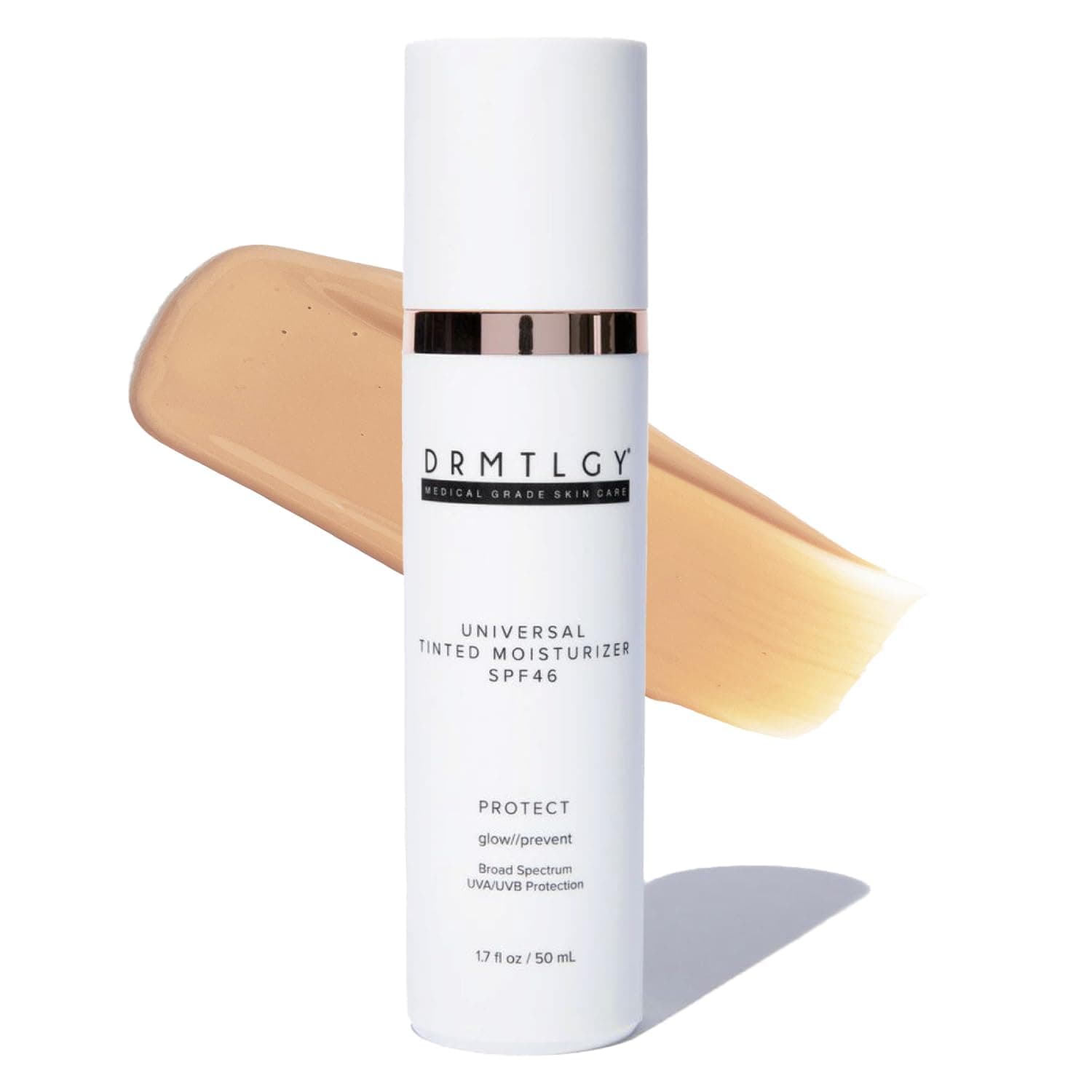
DRMTLGY Universal Tinted Moisturizer SPF 46
Sheer universal tint, broad-spectrum SPF 46, dewy finish. The single product that quiets my redness on a no-makeup day.
A quick note: if you wear this and you're spending real time outside, you still need to reapply, just like any sunscreen. I cover the broader category in best sunscreen for face and there's a tinted-specific roundup in best tinted sunscreen for women if you want to compare options.
The Dr. Idriss Trio That Earned Vanity Space
I'm picky about what gets to live on my vanity. There are three Dr. Idriss products that have earned permanent space, and they all play a specific role.
Left Un-Red Reducer Serum
This is the one I want to talk about most. The Dr. Idriss Left Un-Red Reducer Serum is built to reduce visible redness and calm irritation, and it contains a 10% azelaic acid complex as one of its key actives. That detail matters to me a lot, and I'll explain why in a minute.
In daily use, this serum has been the calmest, most consistent redness-quieter I've found over the counter. It doesn't sting, it doesn't make me peel, it doesn't trigger flares the way some "anti-redness" products did when I was first trying things. I use it at night after my two-step cleanse, before moisturizer.
You can find it on the brand site on the Left Un-Red Reducer Serum product page.
Left Un-Red CalmBack Cream
The companion to the serum. The Dr. Idriss Left Un-Red CalmBack Cream is the moisturizer side of the redness duo, focused on soothing the skin barrier and protecting against the things that set rosacea off in the first place. I layer it over the serum at night. Together, they're the only redness-focused pair I've stuck with for more than a few months.
Brand link: the Left Un-Red CalmBack Cream product page. There's also a Left Un-Red Redness Duo listing if you want both at once.
Major Fade Hyper Serum
This one is not a redness product, it's a tone-evening product, and it's the bridge between everything I've said so far. I had some sunspots from years of less-than-perfect sun habits, and the Dr. Idriss Major Fade Hyper Serum has noticeably faded them and helped my overall tone look more uniform. Which, again, is the whole goal.
When I look at my face in the mirror now compared to a couple of years ago, the redness is still there, but the spots are quieter and the canvas is more even. That's exactly what I'm after. Brand link: the Major Fade Hyper Serum product page.
I want to be careful not to oversell any single product. None of these are miracles. They are, together, a routine that has earned its place by working consistently and not making my skin worse, which is a low bar that a surprising number of skincare products fail to clear when you have rosacea.
The Prescription Route (Honest Version)
I want to be open about this part because I think a lot of women with rosacea are quietly stuck in the same place: cycling through prescriptions and not seeing themselves in the perfect-derm-journey content online.
The standard prescription route for rosacea often includes topicals like ivermectin (you'll see it branded as Soolantra), in gel or cream form. They work well for plenty of people. But from everything I've read and heard from friends who've tried them, sensitive, reactive skin doesn't always get along with the formulations, and some people notice irritation instead of the redness reduction they were hoping for. If that's been your experience, you're not doing it wrong, and you're not out of options.
That's not a rejection of dermatology, and it's not me telling you not to see a derm. If you can find a treatment plan with a doctor that works for your skin, that is a genuinely great outcome. But if the prescription path hasn't clicked, an over-the-counter routine built on the right active can carry a lot of the load.
Here is the through-line that ties this whole post together: the ingredient I trust most for redness and uneven tone is azelaic acid. It's anti-inflammatory, it's well-tolerated by sensitive skin, and it works on both redness and uneven tone, which are exactly the two things this routine is built around. The Reducer Serum I use every night contains a 10% azelaic acid complex, so the hero ingredient a derm might reach for is already doing quiet work in my routine, just from the OTC side. If you want a deeper dive on the ingredient itself, I wrote a whole post on the benefits of azelaic acid for skin.
That feels honest to me. Not anti-derm, not a story about beating the system. Just: the prescription route works for some people and not others, an OTC routine can do real work, and the chemistry happens to overlap.
What My Day Actually Looks Like
For anyone who likes the routine laid out plainly:
Morning
- Wash face gently, pat dry on the face-only towel.
- Dr. Idriss Left Un-Red Reducer Serum.
- Dr. Idriss Left Un-Red CalmBack Cream (the vitamin C cream).
- DRMTLGY Universal Tinted Moisturizer SPF 46. That's it on a normal day.
Evening
- Step 1 cleanse: micellar water on a cotton round.
- Step 2 cleanse: a gentle, rosacea-friendly facial cleanser.
- Step 3: damp face-only towel to wipe off cleanser residue. Clean slate.
- Dr. Idriss Left Un-Red Reducer Serum.
- Dr. Idriss Left Un-Red CalmBack Cream.
- A few nights a week, swap or add the Dr. Idriss Major Fade Hyper Serum on the spots and uneven areas, depending on how my skin is doing.
- Twice a week, I add a sensitive-skin retinol on top of my moisturizer (not under it). Putting moisturizer first creates a buffer that helps the retinol go in slowly instead of slamming my barrier, which matters a lot when your skin runs reactive. Two nights a week is plenty to get the long-term benefits without lighting my face up. I go deeper on which retinols actually behave on reactive skin in how to use retinol with rosacea-prone skin.
That's the whole thing. Six to seven steps at night, two in the morning. Nothing exotic, nothing on a strict spreadsheet. Just enough to actually do every day, which is the point.
A Small Lifestyle Note
Outside of products, the only meaningful lifestyle thing in the rosacea conversation for me is that I don't drink alcohol. I want to be clear that this is just a "more about me" detail, not a claim that alcohol is a trigger for my skin. I'm not telling you to stop drinking to clear your skin. I'm just naming it because skincare posts have a habit of attaching every personal habit to a result, and I want to be honest about which thing is which. Sun and harsh products are what set my skin off. Not drinking is just a thing about my life.
Frequently Asked Questions
Calm Over Perfect
I'll close where I started, because the through-line matters more than any individual product. My goal isn't clear skin. My goal is an even skin tone, because that's what reads as a clean face, and that's a goal you can actually reach with rosacea-prone skin, instead of the impossible one the internet kept selling me.
The two-step cleanse and the dampened face-only towel are the foundation. Daily tinted SPF is the daily defense. Azelaic acid, in the form of an OTC serum I trust, is the active that does the quiet long-term work. Calm cream over the top to support the barrier. A fade serum for the leftover sunspots from years of less careful sun habits.
That's enough. Calm beats perfect. Even beats erased.
If you have rosacea and you've been chasing the clear-skin version of yourself and feeling like you keep falling short, I want to gently suggest that you might be aiming at the wrong thing. Aim at calm. Aim at even. Aim at the version of your face that just looks finished. It's a goal that loves you back.
This post is a personal share, not medical advice. If your rosacea is severe, painful, or changing, please see a dermatologist. What works for my skin may not work for yours, especially if you're managing a chronic condition like rosacea.