My Weekly Exfoliation Routine: The Gentle Mask That Changed My Skin
My weekly exfoliation routine at 36 for sensitive, rosacea-prone skin: why I switched to a gentle chemical AHA mask, how I fit it around retinol nights, and the budget alternative I recommend.

I spent years thinking exfoliation was something my reactive, redness-prone skin needed to skip. Every physical scrub I tried left my cheeks redder than they were before, and anything labeled "brightening" or "resurfacing" sounded like a fast track to a flare. So I avoided it entirely. No scrubs, no acids, no masks, no nothing.
Turns out that was the wrong approach. My skin needed exfoliation. It just needed the right kind, done the right way, on the right schedule. When I figured that out, my tone evened out more noticeably than anything else I'd tried, including some of the serums I genuinely love.
If you have rosacea and you've been side-eyeing the entire exfoliation aisle like it's off-limits, this one's for you. Here's what I do, what I use, how often, and what happened when I overdid it so you don't have to.

Why Rosacea Skin Needs Exfoliation (Done Right)
Let me start with the counterintuitive part. Rosacea makes your skin reactive. The instinct is to do less, and for the most part, that's the right instinct. Gentle cleansers, fewer actives, no fragrances, no scrubbing. That's the foundation of my whole gentle rosacea routine, and I'm not walking any of it back.
But here's what I learned: rosacea-prone skin still accumulates dead skin cells like anyone else's. Those cells sit on the surface, making your texture look rougher and your tone look more patchy than it actually is. When you're already flushed, adding a layer of uneven texture on top makes everything look worse. You're fighting the redness and the dullness at the same time.
Exfoliation, done gently and chemically (not physically), clears that surface layer so the skin underneath looks more uniform. For me, that translates directly into my "even tone over perfect skin" thesis. A freshly exfoliated face gives a cleaner, more finished impression, even with the redness still present. The color might be there, but the surface is smoother, so the overall look reads as calm and intentional rather than irritated and uneven.
That's the whole reason exfoliation earned a permanent spot in my weekly routine. Not to "fix" my redness. Just to keep the canvas smooth so the redness stops being the first and only thing anyone notices.
Physical vs. Chemical Exfoliation: Why I Went Chemical
I want to draw a clear line here because it's the single most important exfoliation decision for rosacea-prone skin.
Physical exfoliation is anything with grit: scrubs, brushes, microbeads, washcloth scrubbing, and those spinning facial brushes that were everywhere a decade ago. Physical exfoliation works by mechanically rubbing dead cells off the surface. For normal skin, that can be fine in moderation. For rosacea-prone skin, it's usually a bad idea. The friction itself triggers redness, and the tiny micro-tears that scrubbing creates are exactly what a compromised barrier doesn't need.
Chemical exfoliation uses acids (AHAs like glycolic and lactic acid, or BHAs like salicylic acid) to loosen the bonds between dead skin cells so they shed naturally, without friction. It's gentler because there's no rubbing involved. You apply, you let it sit, you rinse. The dead cells come off on their own.
For rosacea, chemical exfoliation is almost always the safer choice. The key is picking the right acids, at the right concentration, and not using them too often. AHA masks that also include hydrating ingredients (glycerin, for example) are particularly good because they exfoliate while keeping the barrier supported.
The Mask That Changed My Skin: Dr. Idriss Major Fade Flash Mask
I found the Dr. Idriss Major Fade Flash Mask about a year ago, and it immediately solved two problems I didn't realize were connected: my uneven texture and my leftover sunspots.
The Flash Mask is an AHA-based exfoliating mask built around three key ingredients:
- Glycolic acid at 15%: The workhorse exfoliant. Glycolic acid has the smallest molecular size of the AHAs, which means it penetrates effectively and resurfaces dead skin cells. This is what gives the "smooth as a baby's butt" texture after you rinse.
- Tranexamic acid: A tone-evening ingredient that specifically targets hyperpigmentation and discoloration. This is what works on the sunspots and post-acne marks.
- Lactic acid at 3%: Another AHA, but larger in molecular size and gentler. It provides secondary exfoliation while also hydrating, which balances out the stronger glycolic component.
- Glycerin: A humectant that pulls water into the skin. In a mask that's doing active resurfacing, the glycerin inclusion is thoughtful because it means you're exfoliating and hydrating at the same time rather than stripping the barrier.
The combination of exfoliation plus tone-evening actives is what makes this mask different from a basic AHA peel. It's not just clearing the surface, it's actively fading discoloration while it works. That dual action matters a lot when you have both rosacea redness and sun damage to manage.
The clinical results from the brand are worth noting: 100% of users reported brighter and more radiant skin, 97% reported a more even skin tone, and 90% reported a reduction in the appearance of hyperpigmentation. Those are the numbers that got me to try it, and my personal experience lines up with them.
You can buy the Flash Mask directly from the brand at the Dr. Idriss Major Fade Flash Mask product page. It's $48 for the full size (1.7 oz), and for a mask you use twice a week, that lasts me a few months.

How I Fit Exfoliation Into My Weekly Routine
This is the practical part. Here's how I schedule exfoliation around everything else I'm doing to my face.
The Retinol/Exfoliation Split
I use retinol twice a week, on Monday and Thursday nights. Retinol and exfoliation on the same night is a recipe for irritation, especially with rosacea-prone skin. So I put exfoliation on different nights entirely.
My current rhythm:
- Wednesday night: Flash Mask (exfoliation night, no retinol, no other actives after)
- Saturday night: Flash Mask (second exfoliation night)
- Monday and Thursday: Retinol nights, buffered over moisturizer
- Tuesday, Friday, Sunday: Recovery nights (just the regular routine: cleanse, azelaic acid serum, moisturizer)
This split means there's always at least one recovery night between any active treatment. My skin gets the exfoliation it needs, the retinol it tolerates, and enough breathing room that the barrier never feels compromised.
Sometimes, if my skin is feeling sensitive or if I had a little too much sun that week, I'll drop down to one exfoliation night instead of two. Sunday becomes the backup option. The point is to listen to your skin, not to stick to a calendar like it's a contract.
What an Exfoliation Night Actually Looks Like
On Wednesday and Saturday nights, here's the sequence:
-
Two-step cleanse as usual: Micellar water first to lift off the day's sunscreen and grime, then a gentle cleanser. No skipping this step. Exfoliants work better and more evenly on clean skin, and you don't want to be exfoliating yesterday's SPF into your pores.
-
Damp face-only towel: My clean slate ritual. A soft pass with a damp, dedicated face towel to make sure there's zero cleanser residue left. The skin is truly bare at this point.
-
Apply the Flash Mask: Two to four pumps spread in a thin layer over the face, avoiding the eye area. The brand says you can use it up to three times a week, but twice has been plenty for my skin.
-
Wait 10 to 15 minutes: I set a timer on my phone because it's easy to get distracted and leave it on too long. Ten minutes is my default. On days when my skin feels especially resilient, I'll go to 15. Never longer than that.
-
Rinse thoroughly with warm water: Not hot, not cold. Warm. I use my hands to gently work the water over my face until the mask is completely off.
-
Pat dry with the face-only towel: Gentle, no rubbing.
-
Moisturizer only: On exfoliation nights, I skip serums. Freshly exfoliated skin doesn't need more actives, it needs barrier support. I go straight to the Dr. Idriss Left Un-Red CalmBack Cream and that's it for the night.
That's the whole thing. It adds maybe 12 minutes to my evening routine twice a week, and the payoff in smoother texture and more even tone has been genuinely noticeable.

The Connection to My Sunspot Fade Journey
I mentioned earlier that the Flash Mask combines exfoliation with tone-evening actives, and this is where that got personal for me. A couple of years ago, I had visible sunspots on my cheeks and forehead from years of less-than-diligent sun protection. I started using the Dr. Idriss Major Fade Hyper Serum to fade them, and it worked. The spots lightened noticeably over several months.
But what I didn't anticipate was how much the texture improvement from the Flash Mask would amplify those results. When the surface is smooth and the dead cell layer is cleared, the fading underneath is more visible. The smoother the canvas, the more even the tone reads. The two products work on different layers of the same problem: the Hyper Serum targets the pigment itself, and the Flash Mask clears the surface so you can actually see the progress.
If you're working on fading sun damage, I'd recommend both. But if you can only add one new thing, the Flash Mask gives you the most visible difference after a single use. That immediate gratification matters when you're trying to stay motivated with a long-term skincare goal.
The Ordinary Alternative for Budget Readers
Not everyone wants to spend $48 on a mask, and I get that. If you're looking for a more affordable entry point into chemical exfoliation, the The Ordinary Glycolic Acid 7% Toning Solution is the one I'd recommend.
It's a liquid exfoliating toner rather than a mask, so the format is different, but the active ingredient overlaps: glycolic acid, at 7% instead of the Flash Mask's 15%. The lower concentration makes it gentler and easier to tolerate if you're new to chemical exfoliation, though you'd use it differently. Instead of a 10-minute mask you rinse off, this is applied with a cotton round and left on, followed by moisturizer.
A few things to know if you go this route:
- Start slow: Once a week for the first two weeks. Your skin needs time to adjust to any AHA.
- Skip retinol nights: Same rule applies. Don't layer glycolic acid and retinol on the same night.
- Watch for stinging: If it stings on application, your barrier might be compromised, and you should skip it that night.
- Don't use it as a daily toner: Despite the name, if you have rosacea, this is not a daily product. Once or twice a week is plenty.
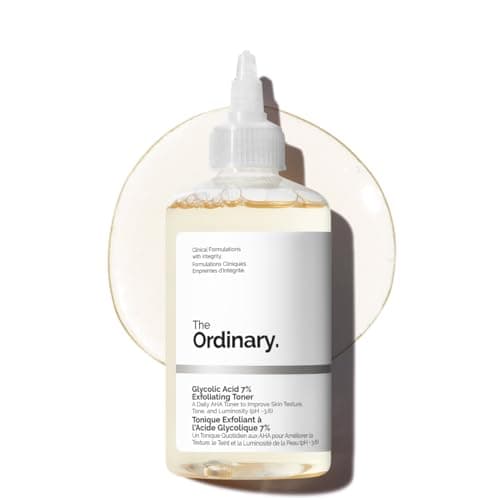
The Ordinary Glycolic Acid 7% Exfoliating Toner
Gentle 7% glycolic acid solution, budget-friendly entry point into chemical exfoliation for sensitive and rosacea-prone skin. Use 1-2x per week max.
I've used both, and if budget weren't a factor, I'd pick the Flash Mask every time for the combination of exfoliation plus tone evening plus the rinse-off format (which limits exposure time, which is safer for reactive skin). But The Ordinary option is a genuinely good product that costs a fraction of the price, and it's a smart place to start if you're not sure chemical exfoliation will agree with your skin.
Signs You're Over-Exfoliating (Ask Me How I Know)
I learned this one the hard way, so here's a short, direct list of what over-exfoliation looks like on rosacea-prone skin:
-
Your face feels tight after cleansing, even with the same gentle cleanser you always use. That tightness is a barrier red flag, not a "clean" feeling.
-
Products that normally don't sting start to sting. If your moisturizer tingles when you put it on, something is off with your barrier, and it's probably exfoliation frequency.
-
Your redness is worse, not better, the morning after. Exfoliation should leave your skin looking brighter and more even the next day. If you wake up redder than usual, you went too hard or too long.
-
Texture feels rougher, not smoother. Paradoxically, over-exfoliating creates a rough, almost sandpapery texture because the barrier is so stripped that the skin is producing uneven surface cells in a panic. It looks and feels like the opposite of what you wanted.
-
You're shiny but not oily. That glass-like transparency is thin, compromised skin, not glow.
If you hit any of these, stop everything. No exfoliation, no retinol, no actives at all for at least a week. Just cleanser and moisturizer. Let the barrier rebuild. Then reintroduce exfoliation at half the frequency and see how it goes.
For me, twice a week is the sweet spot. Once a week if my skin feels sensitive. Three times was too much, and I figured that out in about two weeks of trying. Your number might be different, but the signs are universal.
Frequently Asked Questions
The Routine Is the Point
I'll close with what I actually want you to take from this, which is less about a specific product and more about a mindset.
Exfoliation didn't change my skin because I found a magic jar. It changed my skin because I found the right type (chemical, not physical), the right format (a rinse-off mask with hydrating ingredients), the right frequency (twice a week, never on retinol nights), and the right context (built on top of a clean slate from my two-step cleanse, followed by moisturizer and nothing else).
The product is good. The routine around it is what makes the product work. That distinction matters for anyone with reactive skin. You can have the best mask in the world, but if you use it too often or layer it with the wrong things or skip the moisture after, you'll wonder why your skin isn't cooperating.
Give your skin one new thing at a time. Watch how it responds. Adjust. Your face will tell you what it needs. You just have to pay attention.
If you're building a rosacea-friendly routine from scratch, start with my gentle rosacea routine for the full foundation, then layer this in once you've got the basics down.
This post is a personal share, not medical advice. If you have persistent skin concerns, please see a dermatologist.