Best Family Board Games Everyone Will Actually Want to Play
Four family board games that actually get played again and again, from fast card games to longer strategy picks, with honest notes on age range and play time.

Game night in our house has a way of stretching past bedtime. What starts as one round almost always turns into two or three, and the competitive energy that comes from four boys trying to outwit each other at a table is genuinely one of my favorite things about our evenings together. We have gone through a lot of board games over the years, some that got played until the cards were soft and faded at the edges, some that came out exactly once and sat in a corner forever after.
The difference usually comes down to one thing: does everyone want to play again?
After years of game nights, I have landed on four games that hit the table more reliably than anything else we own. Each one serves a different mood and age range, which matters when you are trying to get everyone from a younger kid to a teenager enthusiastic about the same activity. Here are my honest recommendations with notes on who each one works best for.
What Makes a Family Board Game Actually Worth Buying
Before getting into the picks, here is what I have learned actually matters.
Age range is real. A game marketed as "ages 8+" might genuinely require reading fluency and strategic thinking, which means a just-turned-eight-year-old might be frustrated. If your youngest is six, look for games in the 6-8+ range. If your kids are mostly older tweens, you can push into more complex strategy games without losing anyone.
Play time matters more than you think. A 90-minute game is a commitment on a school night. We keep the longer games for weekends and have a separate set of shorter games (under 30 minutes) for evenings when we want something fun but not a whole production. Having both types in your collection makes it much easier to actually play regularly.
Games with hidden information hold attention better. The reason Codenames and Exploding Kittens keep getting requested is that you never know exactly what is coming next. Games that are fully transparent can start to feel predictable once players figure out the optimal move. A little hidden information adds real tension.
Interaction beats parallel play. Games where players mostly do their own thing in separate tracks are fine, but the most replayed games in our house are the ones where you are actively competing with, responding to, or blocking other players.
At a Glance
| Pick | Best For | Players | Min Age | Approx. Price |
|---|---|---|---|---|
| Ticket to Ride 2025 | Best strategy intro | 2-5 | 8+ | $35-$45 |
| CATAN | Best for older kids | 3-4 | 10+ | $40-$55 |
| Codenames | Best for groups | 4+ | 10+ | $15-$20 |
| Exploding Kittens | Best quick game | 2-5 | 7+ | $18-$22 |
Ticket to Ride (2025 Refresh Edition)
This was the game that made my oldest fall in love with board games, and it has been a reliable hit ever since. The premise is simple: you collect colored train cards, use them to claim routes on a giant map of North America, and earn points for building connected paths between cities. The routes are in five different colors and each player has a set of colored train pieces, so the board fills up visually as the game goes on and you can see at a glance who is building toward where.
What I love about Ticket to Ride is that it has genuine strategy without being overwhelming. The basic rules take about ten minutes to explain, and most kids get the hang of it within the first fifteen minutes of actual play. The strategy layer comes from trying to fulfill your destination tickets (secret cards that tell you which two cities you need to connect) while also blocking your opponents from claiming the routes they need. That combination of personal goals plus competition keeps everyone engaged the whole game.
The 2025 Refresh edition updates the artwork and adds a few small rule improvements. The font on the board is easier to read, and you start with four cards instead of three, which makes the early game move a little faster. If you have never played before, this is the version to get. If you already own an older edition, the updates are nice but not worth repurchasing from scratch.
The limitation worth knowing: the game runs 30-60 minutes, which is a real commitment on weeknights. We treat this as a weekend game and everyone is the better for it.
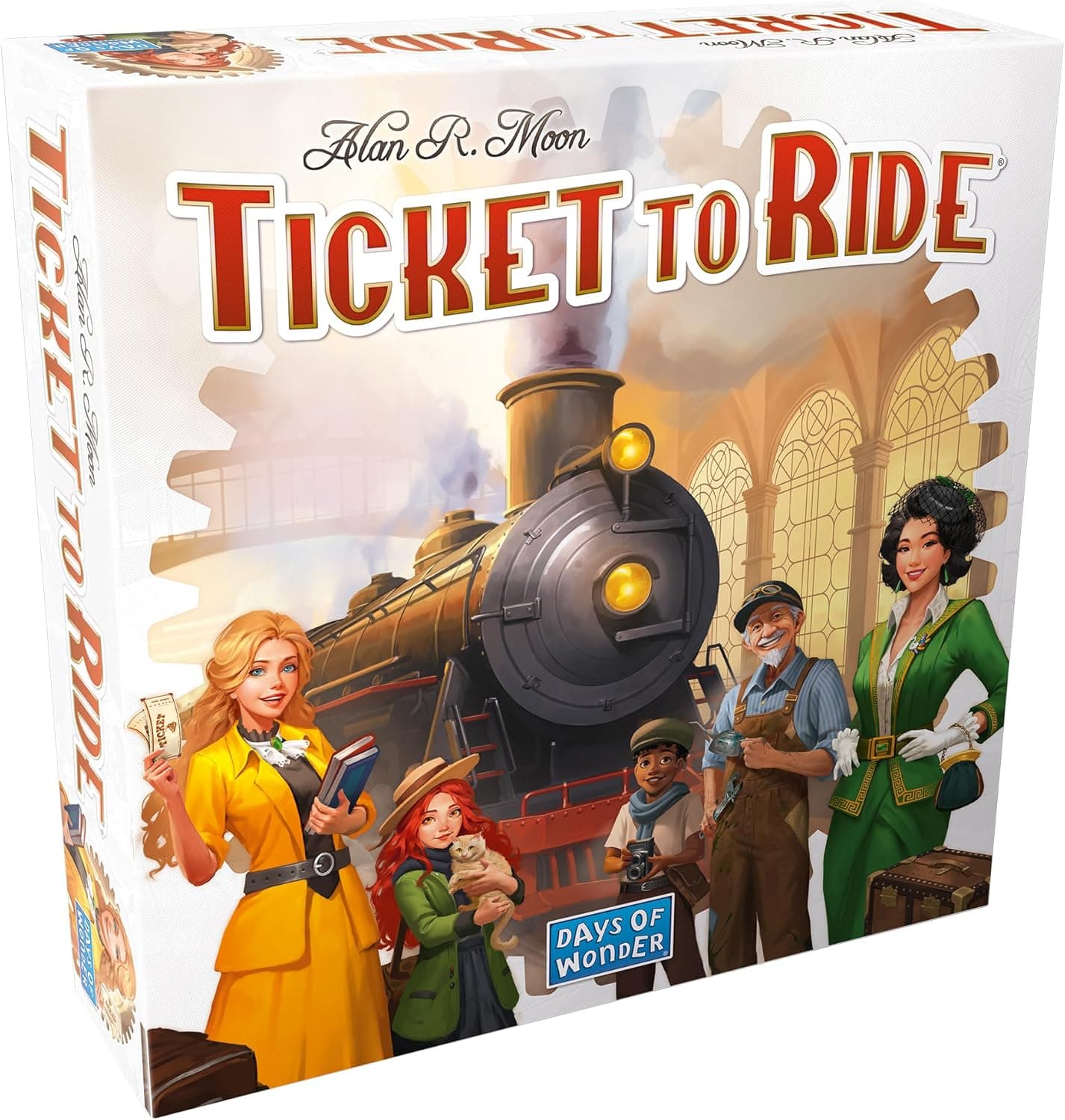
Asmodee Ticket to Ride Board Game (2025 Refresh)
Route-building strategy game for 2-5 players, ages 8+, 30-60 minutes. Collect colored train cards to claim routes across North America and fulfill secret destination tickets. The 2025 Refresh updates the artwork and streamlines a few rules without changing what makes the original great. Best for families with kids 8 and up who want a strategy game that feels genuinely satisfying to finish.
CATAN
Catan is the game our family graduated to once the boys were old enough to handle something with more moving parts. Where Ticket to Ride is a route-building game, Catan is a full resource economy: you settle an island, collect resources based on dice rolls, trade with other players, and use those resources to build roads, settlements, and cities. The goal is to reach ten victory points before anyone else.
What makes Catan special is the trading. Every round involves some amount of negotiating with other players to get the resources you need, which means the game is as much about social dynamics as it is about strategic placement. My kids have learned a lot about negotiation, reading other people's motives, and when to make a deal that looks fair for both sides but is actually tilted in your favor. It is genuinely educational in ways that do not feel like a lesson.
The honest limitations are two things. First, it requires 3-4 players to work well. Two-player Catan with the variant rules is technically possible but not very satisfying. Second, it runs 60-90 minutes, so this is firmly in weekend territory. We have never successfully finished Catan on a Tuesday night. That said, once kids are old enough for it, around ten, it becomes the game they want to play every weekend.
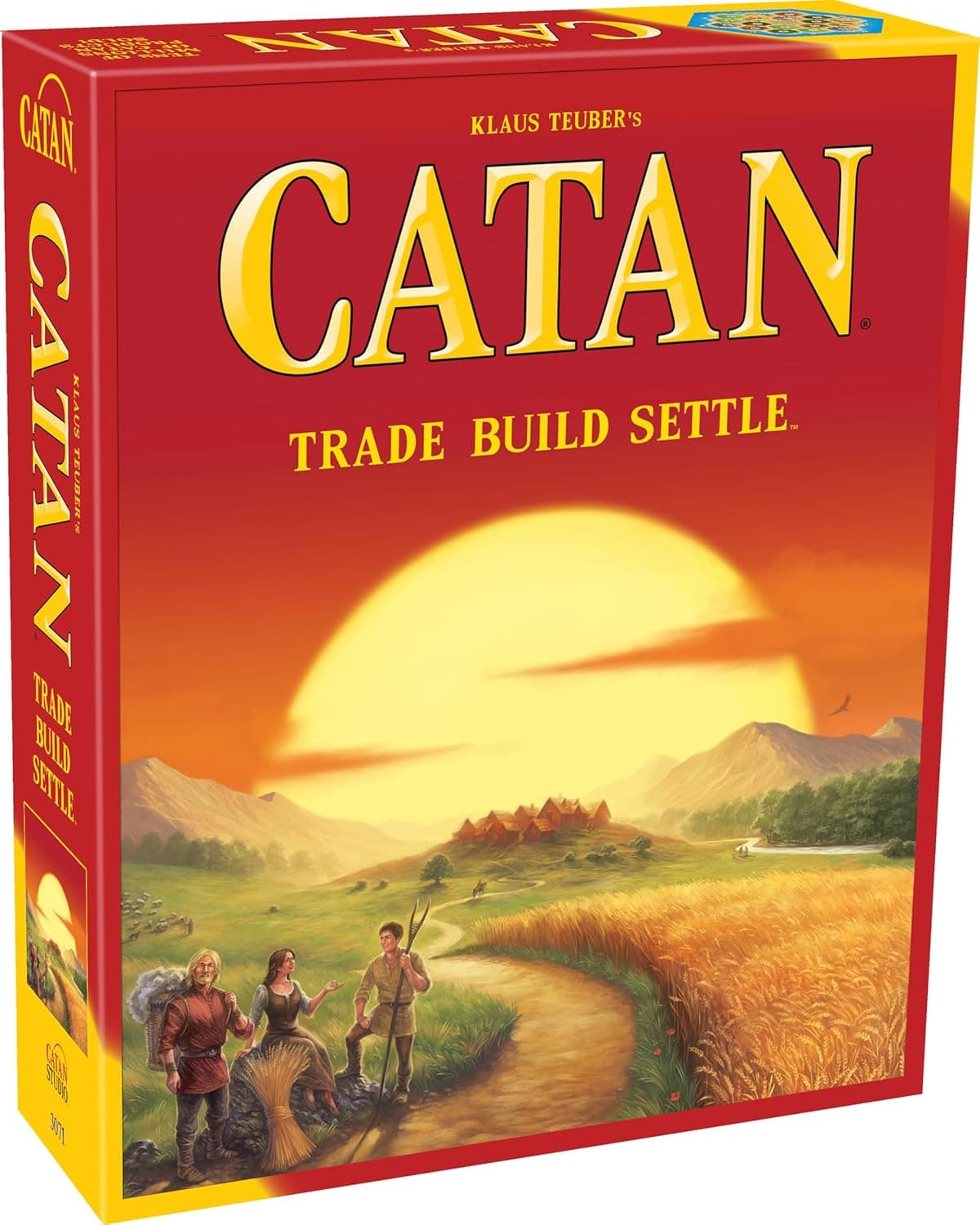
Resource trading and civilization building for 3-4 players, ages 10+, 60-90 minutes. Roll dice to collect resources, trade with other players, and build settlements toward ten victory points. The negotiation element makes every game different and keeps it endlessly replayable. Best for families with older kids ready for something with more strategy and a longer play time.
Codenames
Codenames is the game we pull out when we have more people than usual, or when we want something where adults and kids can genuinely compete on equal footing. Two teams face a five-by-five grid of word cards. Each team has a spymaster who knows which words belong to their team and gives one-word clues that can point to multiple words at once. The team guesses which words the clue covers while trying to avoid the opposing team's words and, above all, the assassin word that instantly ends the game.
It plays in 15-30 minutes, scales cleanly from four to eight or more players, and generates genuinely funny moments when someone misinterprets a clue in a creative way. The 2nd edition has improved word selection and the overall package is clean and simple.
One thing I appreciate is that it levels the playing field between kids and adults more than most games do. Kids who are good at creative thinking and word association sometimes outperform adults who are playing more analytically, which makes for interesting team dynamics and ensures nobody is just going through the motions.
The limitation: it does not work well with fewer than four players and really shines with six or more. If your family is small and you mostly play with two or three people, this is not the right pick for everyday game nights, though it is excellent for gatherings.
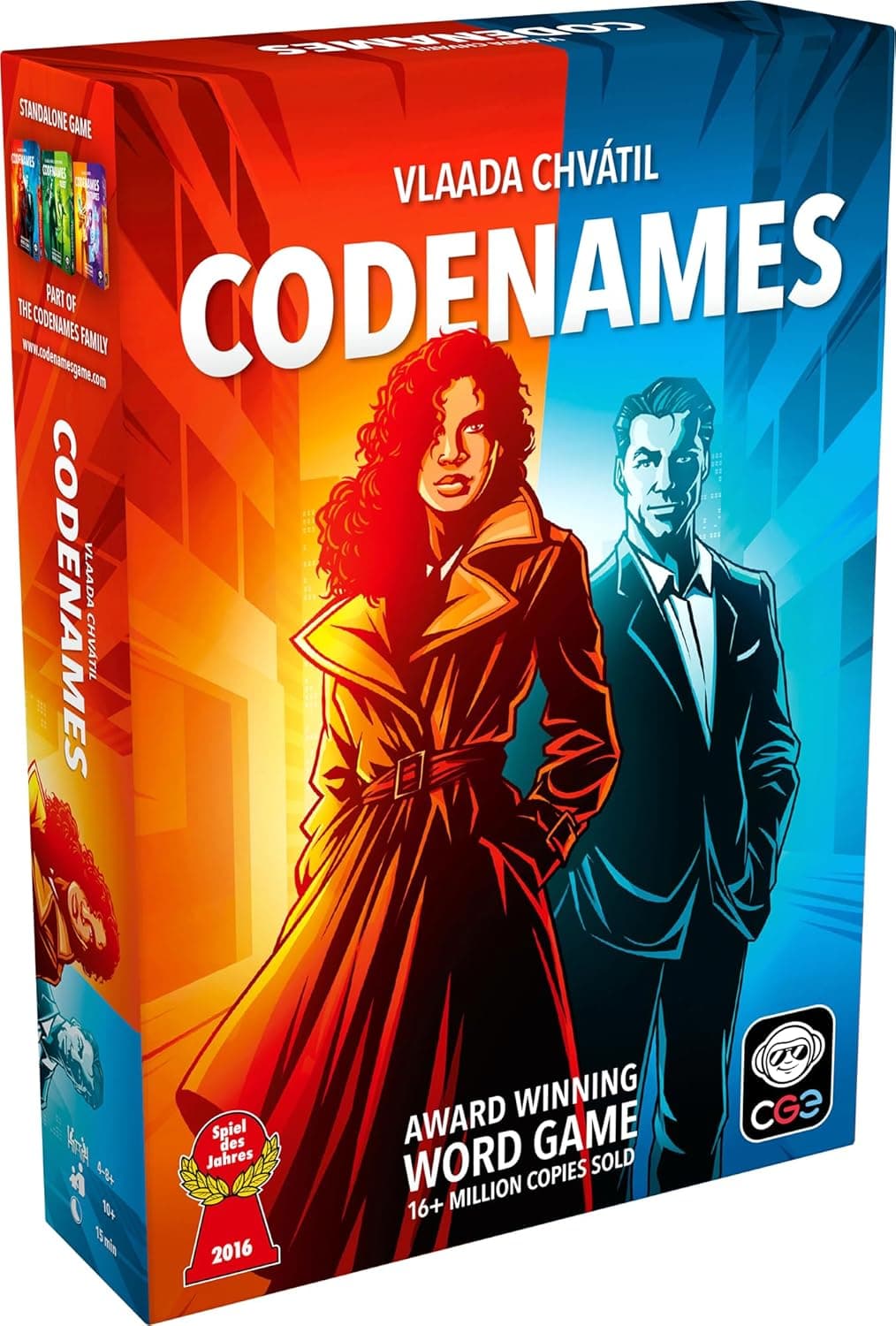
CGE Codenames Board Game (2nd Edition)
Team-based word association game for 4+ players, ages 10+, 15-30 minutes. Two teams compete to identify their secret agents from a grid of 25 words using one-word clues from their spymaster. Scales well to larger groups and plays quickly enough for multiple rounds in one sitting. Best for families who regularly have six or more people at the table.
Exploding Kittens
Exploding Kittens is the game my youngest boys request most often, and for good reason: it is fast, unpredictable, and does not require any sustained strategic thinking. The core mechanic is simple. You draw cards until someone draws an Exploding Kitten card. If you have a Defuse card, you survive. If you do not, you are out. The skill comes from action cards that let you skip drawing, peek at the deck, steal cards from other players, or shuffle the deck at inopportune moments.
A full game takes fifteen minutes. You can almost always squeeze in another round. The rules are simple enough that a six or seven-year-old can learn them in two minutes, which makes it the most age-inclusive game on this list.
I will be honest about the limitations. Exploding Kittens is not a deep game. There is enough card interaction to make decisions feel meaningful, but it is much closer to a luck-based experience than Catan or Ticket to Ride. Some players, usually the older and more strategy-oriented ones, will find it too random after a while. In our house, it is the warm-up game or the wind-down game, not the main event.
The artwork is deliberately ridiculous and irreverent, which our boys find extremely funny. If your kids are easily amused by nonsense humor, they will love this game.
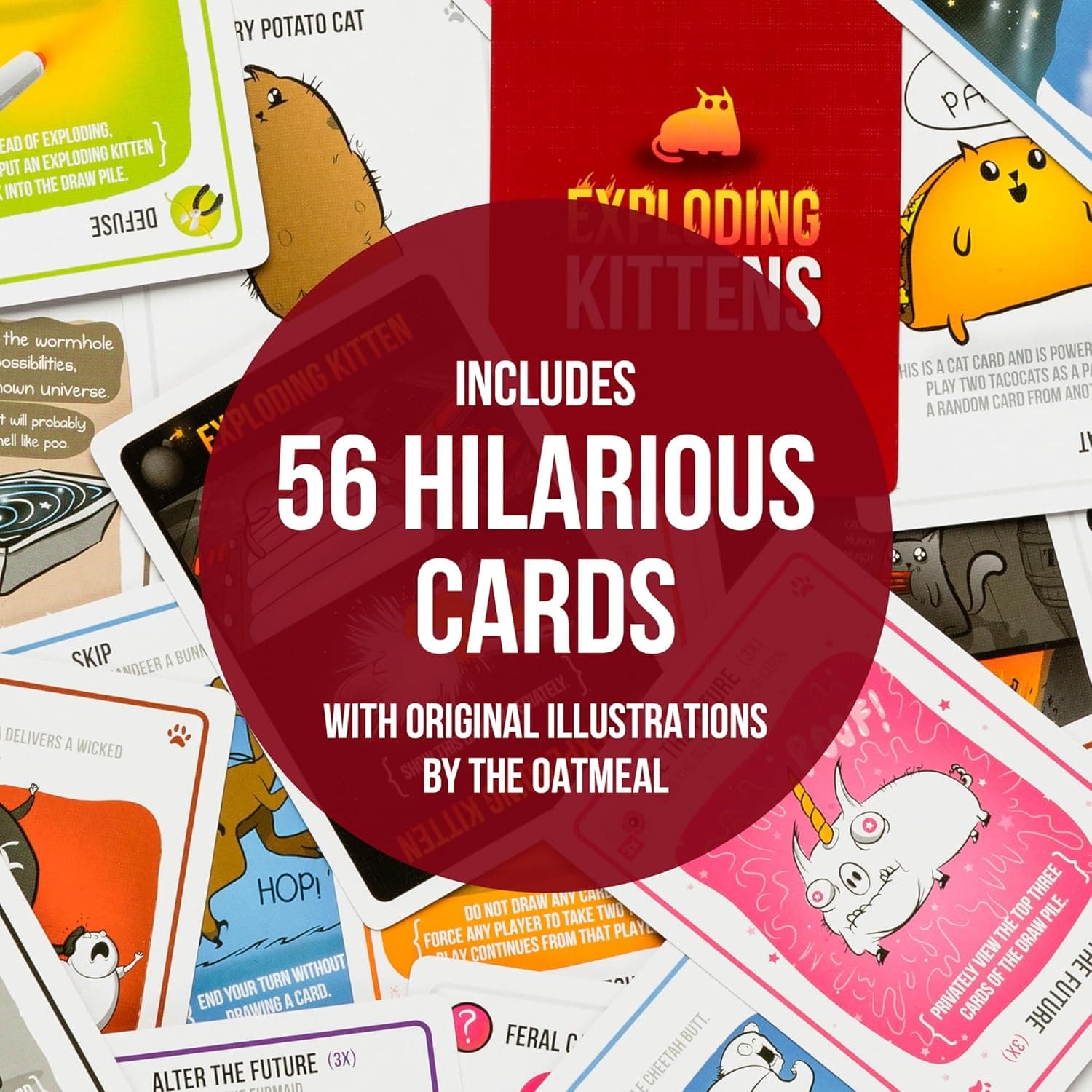
Exploding Kittens Original Edition
Fast-paced card game for 2-5 players, ages 7+, about 15 minutes. Draw cards and hope you do not draw an Exploding Kitten. Action cards let you skip, peek, steal, and shuffle your way to survival. Simple enough for younger kids, quick enough for a weeknight, and funny enough that everyone asks for another round. Best for families who want something light, chaotic, and quick.
Which Game Should You Buy First
If I am picking one game to start with, I recommend Ticket to Ride or Exploding Kittens depending on the ages at your table.
If your youngest player is seven or older: start with Exploding Kittens. It is the most approachable game on this list, plays in fifteen minutes, and generates immediate enthusiasm. Once you have that as a foundation, add Ticket to Ride within a few months, and the kids who are ready for more strategy will migrate toward it naturally.
If your youngest player is eight or nine: start with Ticket to Ride. It is the most satisfying entry-level strategy game I have found, and once kids connect with the route-building mechanics, they tend to stay genuinely interested for years. We still play ours regularly.
If your family regularly hosts other families or extended family: add Codenames. Nothing else on this list scales to six, eight, or ten players as naturally and produces as many laughs.
If your kids are 10 and older and you want something with real depth: add Catan. It tends to quickly become the most-requested game in the house.
A Few Things That Make Game Night Actually Happen
Lower the threshold. The biggest barrier to game night in our house is always setup time. The games that get played most are the ones that can be on the table in under five minutes. For longer-setup games like Catan, we store the pieces pre-organized in small bags inside the box, which cuts setup from fifteen minutes to about three.
Have a first-player system. Nothing derails the start of a game faster than an argument about who goes first. We use a simple rule: whoever most recently won that game starts. If no one remembers, we roll a die. Having a system means everyone accepts it and you actually start playing.
Let kids teach the rules. When we introduce a game to cousins or friends visiting, we let the child who knows the game best explain the rules to the new player. They feel genuinely good about knowing something the other person does not, and the explanation is usually faster and more natural than if I do it myself.
Know when to stop. If someone is clearly miserable or overtired, the right call is to pause and save the rest for another night. Ending on a positive note, even with an unfinished game, means everyone is more likely to want to play again. A forced game that ends badly can put a kid off a game for months.