Best Dash Cams for Road Trips: 4 Picks for Peace of Mind
The best dash cams for road trips, from budget single-lens to front-and-rear coverage. Covers video quality, GPS logging, parking mode, and ease of setup.
We drive a lot as a family. Our road trips down to South Florida are long hauls from Stafford, and a few of those drives have put us close to situations where having video footage would have mattered. A car clipped our lane without signaling, someone ran a red light just as we went through an intersection, and once a truck came so close to the side of our minivan that my husband had to swerve hard. None of them resulted in an accident, but every time I thought: if something had happened, we would have had no proof of anything.
My husband had been looking at dash cams for road trips for months before we finally picked one up. He did most of the research on the technical specs, but I spent time reading through reviews to understand what actually works in a family road trip context, specifically for those long stretches where we are hours from home with four kids in the car. We ended up going through a few options before settling on what we actually use now, and these four are the ones I would recommend to anyone who drives family-distance trips regularly.
What to Look for Before You Buy
Dash cam specs can get overwhelming fast, especially if you end up deep in enthusiast forums. Here is what actually matters for road trip use.
Video quality. For the footage to be useful after an accident or road incident, you need to be able to read license plates. 1080p is the minimum that holds up for close-range plates. 1440p gives you more detail and reads better in low light. For front-and-rear coverage, both channels should be at least 1080p.
GPS and speed logging. On a road trip, being able to show that you were at a specific location at a specific speed adds a layer of proof that matters if something goes wrong far from home. A good GPS integration logs your route, speed, and timestamp tied directly to the video file.
Parking mode. Even parked at a rest stop or hotel lot on a long trip, your car can get bumped and the driver can drive off. Parking mode keeps the camera on low power and triggers recording on impact or motion detection. On a trip where you are parking overnight in unfamiliar places, this matters more than it does at home.
Form factor. A camera that blocks your forward view or looks conspicuous is more distracting than helpful. The best road trip dash cams are small and mount tightly behind the rearview mirror so the driver forgets it is there after the first hour.
At a Glance
| Pick | Best For | Resolution | GPS | Approx. Price |
|---|---|---|---|---|
| Vantrue E1 Lite | Best budget option | 1080p 60fps | Built-in | Under $100 |
| Garmin Dash Cam Mini 2 | Most compact | 1080p | Via app/phone | $110-130 |
| Viofo A229 Plus | Best front and rear | 1440p+1440p | Built-in quad | $160-200 |
| Garmin Dash Cam 67W | Widest viewing angle | 1440p 180° | Built-in | $175-200 |
Vantrue E1 Lite
The Vantrue E1 Lite is the one I point people toward when they want a competent, no-fuss dash cam without spending a lot. At around $90, it includes built-in GPS with speed logging, 1080p at 60 frames per second (which handles fast motion better than standard 30fps), and a detachable design that makes it easy to take with you when you park somewhere you are not fully confident in.
The daytime footage is clean with good license plate clarity. Night footage is decent rather than excellent, which is typical for this price range. The HDR mode helps in mixed lighting like early morning or late evening highway driving, exactly the conditions you hit on long road trip days when you are pushing to get more miles in before stopping.
The Wi-Fi connection to the Vantrue app is straightforward. Pull over, connect your phone, and you can review footage, export clips, and check the GPS route log, all without pulling a memory card. The 24-hour parking mode operates in low power, triggering on impact or motion detection. It supports up to 512GB microSD cards, which is one of the most generous storage allowances in this category.
The honest limitation is that the E1 Lite is a front-only camera. If you want rear coverage, this is not the one. But for a clean, reliable single-channel setup at this price, it covers everything you actually need on a typical highway trip.
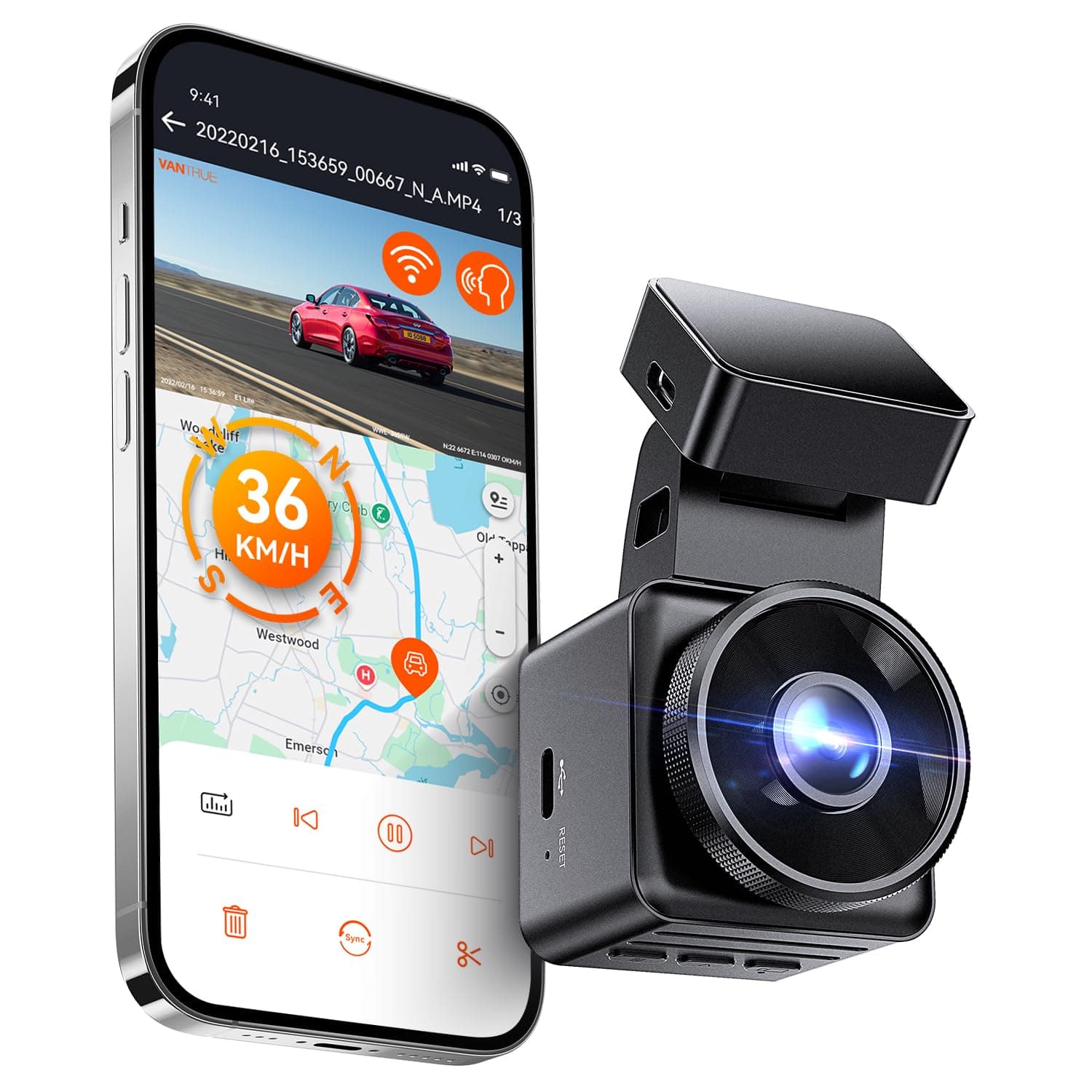
The honest budget pick. 1080p at 60fps with built-in GPS and speed logging, Wi-Fi app access for clip review, 24-hour parking mode, and support for up to 512GB storage. Clean daytime footage, decent night performance. Front-only coverage, but reliable and priced well under $100.
Garmin Dash Cam Mini 2
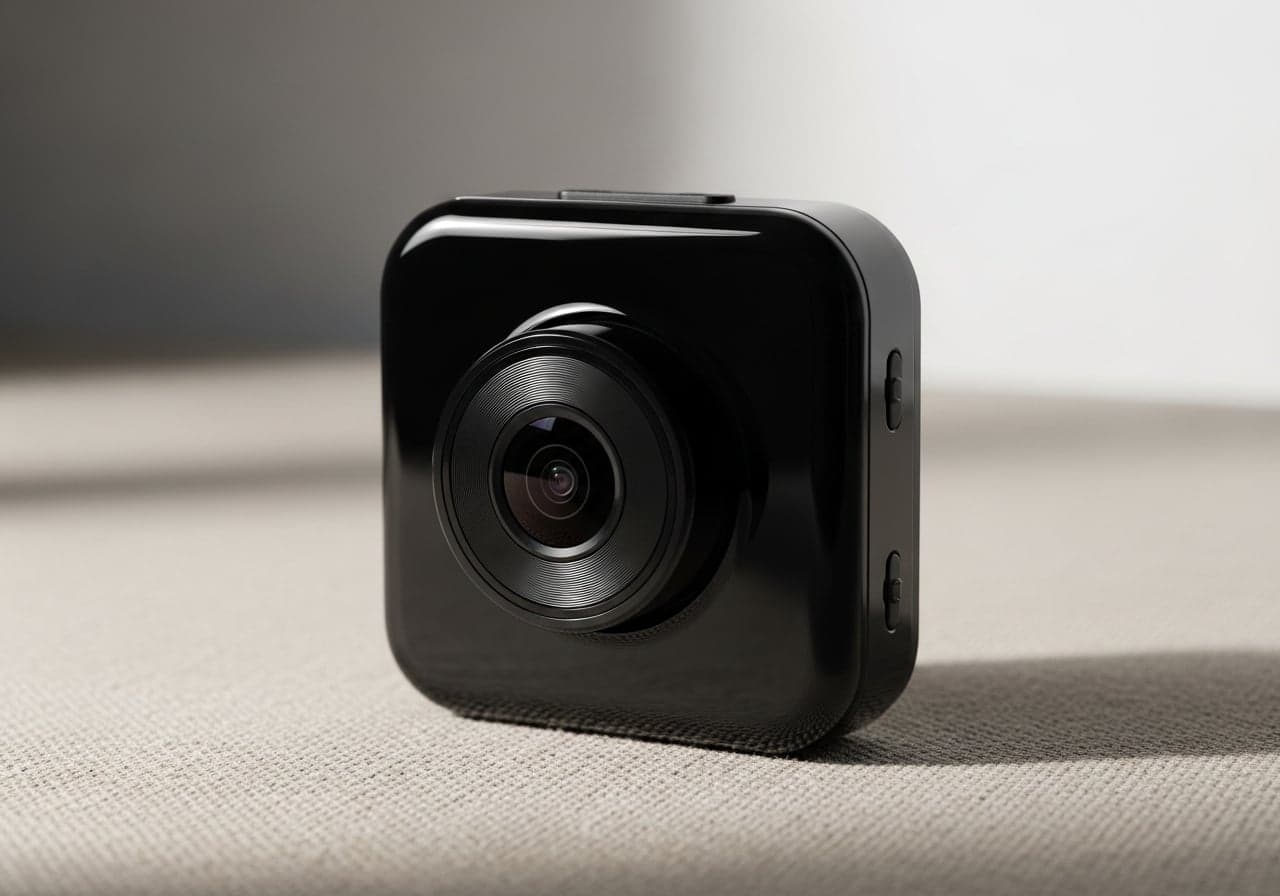
The Garmin Dash Cam Mini 2 is the smallest camera on this list. It is closer in size to a key fob than a traditional dash cam, which means it mounts completely out of your sightline and stays there quietly for every mile of a road trip. If you have ever had a suction-mount camera slowly slide down the windshield on a hot highway, the low-profile magnetic mount on the Mini 2 is a genuine relief.
The camera connects to Garmin's Vault cloud backup system over Wi-Fi, which automatically saves footage clips when it detects an incident. Without a subscription, Vault saves your last three incident clips. With the paid plan it stores clips indefinitely. The cloud backup is useful on a trip because you do not have to manage a memory card, and if you walk away from the car, the footage is already safe offsite.
What the Mini 2 does not have is built-in GPS with standalone speed logging. It does pair with the Garmin Drive app and your phone's GPS if you want location data, but that requires keeping your phone connected, which adds an extra step. For a camera that is otherwise this simple to use, the missing standalone GPS is a notable gap for anyone who specifically wants GPS evidence tied to the footage on road trips.
Voice control works well. "OK Garmin, save video" captures the clip without taking your hands off the wheel, which is the right way to handle a near-miss on a highway.
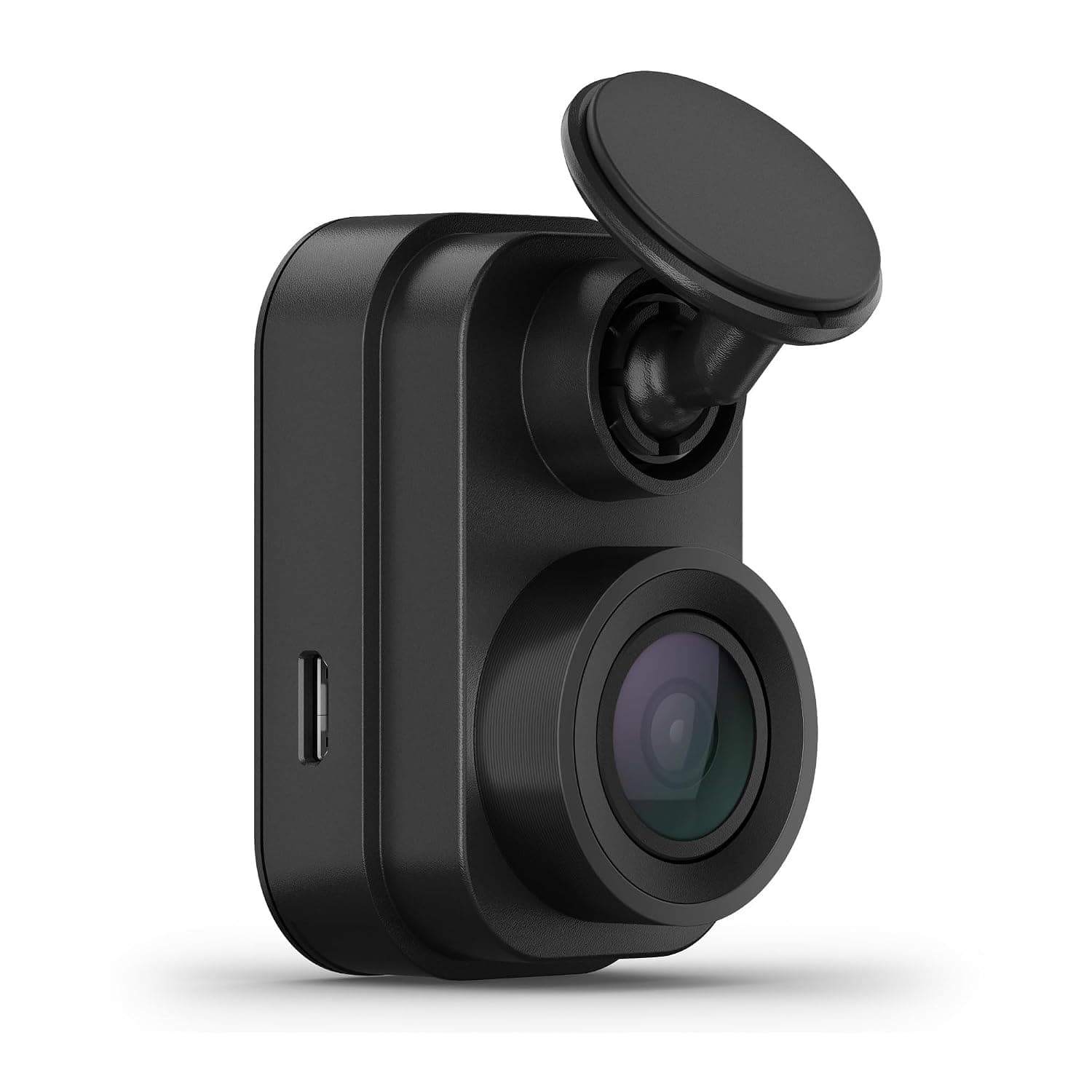
The most compact option on this list. Key-fob sized, 1080p with Garmin Clarity HDR, voice control, and cloud backup via the Garmin Vault. No built-in standalone GPS speed logging, which matters if you want location evidence tied to clips. Ideal if you want something truly discreet that handles basic coverage and cloud backup without any fuss.
Viofo A229 Plus
The Viofo A229 Plus is the front-and-rear setup I would recommend for anyone who wants complete coverage on a road trip. It records 1440p front and 1440p rear simultaneously using dual Sony STARVIS 2 image sensors, and the rear channel actually captures real detail rather than the muddy footage you get on cheaper dual-cam setups where the second camera is an afterthought.
Sony STARVIS 2 sensors have roughly 2.5 times the dynamic range of standard sensors, which translates to footage that holds up in difficult lighting: the sunrise and sunset glare you hit on long highway stretches, or the tunnel-to-bright transitions that blow out cheaper cameras. Both channels handle these conditions well in practice.
The quad-mode GPS records your position using GPS, BEIDOU, GALILEO, and GLONASS satellites, giving it the fastest satellite lock time of anything on this list. The 5GHz Wi-Fi connection is significantly faster than the 2.4GHz standard on most competing cameras, which matters when you are pulling full 1440p clips to your phone at a rest stop and want to actually see them before getting back on the road.
Honest limitation: the front and rear cameras require running a cable from the dash to the rear window, which takes about 45 minutes to route properly. On a trip, it is a one-time setup before you leave, but it is not the plug-and-go experience of a single-lens camera.
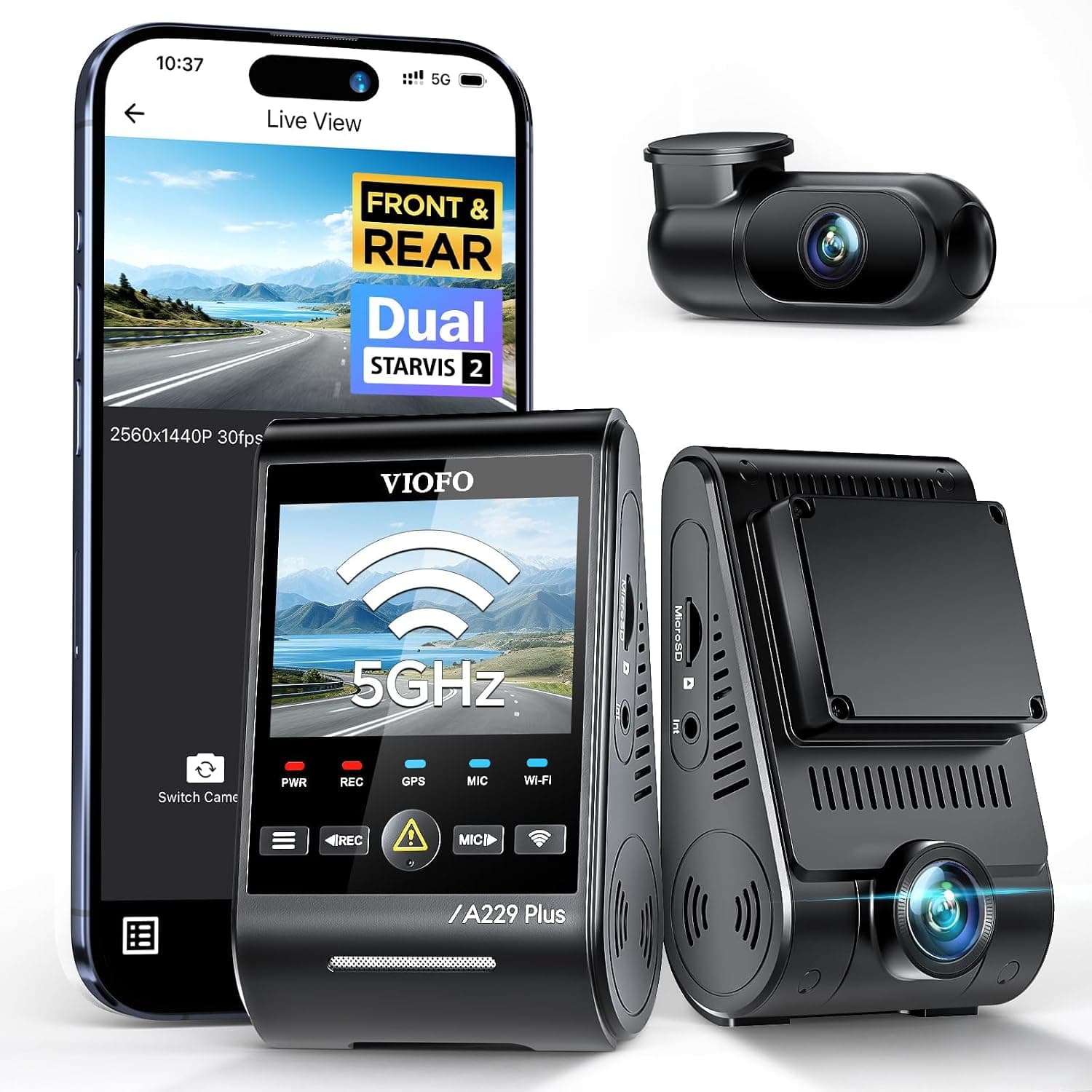
The best front-and-rear setup on this list. 1440p front and 1440p rear on dual Sony STARVIS 2 sensors, quad-mode GPS with fast lock time, and 5GHz Wi-Fi for quick clip transfers. Outstanding footage quality in varied lighting. Requires routing a rear cable, which takes some initial setup time.
Garmin Dash Cam 67W
The Garmin Dash Cam 67W covers more of the road than any other camera on this list. Its 180-degree extra-wide field of view captures not just what is directly in front of you but the cars in adjacent lanes, cross traffic at intersections, and what is happening on both shoulders. On a road trip through unfamiliar intersections or merging on and off unfamiliar highways, that coverage width makes a real difference in what the footage can actually show.
The 1440p recording with Garmin's Clarity HDR processing produces sharp, detailed footage in most conditions. GPS logs your location and speed in every clip, tied directly to the video timestamp, which is exactly the evidence you want if something happens hundreds of miles from home. The remote Live View feature lets you check what the camera sees from your phone when you are away from the parked car, which I find useful for hotel parking lots where you have a vague concern about the vehicle.
The Vault cloud backup saves incident clips over Wi-Fi, and the Parking Guard feature monitors the vehicle while parked and alerts you if something happens nearby. It also comes with a 16GB microSD card included, which not all cameras at this price point bother to include.
The 180-degree FOV does introduce some natural distortion at the edges of the frame, which is normal for this lens width. License plates directly in front of you are crisp. Plates at the edges are readable but slightly curved.
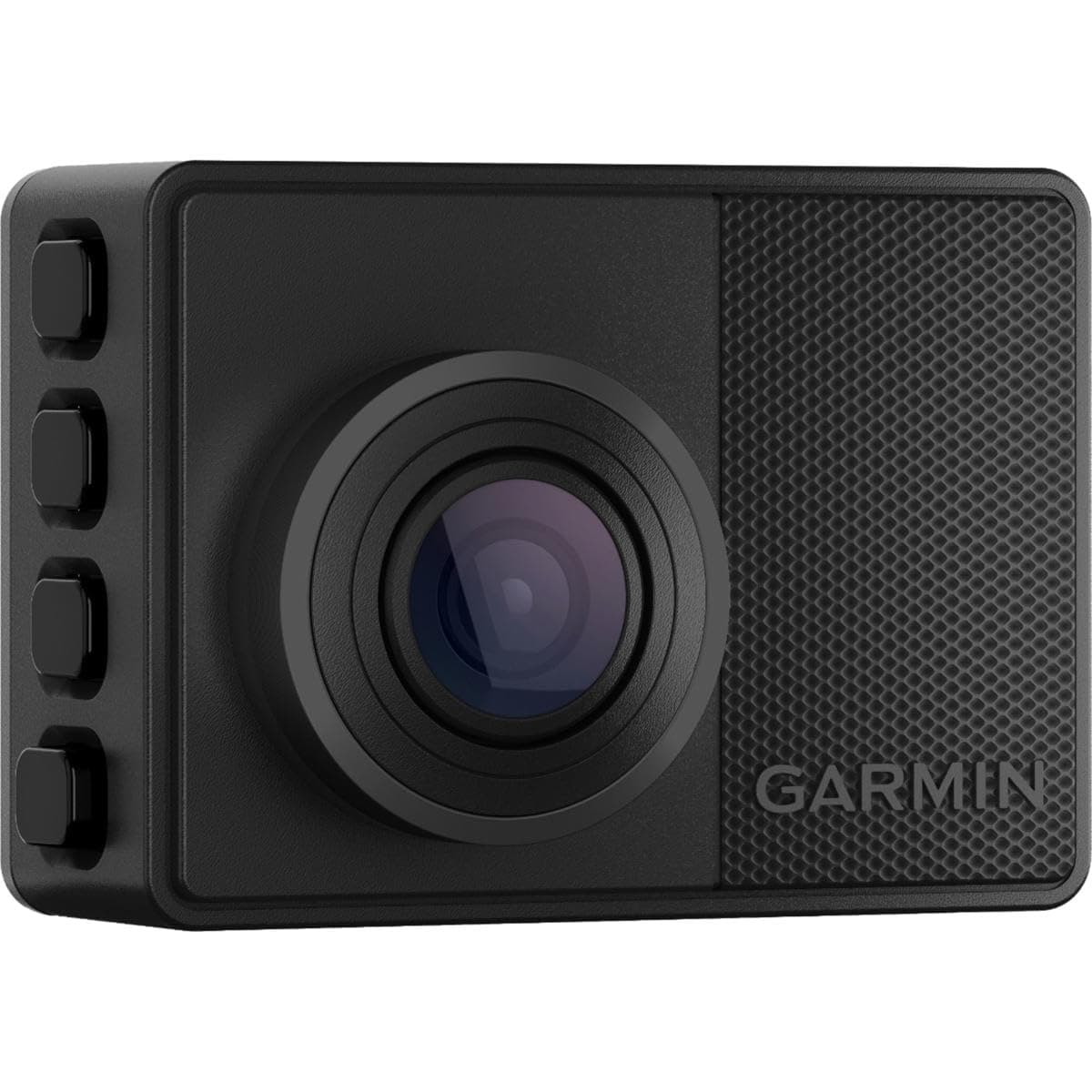
The widest coverage angle on this list. 1440p with a 180-degree FOV captures adjacent lanes, cross traffic, and both shoulders. GPS-stamped footage, remote Live View, Vault cloud backup, and Parking Guard monitoring. Edge distortion is normal for this lens width, but center-frame plate clarity is very good. Comes with a 16GB microSD card.
Which One Is Right for Your Trip
If you want the most affordable option that covers the basics reliably, the Vantrue E1 Lite is the easy choice. Built-in GPS, solid 1080p footage, and Wi-Fi app access at under $100 is a real value for what it delivers.
If you want the smallest possible camera that disappears behind the mirror and handles cloud backup automatically, the Garmin Dash Cam Mini 2 is the one. Skip it if standalone GPS logging matters to you.
If you want front and rear coverage with genuinely excellent image quality on both channels, the Viofo A229 Plus is the right call. The dual STARVIS 2 sensors are a meaningful upgrade over what cameras at this price range typically deliver.
If you want the widest field of view and do not want to deal with a rear camera installation, the Garmin 67W gives you 180 degrees of single-lens coverage with GPS and cloud backup built in.