Best Dry Shampoos for Women That Don't Leave Residue
Four dry shampoos that actually absorb oil without white residue. Honest reviews of Batiste, Klorane, Living Proof, and Drybar for every hair type and budget.
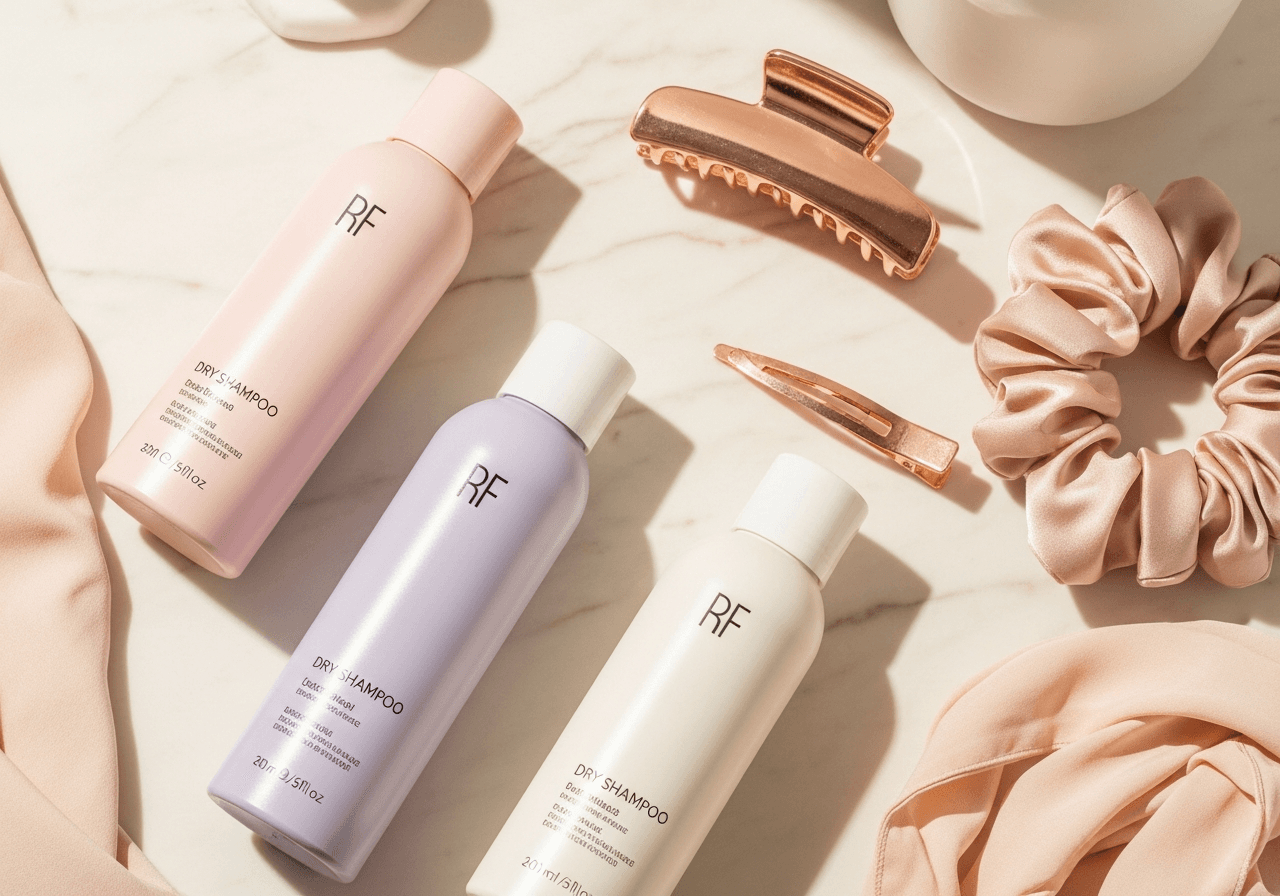
I used to think dry shampoo was a lazy shortcut, the kind of product you reach for only when you have run out of time and options. Then I spent three weeks traveling internationally with a carry-on-only bag, and my perspective shifted completely. When you cannot wash your hair every day and your scalp produces oil like it has a quota to meet, dry shampoo stops being a convenience and starts being a survival skill.
Since then I have tested a lot of bottles, made a lot of rookie mistakes (applying to dry hair, spraying too close, not massaging it in properly), and learned what actually separates a good dry shampoo from one that just makes your roots look dusty and gray. The four below are the ones I genuinely trust, for different reasons and different hair situations.
What Dry Shampoo Actually Does
This is worth understanding before spending money, because the way dry shampoos work explains why some fail where others succeed.
Most dry shampoos rely on an absorbent powder, typically rice starch, tapioca starch, or aluminum starch, to physically soak up sebum (the oil your scalp produces). The powder binds to oil molecules, you massage it in and brush or shake it out, and your hair looks fresher because the oil is now attached to something solid rather than coating the hair shaft.
The white residue problem comes from that same powder. If you spray from too close, apply too much, or do not work it in thoroughly, you are essentially left with undissolved powder sitting on your hair. On darker hair, this shows up as a gray or chalky cast that is hard to shake out. On lighter hair it tends to blend in, which is why blondes get away with more volume from a single spray than brunettes do.
Formulas that use finer starches, or that disperse in a finer mist, leave less visible residue. Some premium dry shampoos, particularly Living Proof, skip traditional starch entirely and use a patented technology that works more like a cleaning agent than a coating. The result for certain hair types is noticeably different from a starch-based formula.
The other thing that matters is scalp sensitivity. Many aerosol dry shampoos use alcohol and synthetic fragrance as part of the delivery system. For a sensitive scalp or anyone prone to irritation, that combination can cause itching, dryness, or scalp inflammation over time. If your scalp reacts to products easily, formula ingredients matter as much as oil absorption.
Batiste Dry Shampoo Original
This is where almost everyone starts, and for good reason. Batiste Dry Shampoo has been the global bestseller in this category for years, and it earns that ranking through genuine reliability and a price point that makes it easy to keep extras everywhere. I have one in my gym bag, one in my bathroom, and one in my desk drawer at this point.
The formula uses starch as its main absorbent, along with a light citrus scent with notes of bergamot and lily. On oily roots, one short burst at the crown followed by a thorough massage produces real volume and a genuinely cleaner feel. For anyone who has not tried dry shampoo before, this is the best starting point because you learn the technique with a product that is affordable enough to experiment with.
The honest limitation is the residue issue on dark hair. On my medium-brown hair, if I apply Batiste carelessly, I end up with visible white at the roots for a few minutes until I work it through. The trick is spraying from at least eight inches away, letting it sit for a full two minutes, then massaging vigorously from underneath. Done correctly, the residue disappears. Done in a rush, it does not.
I use Batiste on hair that just needs a quick refresh, not hair that has been unwashed for two full days. At that point, the starch formula hits its ceiling and a more powerful option does a better job.
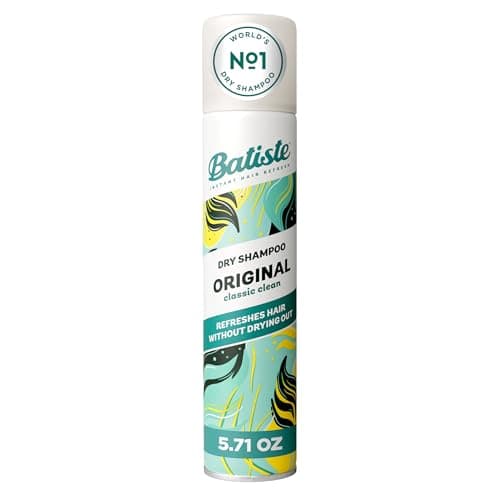
Batiste Dry Shampoo, Original Fragrance Classic Clean, 5.71 oz
The global bestseller for a reason. A starch-based formula with a light citrus scent that absorbs oil, lifts roots, and adds texture in under two minutes. Around $8 for 5.71 oz. Spray from eight inches away, wait two minutes, massage thoroughly. Best for hair that is one or two days post-wash rather than three or more.
Klorane Ultra Gentle Dry Shampoo with Oat+
This is the one I reach for when my scalp is feeling reactive, after a lot of sun exposure, during allergy season, or any week when my skin is in a sensitive state generally. The Klorane formula is built around oat milk protein, which is both the absorbent and a soothing active ingredient. It is hypoallergenic, sulfate-free, paraben-free, and the fragrance is genuinely minimal rather than just marketed that way.
On a sensitive scalp, the difference is real. Standard dry shampoos with alcohol and synthetic fragrance leave my scalp slightly tight and occasionally itchy when I use them back to back. Klorane does not. The mist is finer than Batiste, which means less residue risk with each spray, and it absorbs into the hair with less massaging time required.
The trade-off is oil absorption capacity. For hair that is lightly oily, Klorane does an excellent job. For hair that is genuinely saturated, it works less effectively than starch-heavy formulas. It is a gentle option, not a heavy-duty one, and knowing that going in sets the right expectations.
The price lands around $20 to $22 for 3.2 ounces. That is meaningfully more expensive than Batiste per ounce, and whether it is worth it depends entirely on how your scalp responds to standard formulas. If your scalp is sensitive or reactive, this is the product I would start with.
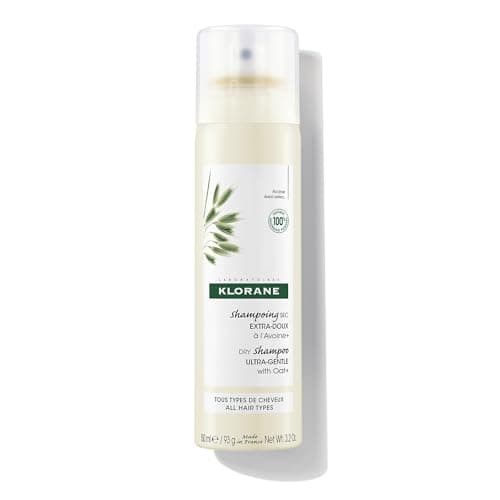
Klorane Ultra Gentle Dry Shampoo with Oat+, 3.2 oz
The sensitive-scalp pick. An oat milk-based formula that absorbs light to moderate oil without alcohol, synthetic fragrance, or irritants. Hypoallergenic, vegan, and dermatologist tested. Finer mist than most aerosol options means less residue and easier massage-in. Best for sensitive or reactive scalps, or hair that is one to two days post-wash.
Living Proof Perfect Hair Day Dry Shampoo
This is the option I reach for when I genuinely need my hair to perform, not just look passable. Living Proof uses a patented OFPMA technology that actively neutralizes odor molecules and binds to oil in a way that behaves differently from starch powder. Instead of coating the root with an absorbent, it attaches to the actual oil and sweat compounds and lifts them away more completely.
What that means in practice: when I use this on hair that has been unwashed for two days, it does not just look cleaner. It actually smells cleaner, which starch-based dry shampoos never quite achieve. There is a light, fresh scent that is not overpowering, and the result holds longer through the day than Batiste does for me.
The formula is silicone-free and paraben-free, which matters if you are trying to keep your hair care routine on the cleaner side. It also absorbs more quickly than most, so the time between spraying and having your hair look presentable is shorter. I have gotten this from a gym bag to a work meeting without looking like I tried, which is the actual goal.
The honest caveat: this is about $28 to $32 for 5.5 ounces. That is a real price difference from a drugstore formula. If you wash your hair regularly and only use dry shampoo occasionally, Batiste is perfectly adequate. If you stretch washes to every three to four days as a regular habit, or if your hair produces significant odor alongside oil, Living Proof is the one that justifies the cost.
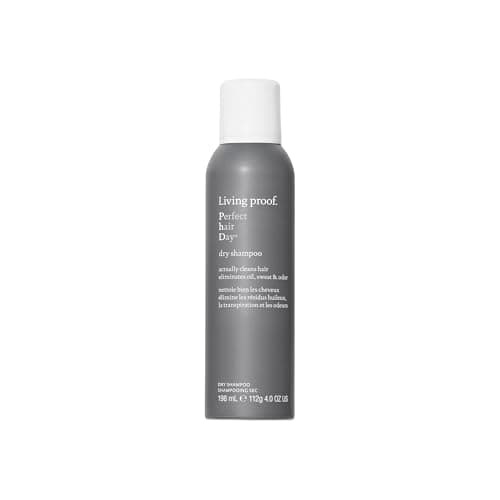
Living Proof Perfect Hair Day Dry Shampoo, 5.5 oz
The premium option that actually cleans rather than just coats. Living Proof's patented OFPMA technology neutralizes odor and binds to oil more thoroughly than starch-based formulas. No silicones, no parabens. The best choice for stretching washes to three or four days, or anytime your hair needs to look and smell genuinely fresh rather than just refreshed.
Drybar Detox Dry Shampoo
Drybar built its reputation on blowouts, and this dry shampoo carries that same professional-finish ethos. Where Batiste gives you a basic refresh and Living Proof focuses on deep cleaning, Drybar Detox lands in the middle as a mid-range option that prioritizes root lift and volume alongside oil absorption. It is the salon-brand option for women who want their second-day hair to look like a styled choice rather than a compromised one.
The formula uses rice starch for absorption alongside a blend of conditioning agents that leave the hair feeling soft rather than stripped. The spray dispenses in a fine, even mist, and I find it easier to control than Batiste in terms of not over-applying. The blanc scent is clean and slightly warm without being heavy.
For my hair type (medium thickness, straight), this gives noticeably better root volume than Batiste does after a single application. The lift stays through most of a day without flattening, which is not something I can reliably say about the drugstore options. It is also the one I tend to use the night before a big day, applying it before bed and letting it work overnight so I wake up to roots that are already lifted and absorbed rather than having to do it in the morning rush.
The limitation is the same one that applies to most starch formulas: on very dark hair, the residue is visible without thorough massaging. The Drybar formula is finer than Batiste, so this is less of an issue, but it is still worth knowing if your hair is on the darker side.
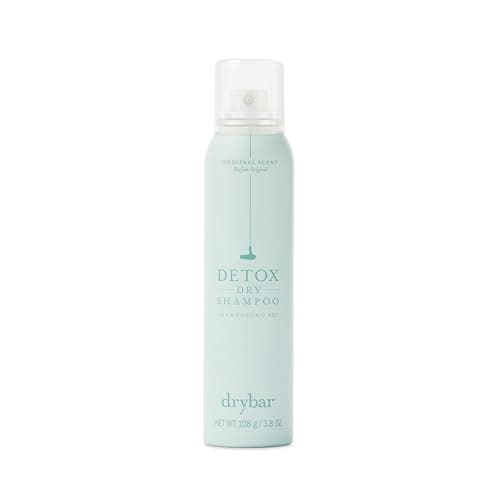
Drybar Detox Dry Shampoo Spray, Original Scent, 3.8 oz
The salon-brand pick for volume and absorption. Drybar's formula uses rice starch with conditioning agents to lift roots and absorb oil without leaving hair stiff or stripped. A finer mist than most drugstore options. Around $25 for 3.8 oz. Apply the night before for maximum lift, or use in the morning for a quick root refresh before heading out.
How to Actually Use Dry Shampoo
Application technique matters more than people realize, and it is the reason dry shampoo gets a bad reputation. Done correctly, the result looks intentional. Done in a rush with bad form, it looks gray and dusty. Here is what I have learned from a lot of trial and error.
Spray from eight to ten inches away. This is the most common mistake. Holding the can close to your roots concentrates the product in one spot and deposits more powder than the area can absorb. Farther away means a finer mist that distributes more evenly.
Section before you spray. Lift the top layer of your hair and spray the roots underneath first, then work outward in sections. This gets product where oil actually accumulates rather than just coating the surface layer. The oil at the root is what you want to reach.
Wait before massaging. Once you spray a section, leave it for at least ninety seconds before touching it. The starch needs time to bind to the oil. Rubbing it immediately just moves the product around without letting it absorb, and you get more residue as a result.
Massage from underneath, not from the top. Press your fingertips into the roots and work upward in small circular motions, like you are shampooing. This loosens any product buildup and works the starch through to where the oil is, rather than just moving it across the surface.
Brush it out. A light brush-through after massaging removes loosened product along with the oil it has absorbed. This is the step most people skip, and skipping it is usually why residue lingers.
One Product That Did Not Work for Me
I want to mention one popular option I tried that did not deliver on its promises, because reading only about products that work can create unrealistic expectations.
A heavily marketed dry shampoo that positions itself as a "long-lasting, no-residue" formula and retails for around $35 for 4 ounces left my hair feeling tacky rather than refreshed and produced a chalky residue that was harder to massage out than Batiste despite being marketed as residue-free. It also had a synthetic floral fragrance that was strong enough to smell from across a room, which is not something I look for in a hair product.
The marketing language around dry shampoo can be aggressive. "72 hours of freshness" and "no residue guaranteed" are not claims that hold up across different hair types and different amounts of application. Reading reviews from people with your specific hair type and oil level is more useful than any claim on the label.