Best Dutch Ovens for Home Cooking: Enameled Cast Iron Picks
The best Dutch ovens for home cooking: enameled cast iron picks for soups, stews, bread baking, and braising that will last your family for decades.
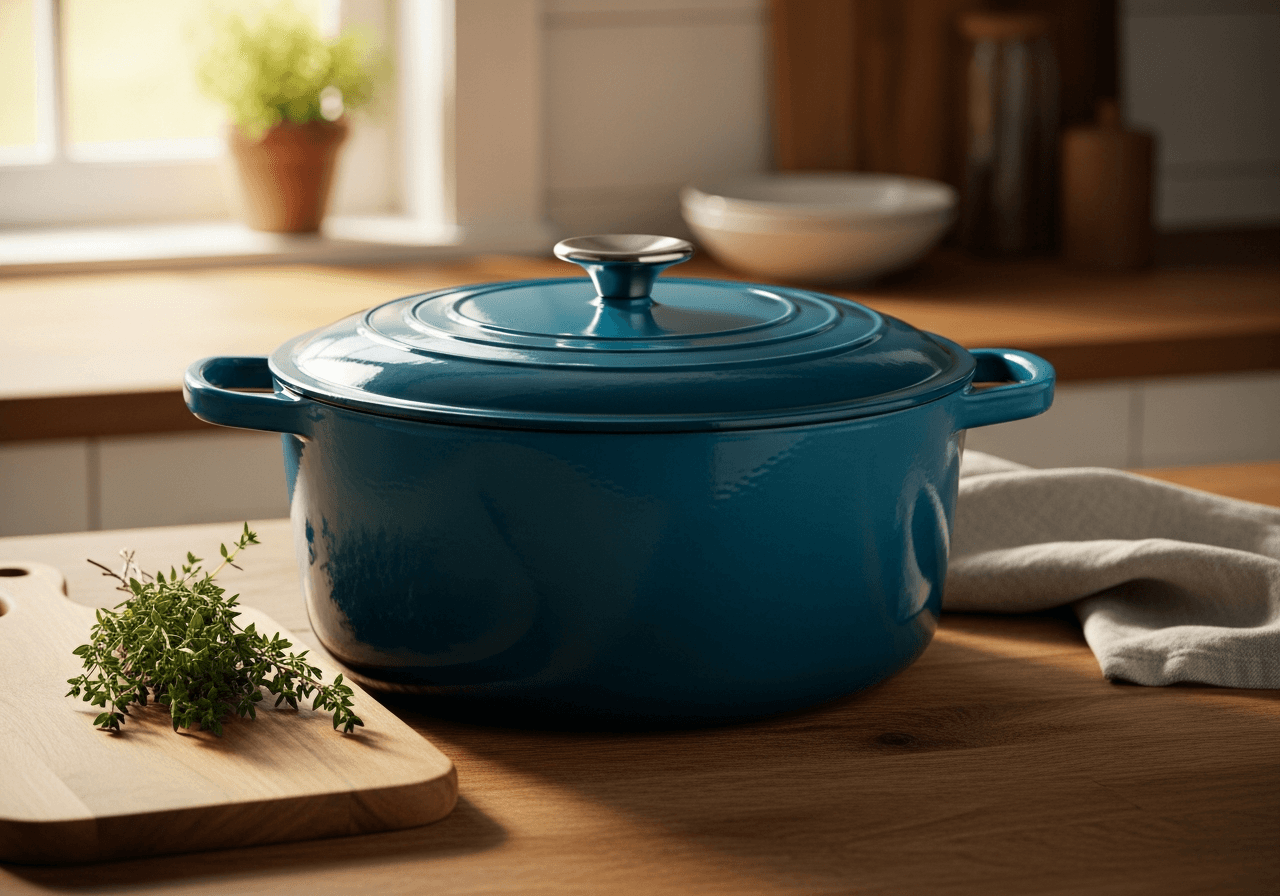
If there is one piece of cookware I would tell every home cook to buy before anything else, it is a good enameled cast iron Dutch oven. I know that sounds dramatic, but this is genuinely the pot I reach for more than any other thing in my kitchen. Soups, stews, braised meats, bone broth, a loaf of crusty sourdough on Sunday morning, a pot of chili that simmers for three hours while we do school at the table. It handles all of it.
I have been cooking from scratch for our family of six for years now, and the thing that changed my cooking more than any fancy appliance or complicated technique was getting a pot that could actually hold heat the way cast iron does, in a form I could actually clean without scrubbing for twenty minutes. Enameled cast iron hit both marks.
If you are trying to decide which Dutch oven to buy, I have used a few of these and done the research on the rest. Here is what I know.
Why Enameled Cast Iron?
Regular cast iron is wonderful, but it requires seasoning and can have issues over time with acidic dishes. Enameled cast iron gives you all the heat retention and even cooking that makes cast iron so beloved, with a smooth interior you can use for tomato-based sauces, wine braises, and anything acidic without worry.
The enamel coating is essentially a glass lining fused to the iron. It does not react with food, it cleans up much more easily, and it requires no maintenance beyond basic washing. The trade-off is that you have to be a little more careful not to drop it (the enamel can chip) and you want to avoid heating an empty pan at very high heat.
For family cooking, a 5.5 to 7-quart Dutch oven is the sweet spot. That size handles a whole batch of soup for six people with room to spare, fits a 4 to 5 pound pot roast comfortably, and works for most bread-baking recipes that call for a covered pot.
At a Glance
| Pick | Best For | Size | Oven-Safe Temp | Approx. Price |
|---|---|---|---|---|
| Lodge 6 Qt | Best overall value | 6 qt | 500°F | $70-$80 |
| Tramontina 6.5 Qt | Best budget family size | 6.5 qt | 450°F | Under $60 |
| Amazon Basics 6 Qt | Cheapest starter pick | 6 qt | Check listing | Low |
| Overmont 5.5 Qt | Best gift / smaller family | 5.5 qt | 500°F | Mid |
Lodge Essential Enamel Cast Iron Dutch Oven, 6 Qt
If I had to pick just one brand that consistently delivers quality at a reasonable price, it would be Lodge. They are an American company that has been making cast iron since 1896, and the enameled line holds up to that reputation.
The 6-quart is the size I use most. It fits a proper batch of soup that will actually feed a family, and the lid seals well enough to lock in moisture during long braises and stews. The self-basting lid has smooth interior bumps that drip condensation back down onto the food as it cooks, which keeps dishes from drying out.
The enamel interior is cream-colored, which I really appreciate because you can actually see what is happening in the pan. You can tell when a fond is developing, when something is getting too dark, when the liquid level is dropping. A dark interior makes all of that harder to judge.
Oven-safe to 500 degrees, which covers everything from low-and-slow braises to high-heat bread baking. I have baked a lot of sourdough loaves in mine and the crust is consistently good because the covered pot traps steam in those critical first minutes of baking.
The honest limitation: Lodge lids can be heavy to lift safely with one hand, especially when the pot is full and hot. You want a good thick oven mitt and a firm grip on the knob. The pot itself is also quite heavy at around 14 pounds for the 6-quart, which is just the nature of cast iron.
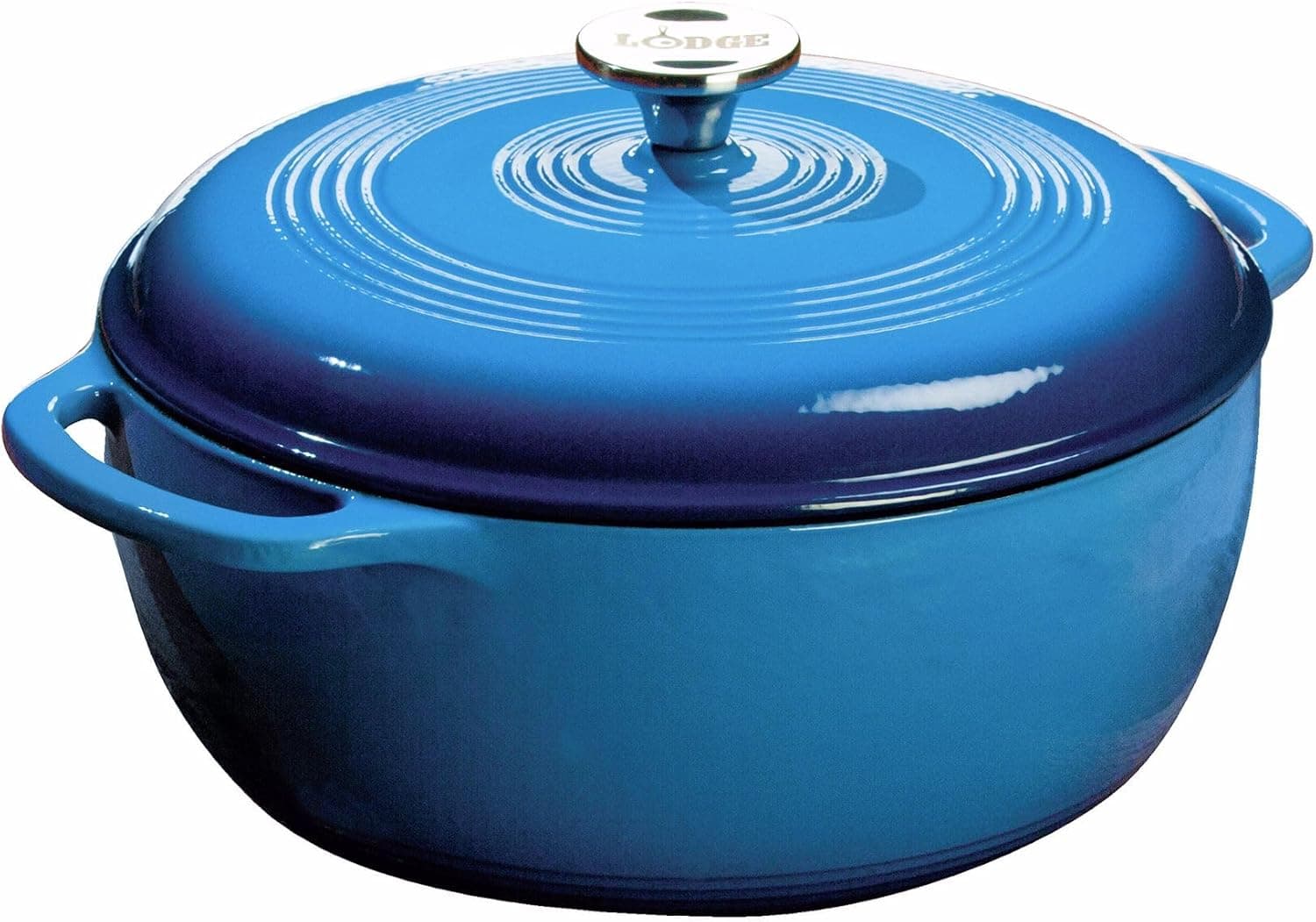
Lodge Essential Enamel Cast Iron Dutch Oven, 6 Qt, Caribbean Blue
The American cast iron standby. Oven-safe to 500 degrees, self-basting lid, cream interior so you can monitor cooking, and a lifetime limited warranty. At around $70 to $80 depending on color, it is the best value for the quality. The 6-quart handles family-sized soups, stews, braises, and whole loaves of artisan bread. Available in a good range of colors.
Tramontina Enameled Cast Iron Covered Dutch Oven, 6.5 Qt
The Tramontina is the Dutch oven I most often recommend to people who have not bought one before, because it delivers genuinely excellent cooking performance at a price that makes it easy to say yes. For years this was considered the best budget Dutch oven, but at this point it is just considered a good Dutch oven full stop. That distinction matters.
The 6.5-quart is slightly larger than the standard 6-quart, which I appreciate. More room for a big batch of bean soup or a full rack of ribs cut in half. The self-basting lid here has ridges that direct condensation back onto the food, and the exterior enamel comes in a beautiful range of colors. The finish holds up well to normal use over time.
Wall thickness on the Tramontina is actually thicker than many comparable Dutch ovens, which means it holds heat even longer once it comes to temperature. For low-and-slow cooking, that is a real advantage. The trade-off is that it takes a little longer to heat up because of that mass, so I always start on medium-low and let it warm gradually.
The oven-safe temperature is 450 degrees, which is slightly lower than Lodge. That is still plenty for most cooking, including bread baking, but worth noting if you regularly cook at higher temperatures.
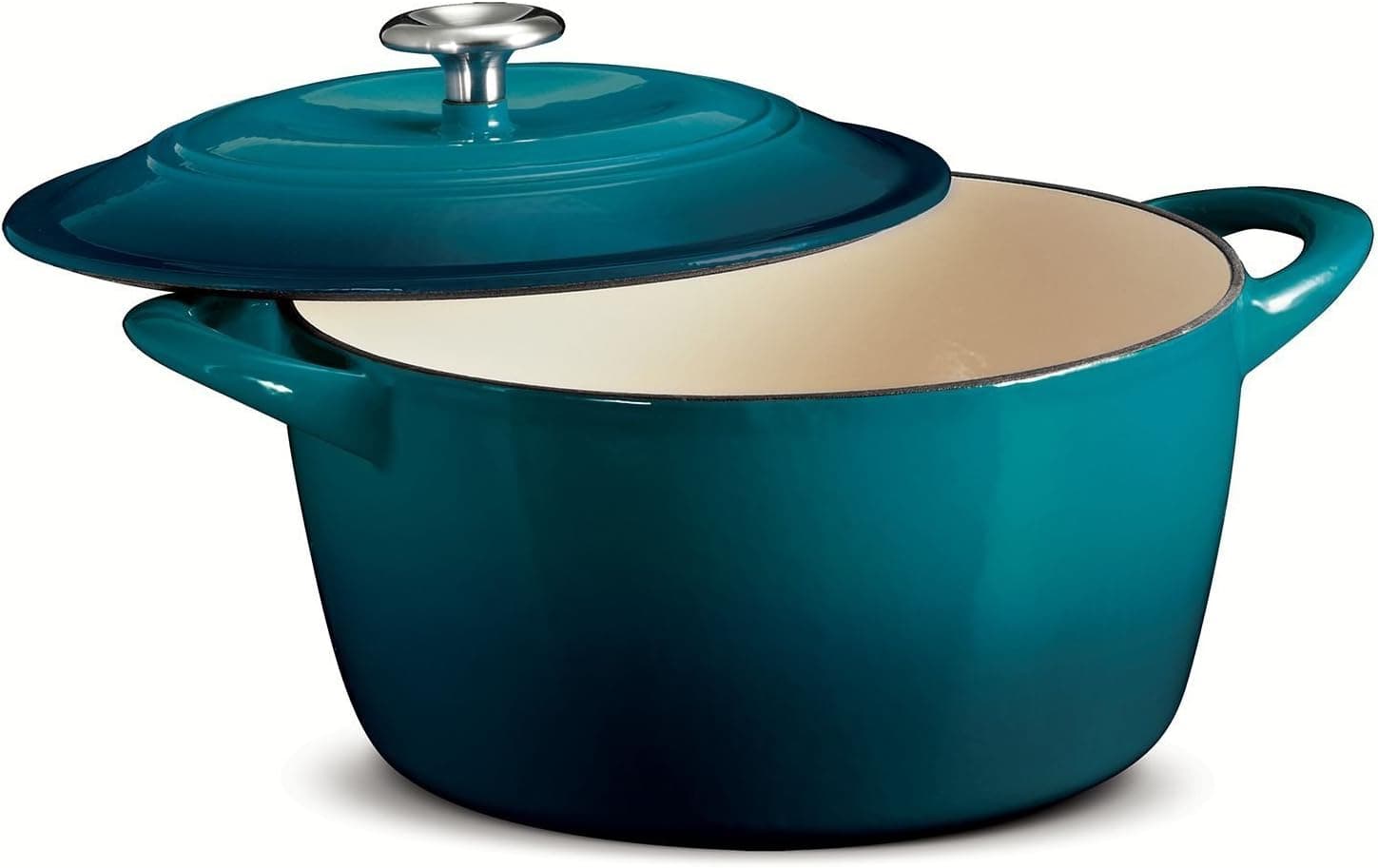
Tramontina Enameled Cast Iron 6.5-Quart Covered Round Dutch Oven
The other Dutch oven I consistently point people to. Thicker walls than most competitors, self-basting lid ridges, and a beautiful exterior enamel that comes in a wide range of colors. Oven-safe to 450 degrees. The 6.5-quart size gives you a little more room than the standard 6-quart, which is welcome when you are feeding a crowd. Often available under $60 on Amazon.
Amazon Basics Enameled Cast Iron Dutch Oven Pot, 6 Qt
I came to the Amazon Basics Dutch oven skeptically. Something about a budget store-brand cast iron pot felt like it would cut corners on the thing that matters most, which is longevity. But after reading through a large number of reviews and comparing it against higher-priced options, the picture is more interesting than I expected.
For the basics of Dutch oven cooking, this one delivers. The cast iron body holds heat well, the enamel interior is a light cream color, and it comes in at a price point that makes the whole category accessible for people who are not sure they want to spend $70 to $100 on a pot they have never used before. If you are a new home cook who wants to see whether you will actually use a Dutch oven before investing more, this is a reasonable starting point.
The honest caveats: the enamel quality and consistency is not quite at the level of Lodge or Tramontina. Some reviewers report chips appearing sooner than expected with regular use, and the lid fit is not quite as tight as the pricier options. For occasional use or someone building up their kitchen slowly, those are manageable trade-offs. For a pot you plan to use four times a week for a decade, I would spend more.
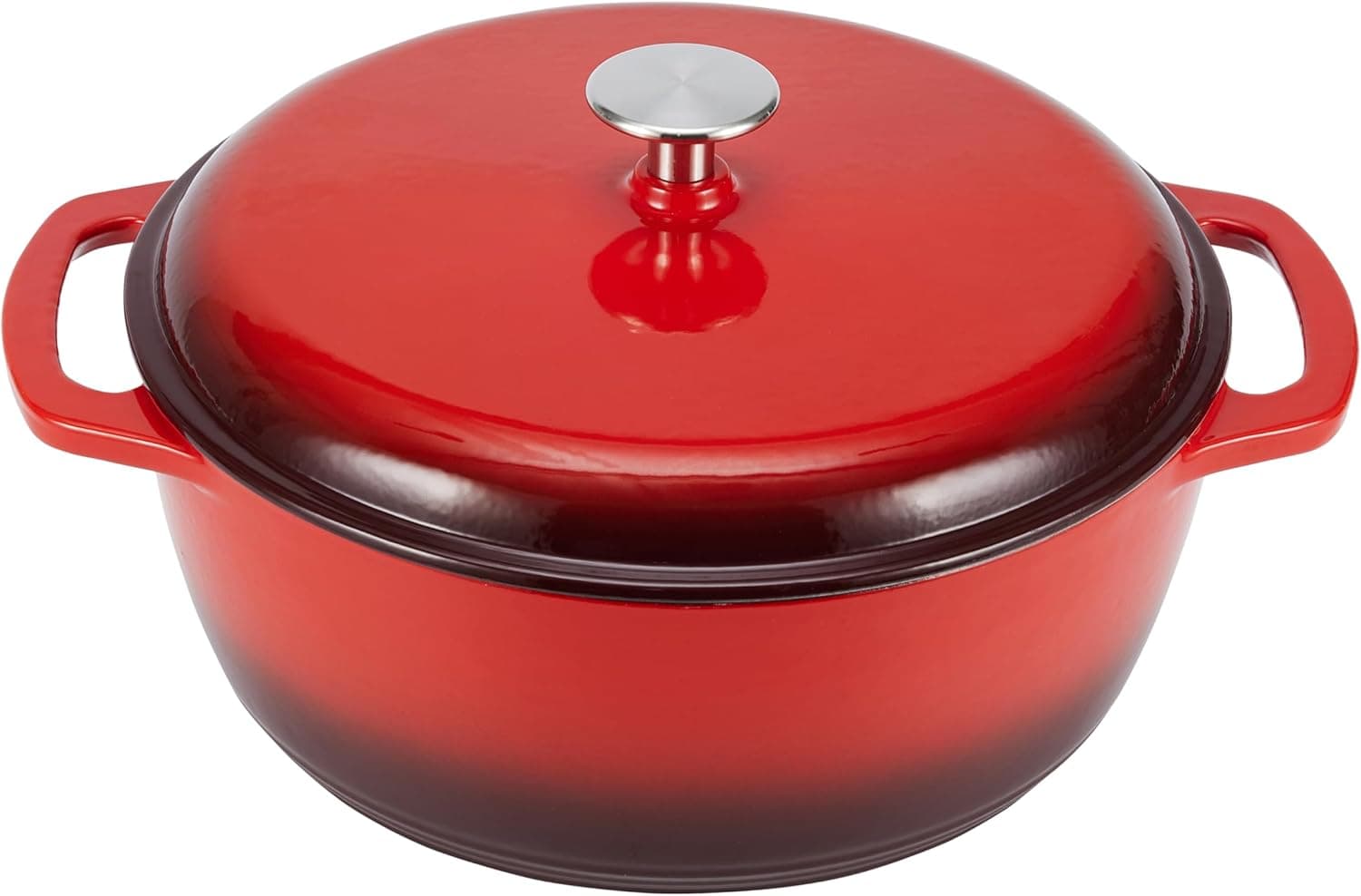
Amazon Basics Enameled Cast Iron Dutch Oven Pot with Lid, 6-Quart, Red
The entry-level option for someone who wants to try Dutch oven cooking without a big investment. Cream enamel interior, dual handles, oven-safe, and available in a few colors. Not quite the durability of Lodge or Tramontina, but solid for the price. A good starting point if you are building your kitchen up gradually and want to try the format before committing to a higher-end pot.
Overmont 5.5 Qt Enameled Cast Iron Dutch Oven
The Overmont is newer to the market than Lodge or Tramontina and has built a following by offering a well-made product at a mid-range price with a few features worth noting. The 5.5-quart size is slightly smaller than a standard 6-quart but still large enough for most family meals. It comes with a small recipe booklet and a pair of cotton potholders, which is a nice touch if you are just getting started.
What stands out about the Overmont is the lid. The interior has more pronounced self-basting points than some competitors, and the fit feels particularly snug. For braising, that tighter seal means even more moisture stays in the pot, which is the whole point of covered slow cooking.
The enamel colors Overmont offers skew toward earthy tones, which I personally love. The bottle green and cream white especially. The 500-degree oven safety matches Lodge, which is solid.
One thing to watch: the 5.5-quart is great for a family of four, but with six of us at the table, I sometimes wish for just a little more volume. If you regularly cook for a larger group, I would size up to the 6 or 6.5-quart options above.
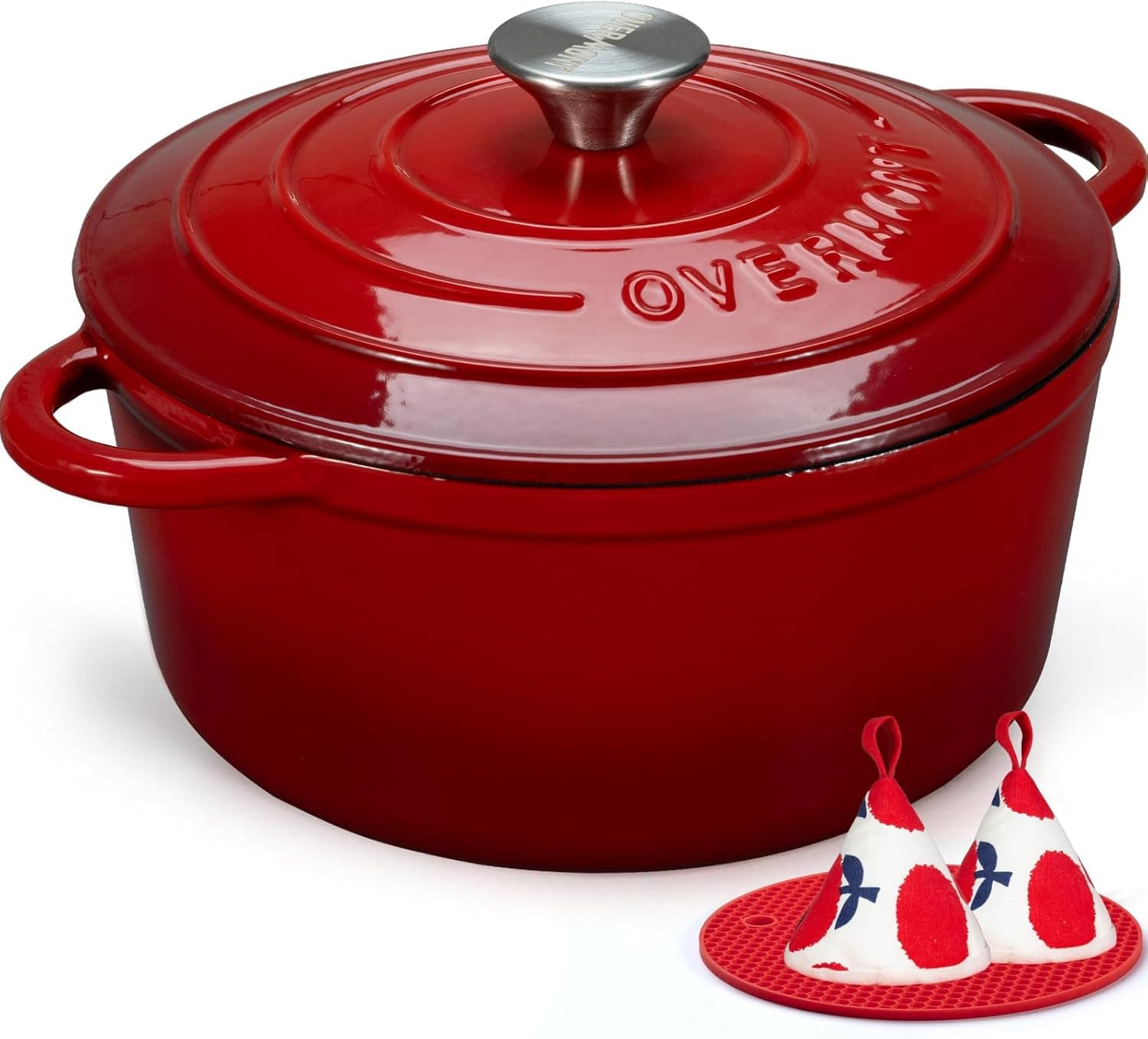
Overmont 5.5QT Enameled Cast Iron Dutch Oven with Lid, Cookbook & Potholders
A solid mid-range option with a tightly sealing lid, pronounced self-basting interior points, and earthy color options that are genuinely pretty. Oven-safe to 500 degrees. Comes with a recipe cookbook and cotton potholders. The 5.5-quart size fits a family of four comfortably and makes a nice gift set because everything comes together.
What Size Dutch Oven Do You Actually Need?
This is the question I get most often, and the answer depends almost entirely on your household size.
For one or two people, a 3.5 to 4-quart is plenty. You can make a proper batch of soup without everything being too shallow, and the smaller pot is lighter and easier to handle.
For a family of four, a 5 to 5.5-quart hits the sweet spot. The Overmont above is well-matched for this.
For larger families or anyone who likes to cook big batches and freeze half, a 6 to 7-quart is the right call. This is what I use. With four boys at the table plus two adults, a 6-quart batch of minestrone or a big pot of chicken stew feeds everyone with a little left for lunch the next day, which I consider mandatory when I am putting this much effort into a meal.
If you are unsure, I would lean toward a size larger than you think you need. A Dutch oven that is a little big for your meal is still a functional pot. A Dutch oven that is too small means the lid will not seat properly, which defeats the purpose of covered cooking entirely.
How to Take Care of an Enameled Dutch Oven
The main things to know: avoid thermal shock (do not put a hot pot directly into cold water or onto a cold surface), use wooden or silicone utensils rather than metal to protect the enamel interior, and hand-wash rather than putting it in the dishwasher for the best longevity.
Stuck-on food comes off easily if you fill the pot with warm soapy water and let it soak for 20 to 30 minutes. For stubborn spots, a paste of baking soda and water works well without scratching the enamel. Avoid steel wool or abrasive scrubbers.
Store the pot with the lid slightly ajar or resting beside it rather than sealed shut. Trapping moisture inside can cause odor over time, and preventing air circulation is one of the few things that can actually cause issues with an otherwise nearly indestructible pot.