Best Watercolor Sets for Beginners: Tried & Tested
Four watercolor sets a friend who paints walked me through, from a budget Arteza pan set to Sakura Koi and Winsor & Newton Cotman. Honest notes on what works.

My friend who paints came over a few months back with a tote bag full of her watercolor sets. She wanted to show me which ones she actually reaches for and which ones live in a drawer at the bottom of her supply pile. I had been curious about trying watercolor with the boys for a while, mostly because it seemed like a kitchen-table activity that did not require a lot of setup or cleanup. So I made us coffee and we spent the afternoon painting at the dining room table.
What I learned in one afternoon would have taken me months to piece together on my own. She walked me through why a $10 craft-store kit produces muddy disappointing results while a $25 set can actually look like a watercolor painting. It is mostly the paper and the pigment quality, not talent. She pulled out four sets she keeps recommending to friends, painted the same simple wash with each, and the differences were obvious even to me as a complete outsider.
I asked enough questions that day to fill a small notebook, and I have since pulled a couple of these out on rainy homeschool afternoons with the kids. These are the four sets she recommends, at different price points and with different goals.
What You Are Actually Buying Matters More Than You Think
Before I get into specific products, there is a tension in beginner watercolor buying that no one explains well: you can get a lot out of inexpensive paints if you use good paper, but good paper with bad paints is still frustrating. Paint quality affects how colors mix, how vibrant they are, and whether they stay reactivatable once dry.
Student-grade watercolors (which is what most beginner sets are) use synthetic pigments and more filler than professional-grade paints. They are totally appropriate for learning, but there is a wide range within student grade. A $10 set and a $30 set are both student grade, but the $30 set will typically have more consistent pigment distribution, better lightfastness, and colors that mix more cleanly without turning gray or brown on you.
Pan sets versus tube sets. Pan sets, which use small dried pucks of paint in individual wells, are the standard for beginners. They are portable, ready to use with a damp brush, and there is no wasted paint if you forget to recap something. Tubes give you access to fresher pigment and are better for large washes, but they require more planning and create more waste until you learn how much to squeeze out. Every set in this post is a pan set, which is where I would start.
A note on paper. Paper matters more than most beginner guides mention, and I want to say it upfront rather than burying it: cheap sketch paper or printer paper will buckle badly under watercolor and cause the paint to spread in ways you cannot control. The minimum you want is 90lb/185gsm watercolor paper labeled as cold-press. Cold-press has a slight texture that is the standard surface for most painting styles. Getting this right early saves a lot of frustration that would otherwise get blamed on the paint.
Arteza Watercolor Paint Set, 36 Colors
The Arteza 36-color watercolor set is the set she recommends most often to people who are completely new to watercolor and not sure yet whether it will become a real hobby. At around $25-$28, it is inexpensive enough that commitment anxiety does not get in the way, and the quality is genuinely above what you would expect from the price.
It comes in a metal tin with a hinged lid that doubles as a mixing area, a set of half-pan color wells, and a water brush pen. The 36 colors give you a usable range without much redundancy. There are warm and cool versions of the primary colors, multiple greens in different tones, several neutrals, and a handful of earthy tones that most budget sets leave out entirely. Having warm and cool primaries matters more than it sounds: a warm blue and a cool blue mix to completely different greens and purples, and that variety is what keeps beginner color mixing from going flat.
Arteza's pigmentation at this price point is better than it has any right to be. The colors activate quickly with a damp brush, read roughly as the color they appear in the pan (which is not always true with cheap sets, where the dried pan color and the painted result diverge significantly), and mix without turning muddy unless you are overworking the wet paint.
The included water brush is fine for the first few sessions but not what you want long-term. The bristles are synthetic and the tip is stiff enough to lose its point under moderate pressure. For learning how watercolor flows and getting a feel for the paint, it works. Once you know you are sticking with it, a round sable or sable-mix brush in sizes 4 through 8 is the upgrade that changes your results most visibly.
The honest limitation is lightfastness. Arteza does not publish detailed lightfastness ratings for this set, which matters if you want to create work that will hold its color for years when displayed. For learning, practice, and anything you are not planning to frame, it is completely irrelevant.
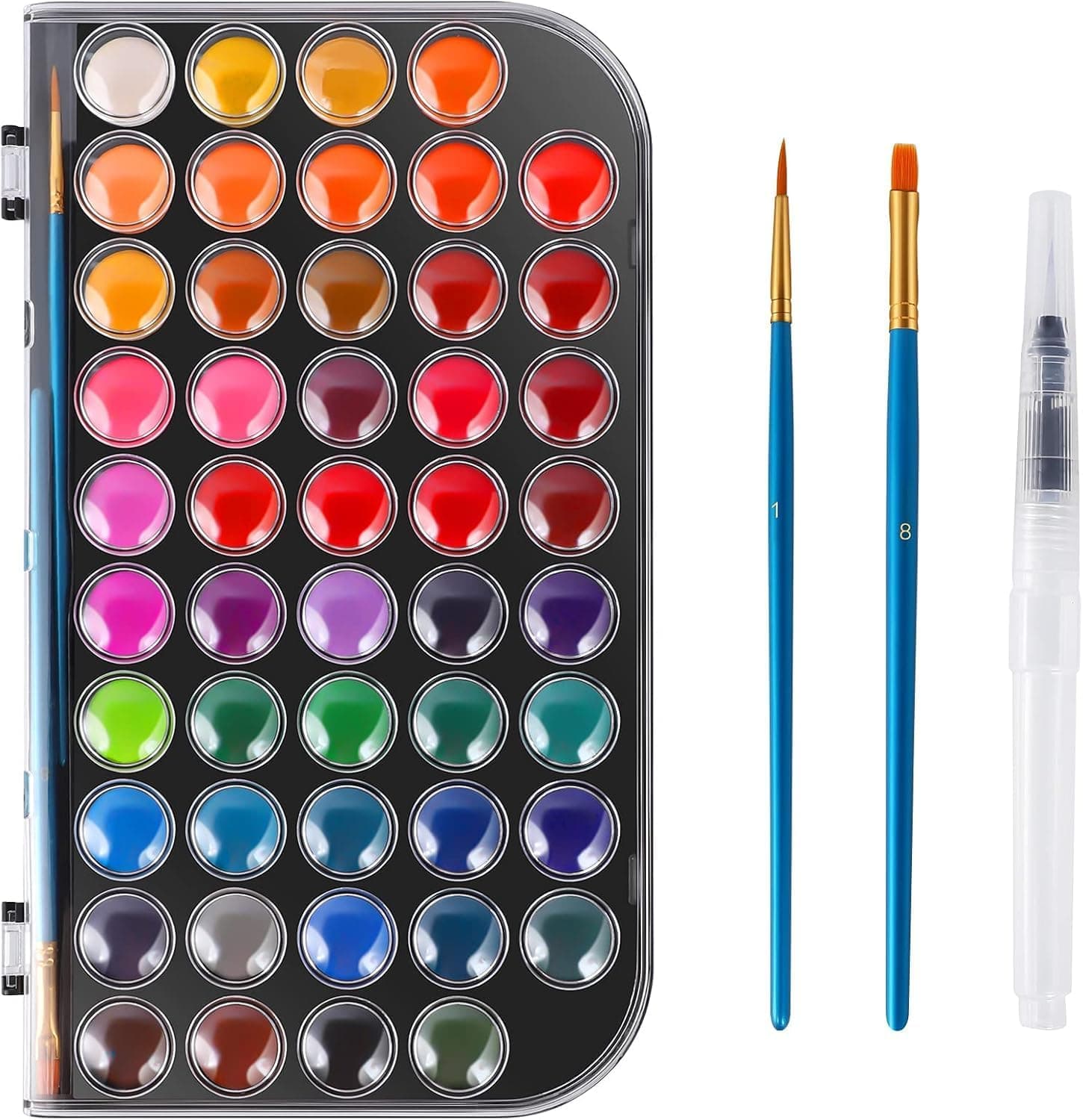
Arteza Watercolor Paint Set, 36 Colors in Half Pans with Water Brush Pen
The best beginner watercolor set at this price. 36 well-pigmented half-pan colors in a tin box with a mixing lid and an included water brush pen. Colors activate quickly, mix cleanly, and read close to what they appear in the pan. Best for total beginners who want to start right away without committing to a larger investment.
Winsor & Newton Cotman Sketchers' Pocket Set, 12 Colors
The Winsor & Newton Cotman line is what most art teachers recommend when students ask what to move to after a budget set. It is student grade, but Winsor & Newton has been making artist paints for nearly 200 years and the quality control shows in ways that newer brands cannot yet replicate.
The Sketchers' Pocket Set has 12 colors in a compact, lightweight tin with a snap closure, a built-in mixing area on the lid, and an included brush. It is deliberately portable, designed for painting on location and outdoors. The tin fits in a jacket pocket or small bag without adding noticeable weight.
Twelve colors sounds limiting compared to 36, but the Cotman color selection is specifically curated for mixing range. Working with a limited palette forces you to learn how colors interact rather than reaching for a pre-mixed convenience color every time. Most watercolor instructors would argue that 12 well-chosen colors teaches more than 36 colors that do the mixing for you. The colors Winsor & Newton chose here cover the primaries (warm and cool versions of each), useful earth tones, and a black, which is enough to mix almost anything with practice.
The quality difference from budget sets shows up most clearly in two ways. First, the Cotman pigments are more finely ground, meaning colors mix without any gritty inconsistency and settle more evenly on paper. Second, the colors are more transparent, so layers glow rather than going chalky and opaque the way cheaper paints sometimes do when built up. That transparency is a big part of what makes watercolor look like watercolor rather than slightly sheer gouache.
The limitation worth mentioning: 12 colors does require color mixing instincts that take time to develop. A beginner who has not yet learned how to arrive at specific colors through mixing may find themselves frustrated when they cannot locate the exact green or purple they want without knowing how to build it. If you learn well by experimenting and do not mind the trial and error, this is a better first set than a large budget option. If you need quicker early wins to stay motivated, start with the Arteza above and work toward this as your second set.
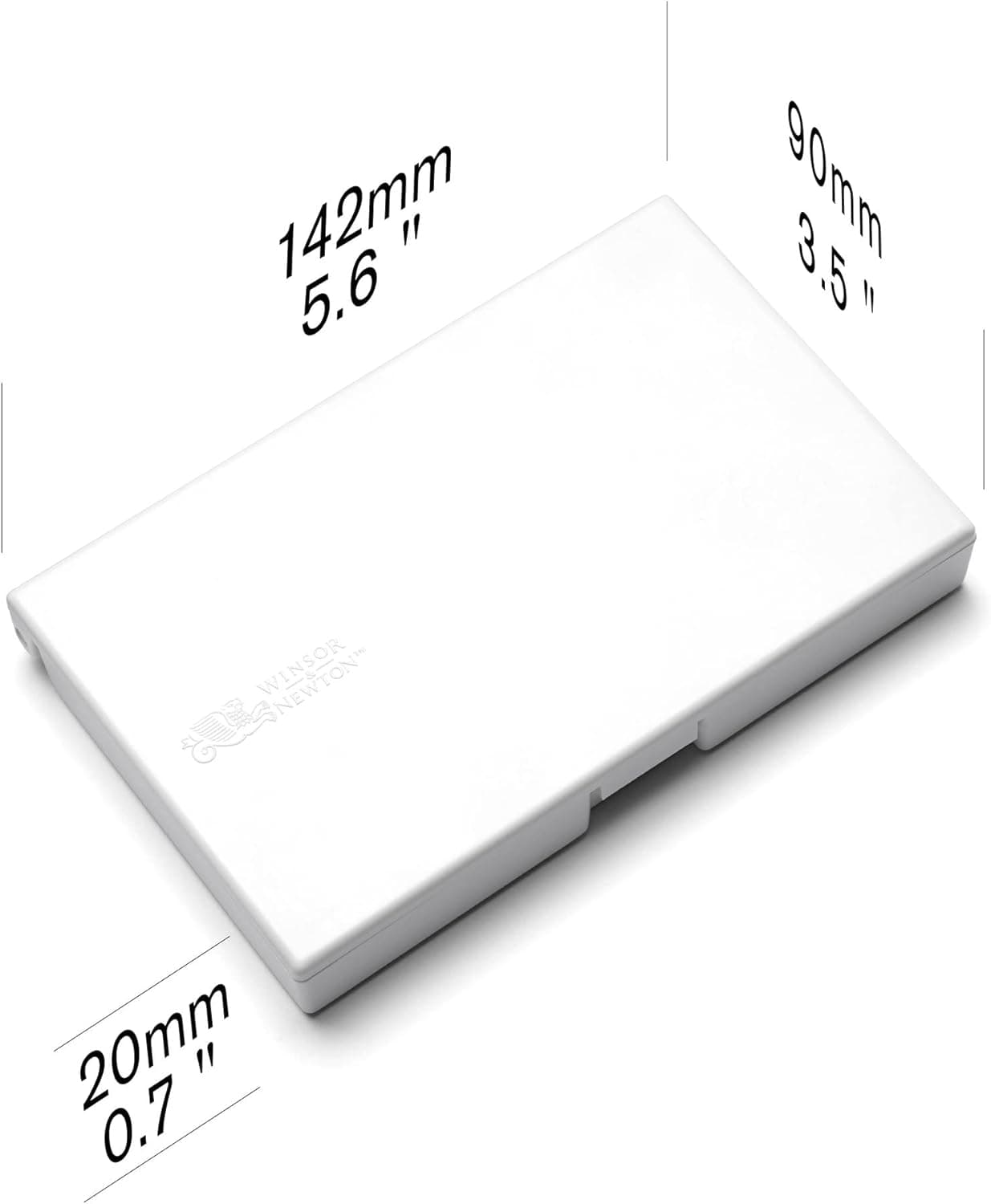
Winsor & Newton Cotman Watercolor Paint Set, Sketchers' Pocket, 12 Half Pan
The standard art-teacher upgrade recommendation. 12 curated half-pan colors in a compact snap-close tin with a mixing lid and included brush. Finely ground pigments that are more transparent and lightfast than budget alternatives. The limited palette builds real color mixing skills. Best for beginners who want to invest in quality from the start, or anyone who paints on the go.
Sakura Koi 24-Color Field Sketch Set
The Sakura Koi Field Sketch Set is the one she takes when she is painting away from her desk. It was designed specifically for painting on location, which means everything about it is optimized for portability without sacrificing paint quality.
It comes in a compact magnetic tin that latches securely even when tossed in a bag. The lid doubles as a mixing palette. There is a built-in water compartment and an included collapsible water brush that holds enough water to paint for a full session outdoors without needing to carry a separate jar. For painting in parks, at a coffee shop, while traveling, or just working outside your usual setup, this is the most complete kit available at this price point.
The 24 Koi colors land closer to Cotman quality than to budget alternatives in terms of pigment behavior. Colors mix predictably, activate easily with a damp brush, and the range covers the colors most beginners actually reach for most often. The tin layout makes it intuitive to navigate even when you are working quickly or in a small space.
What makes this set useful for beginners beyond the portability is how frictionless it makes actually starting. A well-designed kit that unfolds cleanly and has everything in one place lowers the activation energy to painting. She has used this set on picnic tables, in airports, and on the couch, and the setup takes about ten seconds.
The limitation is the mixing area. The lid is small, and if you are working on anything that requires large washes or significant color blending, you will run out of mixing space quickly. Bringing a small ceramic palette addresses this but removes some of the portability advantage. For small-scale work, sketching, and travel, the built-in space is fine.
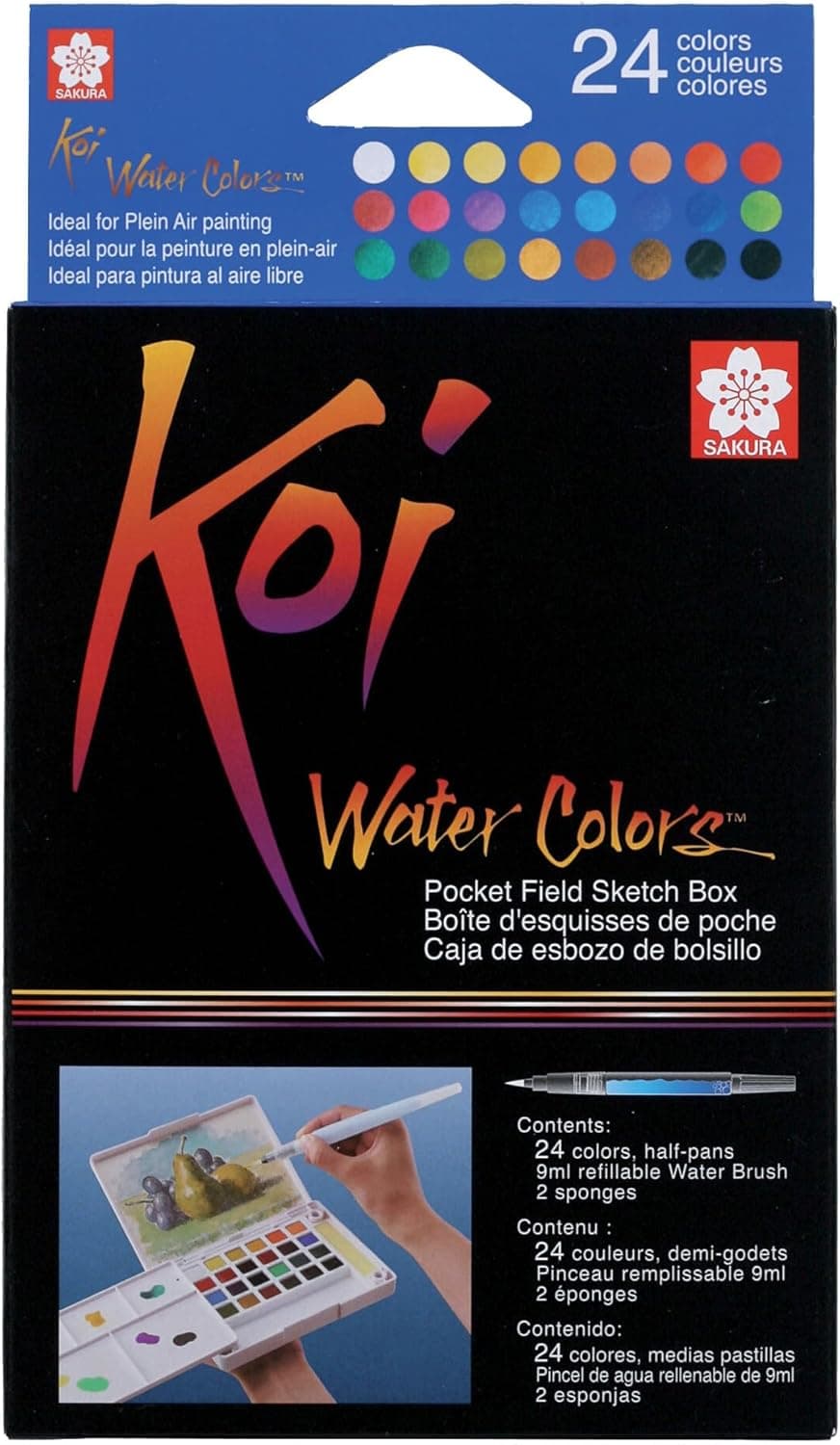
SAKURA Koi 24-Color Field Sketch Watercolor Set with Brush
The best watercolor kit for painting on the go. 24 Koi half-pan colors in a magnetic tin with a built-in mixing palette, water compartment, and collapsible water brush. Paint quality is noticeably above budget sets. The whole kit packs into a jacket pocket. Best for anyone who wants to paint while traveling or away from a dedicated workspace.
HIMI Watercolor Paint Set, 24 Colors
The HIMI watercolor set is the one she points people toward when they want to try watercolor but are not yet sure they will enjoy it enough to invest more. It is the most affordable option here, comes with watercolor paper included, and is fully functional as a starting kit.
The set includes 24 half-pan colors in a compact box, a water brush, and a small pad of watercolor paper. Getting paper included is more meaningful than it sounds. Paper is the one additional purchase most beginners forget about, and the instinct is to make do with whatever is on hand. That almost always means results that look wrong for reasons that have nothing to do with paint or skill, and beginners blame themselves instead of the surface. Having any designated watercolor paper in the box is a genuine advantage over sets that skip it.
The included paper is thin, rated for light washes and practice rather than finished work, but it is enough to understand how watercolor behaves before investing in better paper. Once you know you are committed, upgrading to cold-press watercolor paper is the single most effective improvement you can make.
The paint quality is middle of the road. Colors are vibrant in the pan and paint out with reasonable intensity, though some shades need more brush loading than others to show up with full saturation. Mixing produces clean results if you rinse your brush thoroughly between colors. Nothing about this set will hold back a beginner who is still developing basic technique.
The HIMI set has built a following because it is approachable. The packaging is attractive, everything is in one box, and the low price keeps the stakes low enough that you do not feel any pressure to be good immediately. She says it is what has gotten several of her friends to actually start painting, which matters more than a slightly better pigment formulation.
HIMI Watercolor Paint Set, 24 Colors with Paper Pad and Water Brush
The most approachable first-purchase option. 24 half-pan colors in a compact box with an included water brush and a small watercolor paper pad. Affordable enough to try without commitment. Colors are vibrant and mix without heavy muddiness. The included paper is thin but functional for learning. Best as a first-ever purchase or a gift for someone who wants to try watercolor without pressure.
The Other Things That Make as Much Difference as the Paint
Watercolor painters with experience will tell you that paint is only part of what determines results. Two other things matter as much and beginners consistently underestimate both of them.
Better paper changes everything. If you have been painting on sketch paper, printer paper, or anything not labeled as watercolor paper, the surface is likely why your results look wrong. Watercolor paper is internally sized with gelatin or alum, which lets it absorb water without buckling badly and resist pilling when you work the surface. Cold-press texture in 90-100lb/185-200gsm weight is the standard starting point. Brands like Strathmore, Fabriano, and Canson make solid student-grade watercolor pads at accessible prices. Switching paper will make any of the sets above look significantly better.
Brush quality affects control more than anything. The brushes included in beginner sets are functional for getting started, but a size 6 round brush in sable or sable-mix holds a point and releases paint in a way that cheap synthetic bristles simply cannot. You do not need many brushes. A size 4, a size 6, and a size 12 round covers most of what beginners need for the first year.
Clean water. Change your water jar frequently. Dirty rinse water contaminates colors in ways you sometimes do not notice until you step back and wonder why everything looks gray. Keeping two jars, one for rinsing and one for loading clean water onto your brush, is the simplest habit that produces noticeably cleaner results.
Starting Without Overwhelming Yourself
The mistake I see most often from beginners is trying to learn too many things at once. Pick three colors, two primaries and one dark neutral, and practice mixing everything else from them. Working small, on 5x7 inch pieces of paper, removes the pressure of committing to a full sheet. Let each layer dry completely before adding another rather than working wet into wet until you understand how the paint moves.
Watercolor is unforgiving compared to other mediums. The transparency that makes it beautiful also means overworking a wet passage muddies it permanently. Learning to put paint down and leave it, to make a decision and not second-guess it into a muddy mess, is the main skill that takes time. That is practice, not better supplies.
Give yourself the first month to make paintings you do not like very much. That is not a detour from learning watercolor. That is what learning watercolor looks like.