Best Clarifying Shampoos for Women That Reset Your Hair
Four clarifying shampoos that actually remove buildup from hard water, dry shampoo, and styling products. Honest reviews from drugstore to salon-grade.

There was a stretch of time where my hair just stopped working. Nothing looked right. My conditioner felt like it was sitting on top of my hair instead of absorbing. My blowout looked flat by lunch. My scalp felt grimy even the day after washing.
I blamed my shampoo, my conditioner, the humidity, my pillowcase, everything. It took me embarrassingly long to realize the actual problem was buildup. Months of dry shampoo, leave-in conditioner, sea salt spray, and hard water minerals had created a coating on my hair that nothing could penetrate. My regular shampoo was not touching it.
That was when I actually learned how to use a clarifying shampoo, and what a difference it made. This post covers everything I wish I had known earlier, including four clarifying shampoos I actually trust across different budgets and hair types.
What Clarifying Shampoo Actually Does
A regular shampoo is designed to clean the hair and scalp well enough for everyday use. What it is not designed to do is strip mineral deposits from hard water, break through silicone buildup from multiple styling products, or remove the wax coating from repeated dry shampoo use.
A clarifying shampoo does those things. Most clarifying formulas use chelating agents, stronger surfactants, or acids like apple cider vinegar to physically dissolve and remove stubborn residue that regular washing leaves behind.
The tradeoff is that clarifying shampoos are too strong for daily use. Used too often, they strip natural oils and can leave hair dry, brittle, or prone to frizz. The sweet spot for most women is once every one to four weeks, depending on how much product you use, whether you live in a hard water area, and how your scalp tends to run.
If you use a lot of heavy oils, silicone-based styling products, or dry shampoo regularly, you probably need to clarify more often, closer to once a week. If you have fine hair, color-treated hair, or a dry scalp, less frequently is usually better.
Signs You Need to Clarify
Beyond what happened to me, here are the clearest signals that buildup is the problem.
Conditioners and treatments stop absorbing. If your deep conditioning mask dries stiff instead of soft, the issue is probably not the mask. It is that a layer of buildup is blocking the conditioner from reaching your actual hair.
Hair looks dull even after washing. Clean, healthy hair has a natural shine from the cuticle lying flat. Product and mineral deposits sit on top of the cuticle and scatter light instead of reflecting it, which produces a matte, flat look even on freshly washed hair.
Volume disappears faster than it should. Silicone and wax buildup weighs hair down and makes strands clump together. If your hair feels heavy from roots to ends on day one after washing, that is usually buildup rather than an oil production issue.
Scalp itches or feels coated. Not every itch is dandruff. Sometimes it is just layers of dry shampoo and scalp products that never fully rinsed away.
OUAI Detox Shampoo
The OUAI Detox Shampoo is where I go when I want to clarify without completely stripping my hair. It uses apple cider vinegar as the main clarifying agent along with chelating technology to remove hard water minerals, and keratin to add softness back as it cleans.
What separates this from most drugstore clarifying shampoos is that it handles hard water specifically. I live in an area with notoriously hard tap water, and the mineral buildup in my hair was a huge part of my problem. Apple cider vinegar dissolves mineral deposits in a way that standard clarifying surfactants alone do not.
The formula is also sulfate-free, which matters if you have color-treated hair. A lot of traditional clarifying shampoos use sodium lauryl sulfate in high concentrations, which effectively strips color along with buildup. The OUAI removes buildup without fading dye significantly, at least for well-maintained color.
The honest limitation: it retails around $30 for 10 ounces. That is more than you probably want to spend on a shampoo you use once a week. I think it is worth it if you live in a hard water area and have color-treated hair, but if either of those conditions does not apply to you, there are less expensive options that perform equally well.
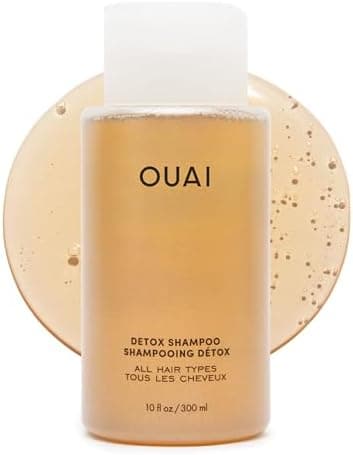
The gentle luxury clarifying pick. Uses apple cider vinegar and chelating agents to remove hard water minerals and product buildup, with keratin to keep hair from feeling stripped. Sulfate-free, safe for color-treated hair. Around $30 for 10 oz. Best for color-treated or chemically processed hair that needs clarifying without damage.
Neutrogena Anti-Residue Clarifying Shampoo
The Neutrogena Anti-Residue Clarifying Shampoo is the product that launched my clarifying routine, and I still think it is the best drugstore option available.
It claims to remove up to 90% of heavy, dulling residue with one wash, and in my experience that is accurate. After one use, my hair felt noticeably different. Lighter, cleaner, and genuinely squeaky in the way that hair felt after salon washes when I was younger and not using seventeen products.
This formula does use stronger surfactants than the OUAI, which is how it achieves that level of clarifying in one wash. The result is more aggressive on the scalp and strands, which means it is not the right choice for every hair type. If you have dry, damaged, or heavily processed hair, the OUAI or Redken Detox options are gentler. If you have oily hair or a resilient hair type that bounces back easily, this is an extremely effective and very affordable option.
At under $10 for 12 ounces, this is also the most accessible option on the list. I keep it specifically for when I have overdone it with dry shampoo over several days and my scalp genuinely needs a reset.
One thing to know: follow up with a deep conditioner after using this. The strong formula strips buildup effectively, but it also removes some natural oils, and hair benefits from a moisture boost afterward. This is actually the ideal time to apply a conditioning mask, because the cleared cuticle absorbs treatments far better than it would through layers of residue.
Neutrogena Anti-Residue Clarifying Shampoo, 12 fl. oz
The drugstore classic. Removes up to 90% of heavy residue in one wash using a stronger surfactant blend that genuinely strips buildup. Under $10 for 12 oz, best used once a week or less. Always follow with a conditioner. Best for oily or resilient hair types. Too stripping for dry, damaged, or heavily color-treated hair used frequently.
Kristin Ess Deep Clean Clarifying Shampoo
The Kristin Ess Deep Clean is the middle-ground option I recommend most often to friends who are new to clarifying shampoo. It is gentle enough for weekly use on most hair types, including color-treated hair, and affordable enough to not require rationing.
The formula is sulfate-free, uses a balanced blend of surfactants and fruit acids to dissolve buildup, and leaves hair feeling clean without the stripped-out dryness some stronger clarifying shampoos produce. I have recommended it most to friends with highlighted or colored hair who were skeptical about clarifying because they were worried about fading.
What makes it stand out is the price-to-performance ratio. Kristin Ess is widely available at Target, which means you can pick it up without ordering online, and it costs around $10 to $13 for a 10-ounce bottle. At that price point, the performance is genuinely impressive compared to options two or three times the cost.
The limitation is worth naming clearly. If you have severe hard water buildup or heavy silicone residue from multiple products, the Kristin Ess will not be aggressive enough to fully resolve it in one wash. It is better suited to maintenance clarifying every two weeks than to a deep reset after months of buildup. For that situation, start with the Neutrogena or OUAI first, then switch to Kristin Ess Deep Clean for regular upkeep.
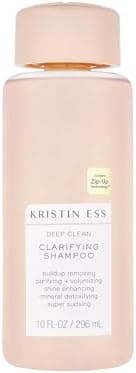
Kristin Ess Deep Clean Clarifying Shampoo
The gentle everyday clarifying option. Sulfate-free, color-safe, and affordable at around $12 for 10 oz. A blend of fruit acids and surfactants removes regular buildup without stripping. Best for maintaining a clear scalp between deeper clarifying sessions, and for color-treated hair that needs regular but gentle cleansing. Not strong enough for a full reset after months of heavy product use.
Redken Detox Hair Cleansing Cream
The Redken Detox Hair Cleansing Cream is different from everything else on this list in one important way: it is a cream formula rather than a liquid shampoo. That distinction matters a lot for how it performs on dry or damaged hair.
Most clarifying shampoos are high-lather, stripping formulas. The Redken Detox takes a different approach, using a cream base with cleansing agents plus conditioning ingredients that clarify the scalp and strands while maintaining more moisture than a traditional clarifying shampoo. It is the option I point to when someone has dry, damaged, or fragile hair and still needs to remove buildup.
The formula uses a chelating agent to remove hard water minerals, along with ingredients that specifically target scalp buildup from styling products. It works particularly well for removing silicone residue from leave-in conditioners and serums, which is often the primary buildup issue for people who use a lot of heat-protectant or smoothing products.
At around $25 for 10.1 ounces, it sits in the mid-to-luxury range. My honest take is that it is most worth the price for women with dry or compromised hair who need to clarify but cannot afford the dryness that comes from more aggressive formulas. For resilient hair types, the Neutrogena does the job for a fraction of the cost.
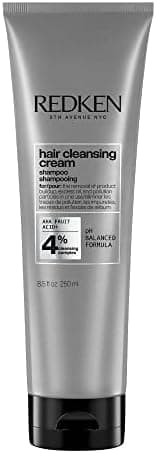
Redken Detox Hair Cleansing Cream Clarifying Shampoo
The gentle salon-grade pick for dry or damaged hair. A cream formula rather than a traditional lather shampoo, with chelating agents to remove hard water buildup plus conditioning ingredients to prevent stripping. Around $25 for 10 oz. Best for damaged, dry, or fragile hair that needs clarifying without aggressive surfactants. Not as widely available as the other options on this list, primarily sold at salons and online.
How Often to Clarify (and What to Do After)
Getting the frequency right matters as much as picking the right shampoo.
For oily hair or heavy product users (dry shampoo, silicones, waxes, pomades): clarifying once a week is typically the right starting point. You will notice hair feeling lighter and more manageable right away.
For normal to dry hair with moderate product use: every two to four weeks usually works well. This maintains clarity without over-stripping natural oils.
For color-treated or chemically processed hair: every four to six weeks with a gentle formula like the OUAI or Kristin Ess. More frequent clarifying fades color and can compromise the bond structure in bleached or highlighted hair.
After clarifying, always follow with a conditioner, and a deep conditioning mask whenever possible. Clarifying opens the hair cuticle and removes buildup, which means your strands are more receptive to treatment than usual. This is genuinely the best time to use a mask, because the cleared cuticle absorbs conditioning ingredients far more effectively than it would through weeks of accumulated product residue.
I go into detail on the specific masks worth using in my post on best deep conditioning hair masks for dry and damaged hair.
What Not to Do
Clarifying too often is the most common mistake. Once a week is the maximum I would recommend for any hair type. Going more frequently than that, especially with stronger formulas, leads to a dryness-and-oiliness cycle where the scalp overproduces oil to compensate for what was stripped, which makes the problem worse rather than better.
The second mistake is clarifying but skipping the conditioner. The whole point of clarifying is to reset the slate so your other products can actually penetrate and work. If you clarify and walk out without conditioning, you are leaving hair open and vulnerable without replacing any moisture.
The third thing to watch is water temperature. Hot water opens the cuticle further during clarifying, which helps the formula reach deep-seated buildup. But rinsing out with hot water leaves the cuticle raised and rough. Always finish with a cool rinse to close the cuticle back down, which is what gives hair its smoothness and shine.