Best Stand Mixer for Home Baking: 4 Honest Picks
Four stand mixers worth buying for home baking, from the KitchenAid Classic to the Pro 600. Honest reviews on capacity, power, and who each one is really for.
I have been baking bread more or less every week since the boys were small enough to think mixing dough was the best part of any morning. For a long time I did everything by hand or with a hand mixer, and it worked fine until I started making bigger batches. Homeschool mornings move fast, and I kept running out of mental bandwidth when I was trying to knead dough and also help someone with a reading lesson at the same time.
The first time I used a stand mixer was at my neighbor's kitchen. She had the full KitchenAid setup and let me use it for a batch of cinnamon roll dough. It took me about four minutes to realize this was something I needed. The dough came out silky and smooth with almost no effort, and she was sitting across the room reading while it ran.
I have since tested and used several machines, and the picks below are the ones I can honestly recommend at different price points and for different kinds of baking. If you are in the research phase right now, here is what actually matters when you are comparing them.
What to Look for Before You Buy
Bowl size affects daily practicality. A 4.5-quart bowl handles a standard double batch of cookies or a single loaf of bread without any issue. If you regularly make multiple loaves at once or bake for a large family, a 5- to 6-quart bowl will save you from splitting batches. I primarily bake for six people and find a 5-quart to be the sweet spot for our household.
Tilt-head vs. bowl-lift. Most home stand mixers are tilt-head style: you unlock the motor head, tilt it back, and swap out attachments from the top. Bowl-lift machines, like the KitchenAid Pro series, have a lever that raises the bowl up into the mixer head instead. Tilt-head machines are generally easier to use for everyday baking and adding ingredients mid-mix. Bowl-lift machines are more stable for very heavy doughs and large batches.
Wattage tells you something, but not everything. More wattage generally means more power for thick doughs, but motor efficiency matters too. For most home bakers, anything at or above 300 watts handles all but the heaviest bread dough without straining. What you really want to avoid is running a low-wattage machine on dense, fully loaded batches week after week.
Hub attachments. KitchenAid's attachment hub is one of the most practical features in home cooking. Pasta rollers, food grinders, and ice cream bowls all fit the same connection point. If you think you might want those down the road, that compatibility is worth factoring in before you choose between brands.
At a Glance
| Pick | Best For | Bowl | Motor | Approx. Price |
|---|---|---|---|---|
| KitchenAid Classic 4.5 Qt | Best starter, everyday baking | 4.5 qt tilt-head | 275W | $250-$300 |
| KitchenAid Artisan 5 Qt | Best all-around home baker | 5 qt tilt-head | 325W | $350-$450 |
| Cuisinart SM-50 5.5 Qt | Best value alternative | 5.5 qt tilt-head | 500W | $150-$200 |
| KitchenAid Pro 600 6 Qt | Best for bread and heavy loads | 6 qt bowl-lift | 575W | $450-$600 |
KitchenAid Classic Series 4.5 Quart Tilt-Head Stand Mixer
If you want a KitchenAid and you are not sure how often you will actually use it, start here. The Classic is the most affordable way into the KitchenAid family, and it does everything a home baker needs for everyday use: cookies, cakes, muffins, whipped cream, and lighter bread doughs all come out perfectly.
The 275-watt motor is honest about what it is. It handles most baking tasks without complaint, but if you regularly make stiff bagel or dense artisan bread dough, it can strain under that load over time. I would not use this machine weekly for heavy bread batches. For most home bakers, though, that particular use case does not come up often enough to disqualify it.
What the Classic does well is everything in the middle: reliable, consistent mixing at a price that makes the decision easy. The 4.5-quart bowl handles a standard batch of chocolate chip cookies, a single layer cake, or a batch of pizza dough for a small family without any issue. The tilt-head design makes it easy to switch attachments and add ingredients mid-mix. And every KitchenAid attachment fits it, so your investment extends to a pasta roller or meat grinder later if you want.
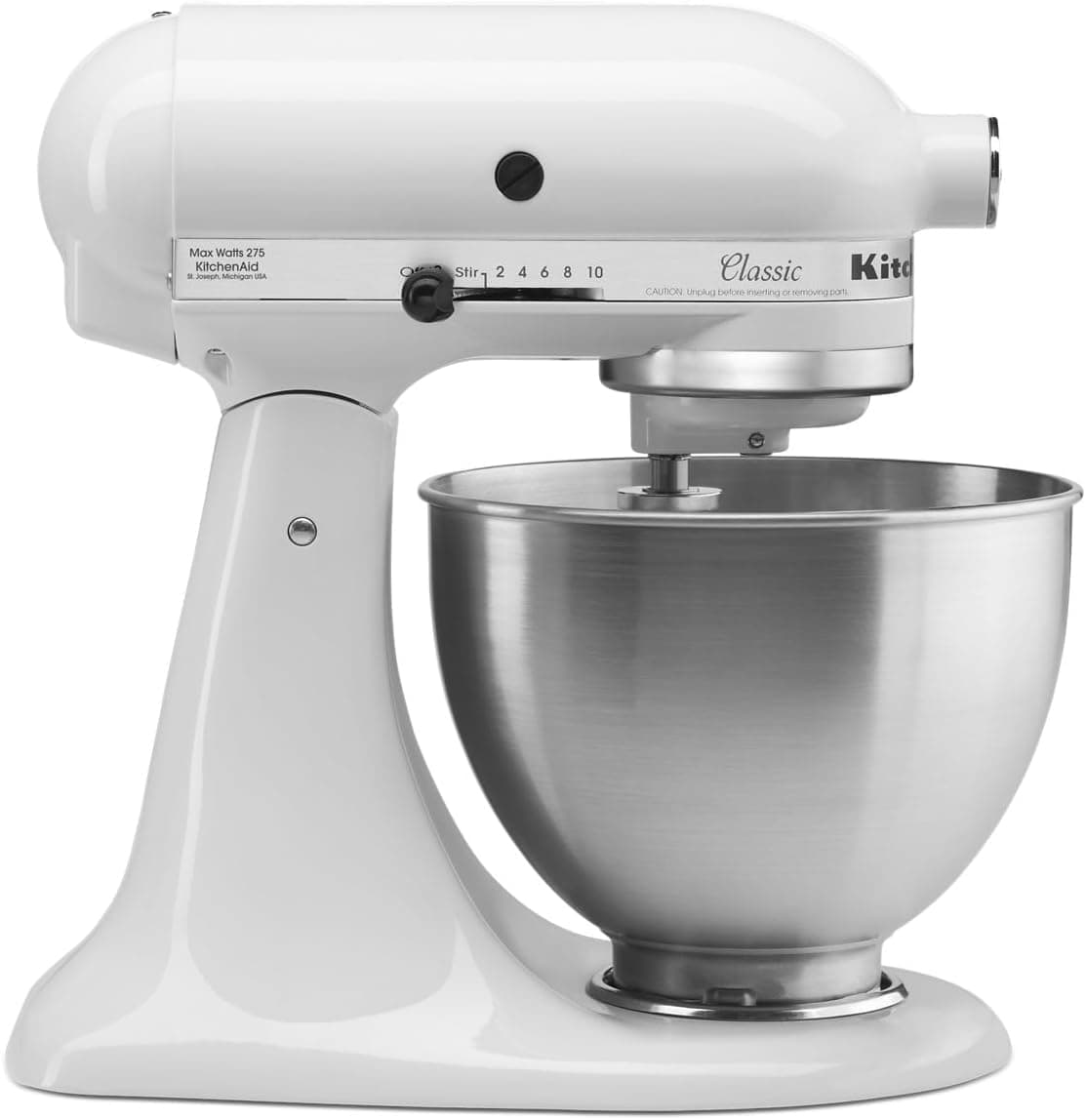
KitchenAid Classic Series 4.5 Quart Tilt-Head Stand Mixer K45SS, White
The most affordable way into the KitchenAid family. Handles everyday baking from cookies and cakes to lighter bread doughs without any complaint. The 275-watt motor is not built for heavy weekly bread batching but covers nearly everything else with ease. All KitchenAid hub attachments are compatible, so it grows with you.
KitchenAid Artisan Series 5 Quart Tilt-Head Stand Mixer
This is the one I would recommend to most people without hesitation. The KitchenAid Artisan 5-quart is the best-known stand mixer in the world for good reason: it is genuinely excellent at a wide range of tasks, it comes in dozens of colors so it actually looks good on your counter, and the 325-watt motor handles nearly everything a home baker throws at it.
I use mine mostly for bread doughs, cookie doughs, and the occasional batch of whipped cream or cream cheese frosting. The tilt-head is easy and intuitive. The 5-quart bowl is the right size for most families, and I have made four loaves worth of sandwich bread dough in a single batch without any issue.
The main honest caveat is the price. If you bake more than once a week, the Artisan pays for itself in the time it saves within a year, no question. If you bake once a month, maybe start with the Classic and upgrade when you know you will get real regular use out of it.
The other thing worth knowing: the Artisan runs warm on long mixing cycles, which is normal, but I would not push it for more than about ten minutes of continuous kneading on a heavy dough. Breaking a long knead into two shorter sessions gives the motor time to rest and will extend the life of the machine significantly.
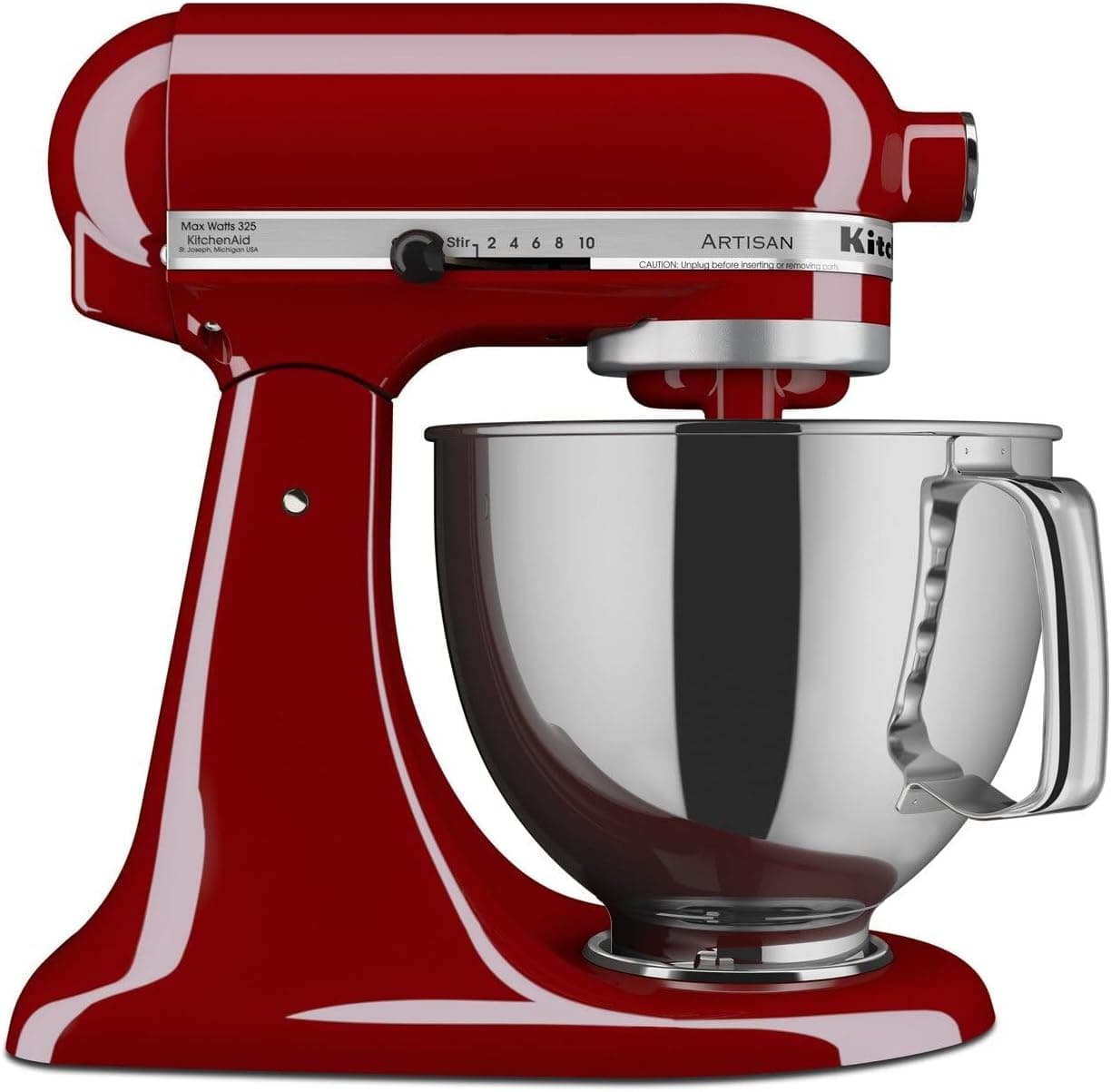
KitchenAid Artisan Series 5 Quart Tilt Head Stand Mixer KSM150PS, Empire Red
The mixer I reach for every week. Five quarts is the right size for most home bakers, the 325-watt motor handles bread dough and everything lighter without straining, and the tilt-head design makes daily use simple and intuitive. Available in over 20 colors. All KitchenAid hub attachments fit.
Cuisinart Precision Master 5.5 Quart Stand Mixer
If the KitchenAid price point is a barrier, the Cuisinart SM-50 deserves a serious look. My sister-in-law picked one up when she was setting up her kitchen after a move and was not ready to spend KitchenAid money. She has been using it for over two years now for cookies, bread, and frostings, and she has no complaints.
The SM-50's 500-watt motor is the most powerful on this list by wattage, and it shows up most noticeably in bread doughs. It kneads without struggling in a way that the lower-wattage Classic cannot always match. The 5.5-quart bowl gives you more capacity than the Artisan at roughly half the price, and twelve speed settings give you more fine-grained control than the ten speeds on KitchenAid machines.
The trade-off is the attachment ecosystem. KitchenAid's hub system is much more expansive and better supported, with pasta rollers, ice cream bowls, spiralizers, and meat grinders all available. Cuisinart has some attachments but not the same depth. If you are buying a stand mixer primarily for baking and not planning to add attachments, the SM-50 does everything you need at a price that makes the decision easy. If you want the attachment options later, KitchenAid is worth the premium.
The build quality is noticeably different in feel from a KitchenAid. It is a solid machine, but it does feel like a different tier. My sister-in-law does not think about this at all in daily use, and I think that is the honest way to frame it.
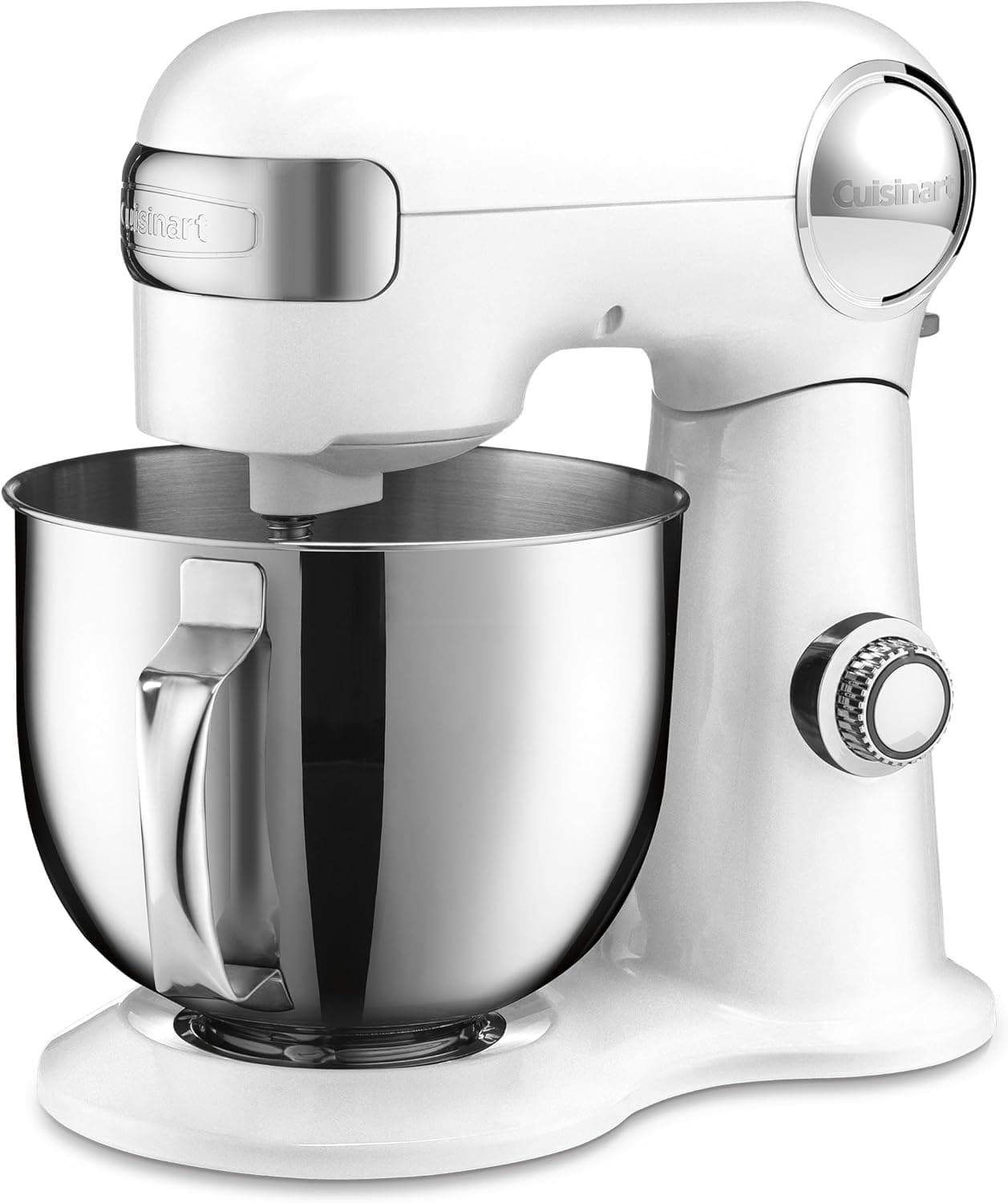
Cuisinart Precision Master 5.5 Quart Stand Mixer SM-50, White Linen
The best value stand mixer for anyone who wants serious capacity and power without KitchenAid pricing. The 500-watt motor handles bread dough comfortably, the 5.5-quart bowl is bigger than the Artisan, and twelve speed settings give you precise control. The attachment ecosystem is smaller than KitchenAid's, but for baking specifically this mixer delivers.
KitchenAid Professional 600 Series 6 Quart Bowl-Lift Stand Mixer
When I have guests coming and I am making multiple batches of everything at once, or when I am doing a big bake before a long trip, the Pro 600 is the machine built for that kind of volume. The bowl-lift design stabilizes the bowl more firmly against the mixing attachments, which matters most when you are working with a full six-quart load of stiff dough.
The 575-watt motor is the strongest KitchenAid motor available at this price point, and it is genuinely designed for heavy, sustained work. For serious home use, including weekly bread baking, large batch cookie production, and high-volume baking for a big family, the Pro 600 handles it without any strain that smaller machines would show.
The bowl-lift design takes a little adjustment compared to tilt-head machines. Adding ingredients mid-mix requires lowering the bowl, adding what you need, and raising it back up, rather than simply tilting the head back. It is a small extra step, but worth knowing before you choose this over the Artisan.
It is also the most expensive machine on this list by a meaningful margin. I would not recommend it to someone who bakes occasionally or who is just starting out. But if you are baking large quantities regularly, it is built for exactly that in a way the smaller machines are not.
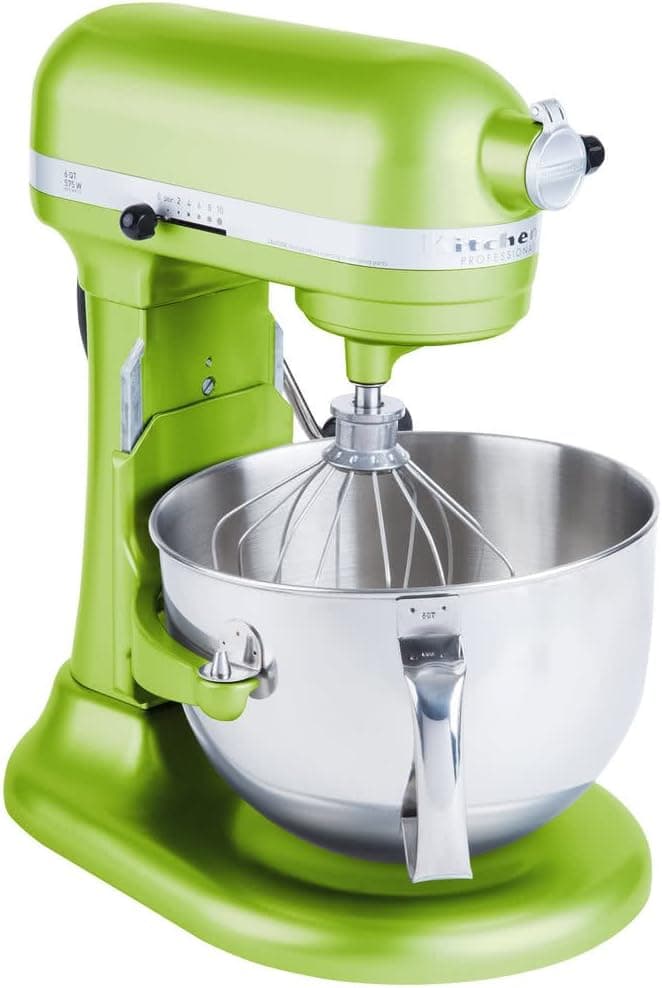
KitchenAid Professional 600 Series 6 Quart Bowl-Lift Stand Mixer KP26M1XVB
Built for high-volume, heavy baking. The bowl-lift design and 575-watt motor handle full six-quart loads of stiff bread dough without strain. This is the machine for serious home bakers who bake multiple loaves weekly or regularly work with large batches. All KitchenAid attachments are compatible.
Attachments Worth Knowing About
One of the strongest reasons to invest in a KitchenAid over a competing brand is the attachment system. The hub on every KitchenAid stand mixer accepts a range of optional add-ons that turn it into more than a mixer.
The pasta roller and cutter attachment is the one I hear about most from people who cook a lot from scratch. Fresh pasta at home is genuinely excellent, and the quality difference from dried pasta is real. Having the machine do the rolling work makes it actually practical on a weeknight.
The food grinder attachment is useful if you care about knowing exactly what goes into your ground meat. For families who cook large quantities of ground beef or want to try homemade sausage, this one pays for itself quickly.
The ice cream bowl requires pre-freezing overnight but produces smooth, genuinely good ice cream. We use ours several times each summer. The boys request it regularly once the weather warms up in Virginia, and it is one of those things I am glad we have.
None of these attachments are necessary for the mixer to do its job. But knowing they exist before you choose between KitchenAid and another brand is worth factoring in, especially if any of those use cases sound appealing.
How to Make Your Stand Mixer Last
Clean the bowl and attachments after every use. Baked-on dough around the attachment coupler is the main thing that causes wear over time, and it is easy to prevent with a quick wash while the bowl is still warm.
Do not exceed the maximum fill line. Overfilling is the most common way to strain the motor, and every machine has a recommended capacity that is worth respecting.
Give the motor time to rest on long kneading cycles. If you are running a heavy dough for fifteen minutes straight, break it into two shorter cycles with a couple of minutes of rest in between. This matters most with lower-wattage machines.
If your machine starts to smell warm or the motor sounds different, stop it and let it rest. This is the machine protecting itself from overheating, and paying attention to it early will save you from a much bigger problem later.