Best Sunscreen for Kids That Parents Actually Trust
Four kids sunscreens that go on easily and stay on: mineral and chemical picks for sensitive skin, beach days, and squirmy toddlers who hate sunscreen.
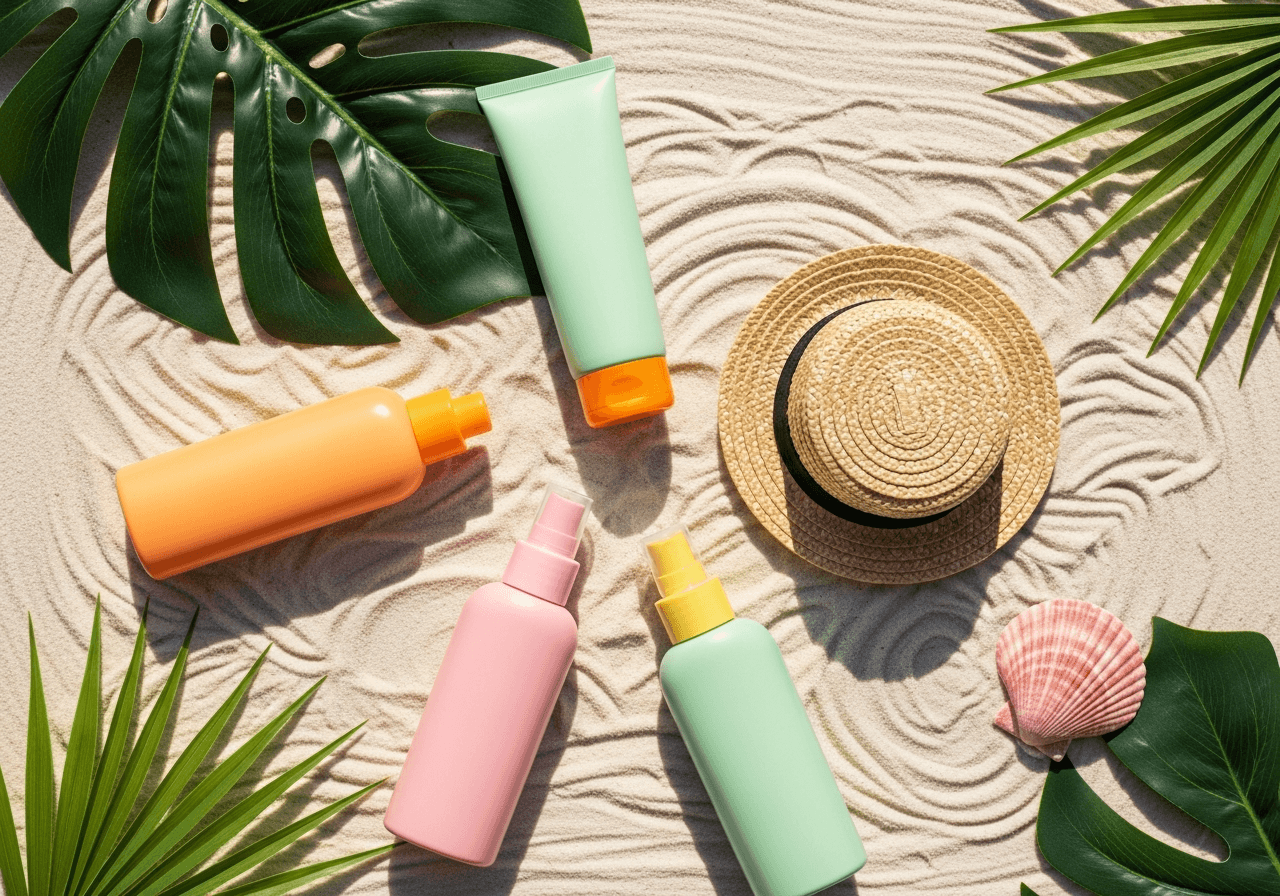
Every summer I go through the same ritual. I round up the kids, locate the sunscreen from wherever it migrated in the beach bag, and prepare myself for the negotiation that follows. My youngest has decided sunscreen is his personal enemy. My older one tolerates it as long as it does not "smell weird." And I have my own requirements, which mostly come down to: please actually protect them, and please do not take fifteen minutes to rub in.
After many disappointing bottles and a few rashes that confirmed some formulas are just not for sensitive skin, I have landed on a short list I trust. These four sunscreens cover different needs, different skin types, and different levels of willingness to sit still. If you are searching for the best sunscreen for kids this summer, here is where I would start.
What to Look for in a Kids Sunscreen
Before I get into specific products, here is what actually matters, since sunscreen labels are full of terms that sound important but do not always mean what you think.
SPF 30 is the minimum, 50 is better for kids. SPF 30 blocks about 97 percent of UVB rays. SPF 50 blocks about 98 percent. The difference sounds small, but for kids who are in the sun for hours and probably not reapplying as often as they should, that extra margin matters. I stick with SPF 50 as a baseline.
Broad spectrum is non-negotiable. UVB rays cause sunburn. UVA rays cause deeper skin damage and accelerate aging. A sunscreen labeled "broad spectrum" blocks both. If it only says SPF without the broad spectrum designation, it is not doing the full job.
Water resistant, not waterproof. No sunscreen is truly waterproof. Look for "water resistant (80 minutes)" which means it holds up through 80 minutes of swimming or sweating. Reapplication after toweling off is still necessary.
Mineral versus chemical. This is where parents get the most confused, so it is worth a moment.
Mineral sunscreens use zinc oxide or titanium dioxide as the active ingredient. They sit on top of the skin and physically block UV rays. They tend to be gentler on sensitive skin, are less likely to cause stinging if they get into eyes, and are generally considered safer for younger children. The downside: they are thicker and can leave a white cast, especially on deeper skin tones.
Chemical sunscreens use ingredients like avobenzone, octinoxate, or oxybenzone to absorb UV rays and convert them to heat. They tend to blend in more easily, feel lighter, and work well in spray form. Some ingredients, particularly oxybenzone, have raised questions about hormone disruption in studies, though the research is ongoing. Neutrogena's newer formulas and Coppertone's Pure and Simple line have moved away from oxybenzone and octinoxate in response to consumer concern.
For toddlers and babies, I lean toward mineral. For older kids who resist thick white creams, a chemical option that actually gets applied is better than a perfect mineral formula they refuse to wear.
Mineral or Chemical: Does It Actually Matter?
The honest answer is that the best sunscreen is the one your kid will actually let you put on them, and that you will actually remember to reapply. I spent a summer buying the theoretically ideal mineral sunscreen only to watch my son wipe it off his face because the texture drove him crazy. He now gets the Neutrogena spray, which he tolerates. His skin is protected. That is the goal.
That said, for kids under two and for children with eczema or reactive skin, I always recommend mineral first. The ingredients list is simpler and the risk of irritation is genuinely lower.
Thinkbaby SPF 50+ Baby Sunscreen
Thinkbaby SPF 50+ was one of the first mineral sunscreens to make a serious push into baby and kids skincare, and it has earned its reputation over the years. It uses zinc oxide as the only active ingredient at 20 percent concentration, which is higher than many competitors. Higher zinc oxide concentration generally means better UVA protection, not just the UVB protection that determines the SPF number.
This one is EWG verified, which means it meets the Environmental Working Group's criteria for ingredient safety and transparency. For a lot of parents, that designation matters. The formula is free from harmful chemicals, fragrances, and parabens.
The texture is thick, which is the trade-off with most high-zinc mineral formulas. On fair skin, the white cast fades as you rub it in. On darker skin tones, it is more visible and may not be the ideal daily choice. For beach days where sun protection is the priority and white residue matters less, it does a great job.
What I appreciate most is that it does not irritate the skin around the eyes even when it migrates there during application, which anyone who has sunscreened a squirmy toddler knows is inevitable. It is water resistant for 80 minutes and holds up better than I expected for a mineral formula.
Caveat: the 3 oz tube runs out quickly if you are using it the way you should, which means generous and frequent application. Buy two.
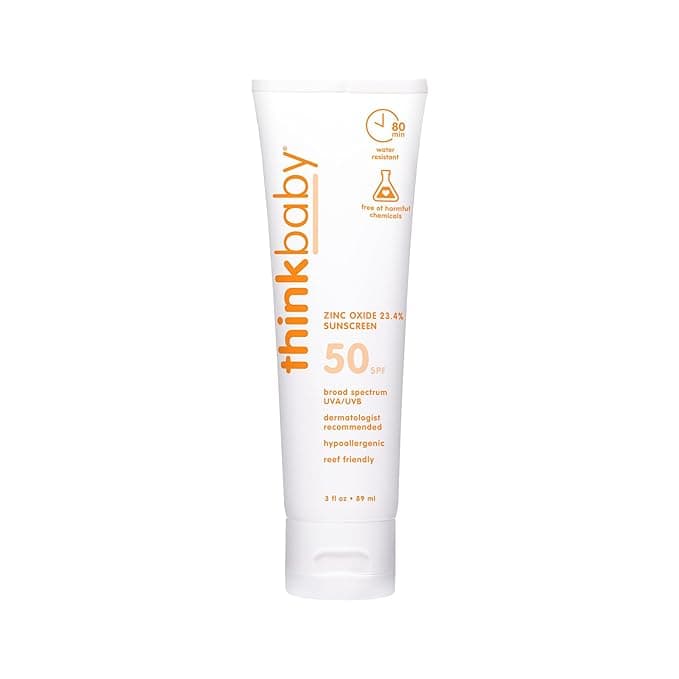
Thinkbaby SPF 50+ Baby & Kids Sunscreen
A trusted mineral sunscreen using 20% zinc oxide, EWG verified and free from harmful chemicals. Thick formula that stays put without irritating eyes, water resistant for 80 minutes. Best for sensitive skin, eczema-prone kids, and toddlers.
Blue Lizard Kids Mineral Sunscreen SPF 50
Blue Lizard is an Australian brand with a cult following among dermatologists, and the Kids version is one of my favorite recommendations for families dealing with sensitive or reactive skin. It uses 10 percent zinc oxide and 5 percent titanium dioxide for broad spectrum protection, which is a slightly different approach than Thinkbaby's higher single-ingredient formula.
The texture is noticeably lighter than Thinkbaby, which makes it easier to rub in on kids who complain about feeling sticky or coated. It still leaves some whiteness on application, but it blends down much faster. For kids with medium skin tones, this tends to work better cosmetically.
One thing I did not expect: the bottle has a UV-sensitive cap that turns pink in UV light, which is a clever reminder that sunscreen needs to be reapplied as UV exposure continues. My older kid actually finds this useful, which I never would have predicted. Small design details can matter when you are trying to get children to take sun safety seriously.
It is fragrance-free, paraben-free, and gentle enough for daily use beyond just beach and pool days. I have used this as a year-round face sunscreen on kids with rosacea-prone or very sensitive complexions with no issues.
The limitation here is price. Blue Lizard sits at a higher price point than drugstore options. For a large family or daily use on multiple kids, the cost adds up. I use it for face and neck and reach for a less expensive option for the body.
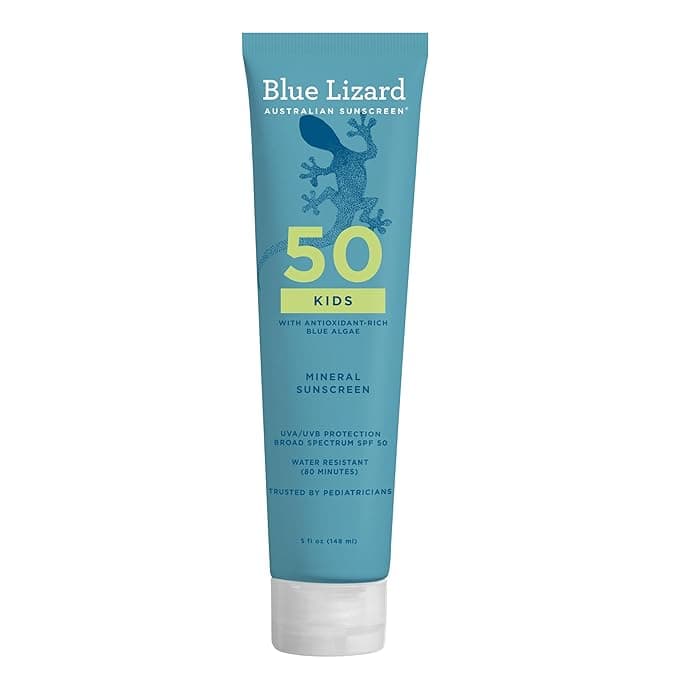
Blue Lizard Kids Mineral Sunscreen SPF 50
Dermatologist-recommended mineral formula with zinc oxide and titanium dioxide. Lighter texture than most mineral sunscreens, UV-sensing cap reminds you to reapply, fragrance-free and gentle enough for daily use. Worth it for sensitive or eczema-prone skin.
Coppertone Pure & Simple Kids Sunscreen SPF 50
This is the one I reach for when I need to buy in bulk without spending a lot, and I want something I can feel reasonably good about putting on my kids daily. Coppertone Pure and Simple Kids uses zinc oxide as the only active ingredient, which puts it firmly in mineral territory despite being from a mainstream brand.
What makes this stand out from Coppertone's other kids lines is what they removed. No oxybenzone, no octinoxate, no parabens, no synthetic fragrances. It is a simplified mineral formula that aligns more with what clean beauty and pediatric dermatology organizations recommend.
The texture is lighter than Thinkbaby but thicker than a chemical sunscreen. It blends to a faint white sheen that disappears on fair to medium skin tones. The 6 oz bottle is a reasonable size for a summer's worth of use, and the price is accessible enough that I do not feel guilty being generous with application.
The honest limitation: it does not perform quite as well as Thinkbaby or Blue Lizard in terms of water resistance in my experience, and the zinc oxide concentration is lower. For an afternoon at the playground or a quick outdoor activity, it is excellent. For a long beach day where kids are in and out of the water, I prefer one of the others and reapply more frequently with this one.
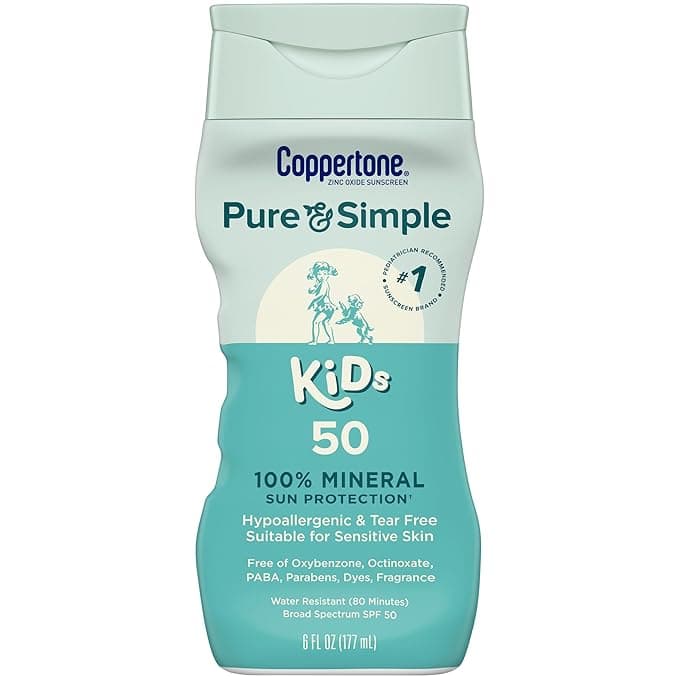
Coppertone Pure & Simple Kids Sunscreen SPF 50
An accessible mineral sunscreen from Coppertone that skips oxybenzone, octinoxate, and synthetic fragrance. Great daily-use option at a budget-friendly price, with a lighter texture than premium mineral formulas. Best for everyday activities and school days.
Neutrogena Beach Defense Kids Sunscreen Spray SPF 70
I am including this one with full transparency about what it is. This is not a mineral formula. It is a chemical sunscreen in spray form. And for a specific use case, nothing on this list beats it.
That use case is: a kid who will not hold still, a beach trip where reapplication needs to happen fast, or older children who have decided that lotion sunscreen is beneath them and will accept a spray or nothing.
Neutrogena's Beach Defense Kids formula is oxybenzone-free, which addresses the biggest concern about chemical sunscreens for children. It absorbs in seconds, dries completely clear, and the spray format makes it genuinely fast to cover a moving child. The SPF 70 gives extra protection against the inevitable patchiness that comes with spray application on a kid who keeps turning.
The water resistance is 80 minutes, same as the mineral options. It does sting if it gets in the eyes, which is the clearest difference from mineral formulas. For kids old enough to close their eyes on request, this is manageable. For toddlers and small children, I stick with the lotion mineral options above and save this one for older kids who have some self-preservation instincts.
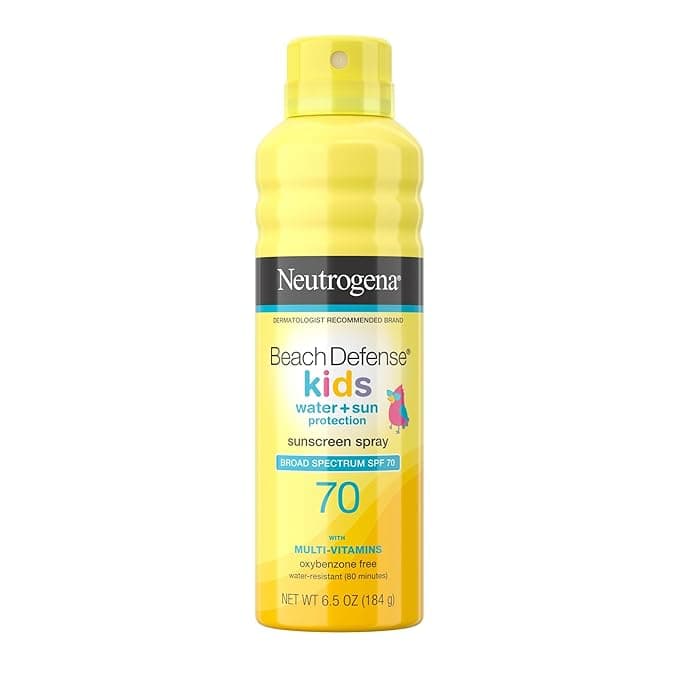
Neutrogena Beach Defense Kids Sunscreen Spray SPF 70
Oxybenzone-free chemical spray sunscreen at SPF 70, designed for kids. Absorbs fast, dries clear, and covers quickly, ideal for beach days and kids who resist lotion application. Not for very young children or those sensitive to chemical filters.
How to Actually Apply Sunscreen on Kids
Choosing the right formula matters a lot less than applying it correctly, so here is what makes the biggest difference in practice.
Apply 15 to 30 minutes before going outside. This matters more for chemical formulas, which need time to activate. Mineral sunscreens work immediately on contact, but waiting still helps ensure even coverage.
Use more than you think you need. Most people apply 25 to 50 percent less sunscreen than the tested amount, which reduces protection significantly. For a child's body, you need about one ounce total, roughly the amount that fills a shot glass. That sounds like a lot because it is.
Do not skip the ears, the back of the neck, the tops of the feet, and the part in the hair. Those are the burns that surprise people every summer. Lips need protection too: a tinted lip balm with SPF is the easiest solution for kids.
Reapply every two hours, or immediately after toweling off, even if the sunscreen is labeled water resistant. No sunscreen maintains full protection after a long swim and a rub with a towel.
If your child is in a rash guard or SPF swim shirt, you still need to apply sunscreen to exposed areas: face, neck, hands, and the back of the legs if the shirt does not cover them. Rash guards are a great complement to sunscreen but not a replacement for it.