Best Tie-Dye Kits for Kids & Families
The best tie-dye kits for kids and families, tested with my boys. From a party-sized Tulip set to an all-inclusive kit with shirts included.
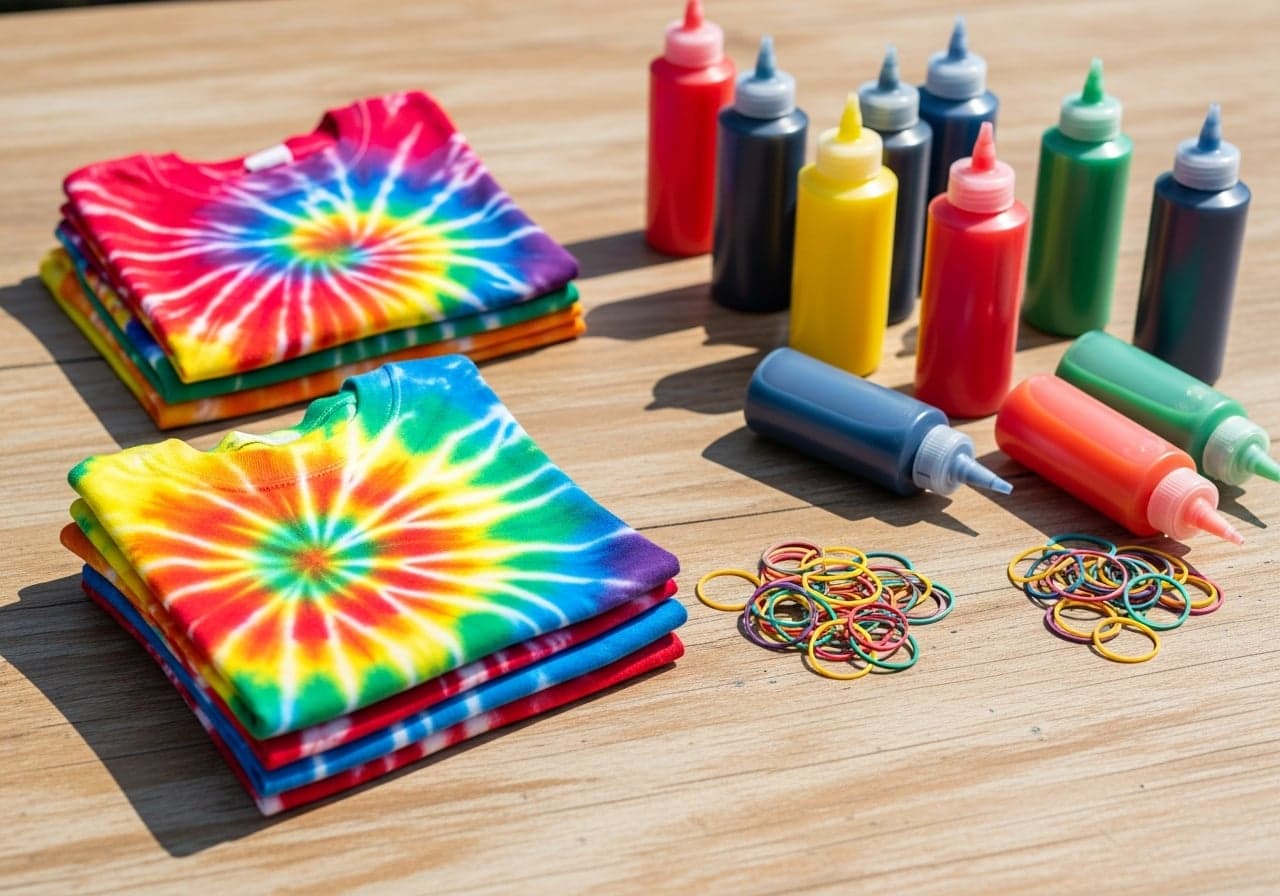
Tie-dye became a summer staple in our house almost by accident. We were looking for something my boys could actually get excited about that also involved being outside and making something real with their hands. I picked up whatever kit I could find at the craft store, we set up in the backyard with old towels under everything, and we had a genuinely fun afternoon. The problem was the shirts. After one wash, the colors that had looked so vivid in the yard were significantly muted. By the third wash, a couple of them looked more like a sad watercolor painting than the bold rainbow swirls we started with.
After that I got more deliberate about which kits I was buying. I have tried a few at this point, and there is a real difference in how the colors hold up over time, how much prep work is required, and how much of the process a seven-year-old can actually handle on his own. This post covers the three I keep coming back to, at different price points and for different goals.
What Actually Matters in a Tie-Dye Kit
Not all tie-dye dyes are the same. A few things are worth understanding before you pick one.
Pre-filled vs. powder dyes. Most kits aimed at families come with pre-filled squeeze bottles, which means you shake and squeeze with no mixing required. Some kits, especially more professional ones, come with dye powder you mix yourself. For kids, pre-filled is almost always easier and less likely to result in someone inhaling powder or accidentally creating a muddy color. Powder gives you more flexibility but requires more patience and setup.
Fiber-reactive vs. all-purpose dye. This is the biggest factor in color longevity. Fiber-reactive dyes (like Procion MX) chemically bond to cotton fibers and produce colors that stay vivid through dozens of washes. All-purpose dyes, which most beginner kits use, sit on top of the fibers and fade faster. If you want shirts that still look great three months later, fiber-reactive dye is worth knowing about.
What is actually included. The minimum you need beyond the dye: rubber bands, gloves, and some kind of surface protection. Kits that include all of this are genuinely more convenient because you are not making a separate run to find rubber bands and then discovering you do not own enough old plastic sheeting to cover a table. A few kits also include shirts, which eliminates another step entirely.
Yield. Some kits are sized for one sitting with two or three kids. Others are designed for a group or a party. If you have multiple kids and plan to make more than a shirt or two, a larger kit is usually a better value than buying multiples of a small one.
At a Glance
| Pick | Best For | Colors | Shirts Included | Approx. Price |
|---|---|---|---|---|
| Tulip One-Step Party Kit | Groups, parties, lots of kids | 18 bottles, 14 colors | No | $25-$35 |
| KOOL KRAFTS All-Inclusive | First-timers, everything included | 12 colors | Yes (4 shirts) | $25-$35 |
| Jacquard Procion MX | Best vibrancy and lasting color | 3 primary mix | No | $15-$25 |
Tulip One-Step Tie Dye Party Kit
The Tulip One-Step Party Kit is the one I reach for when multiple kids are involved. It comes with 18 pre-filled squeeze bottles in 14 different colors, enough rubber bands and gloves for a group, and a project guide with eight different folding and banding techniques. Everything except the shirts is in the box.
What I like most about this kit is how beginner-friendly the squeeze bottles are. The dye is already mixed, the bottle tips are narrow enough to apply color in somewhat controlled lines, and the nozzles are easy enough for younger kids to manage without constant help. My youngest was six when we first used this, and he could do the squeezing himself once I had the rubber bands in place.
The colors are bright and vivid when they first come out of the rinse. Fade over multiple washes is noticeable but not dramatic. After about ten washes, the shirts look a little softer and more vintage than they did fresh, which honestly some people prefer. If you want colors that stay extremely vibrant indefinitely, this is not the kit for that. But for a family activity where the goal is fun and wearable results that hold up through a season, the Tulip kit delivers reliably.
One honest limitation: color mixing can be a little unpredictable. When dye colors overlap on the fabric, you sometimes get muddy tones rather than clean blends. This is partly technique and partly the dye formula. It is not a problem if you keep sections separated, but if your kids saturate every inch of fabric with every possible color touching, some shirts will come out more brown than rainbow.
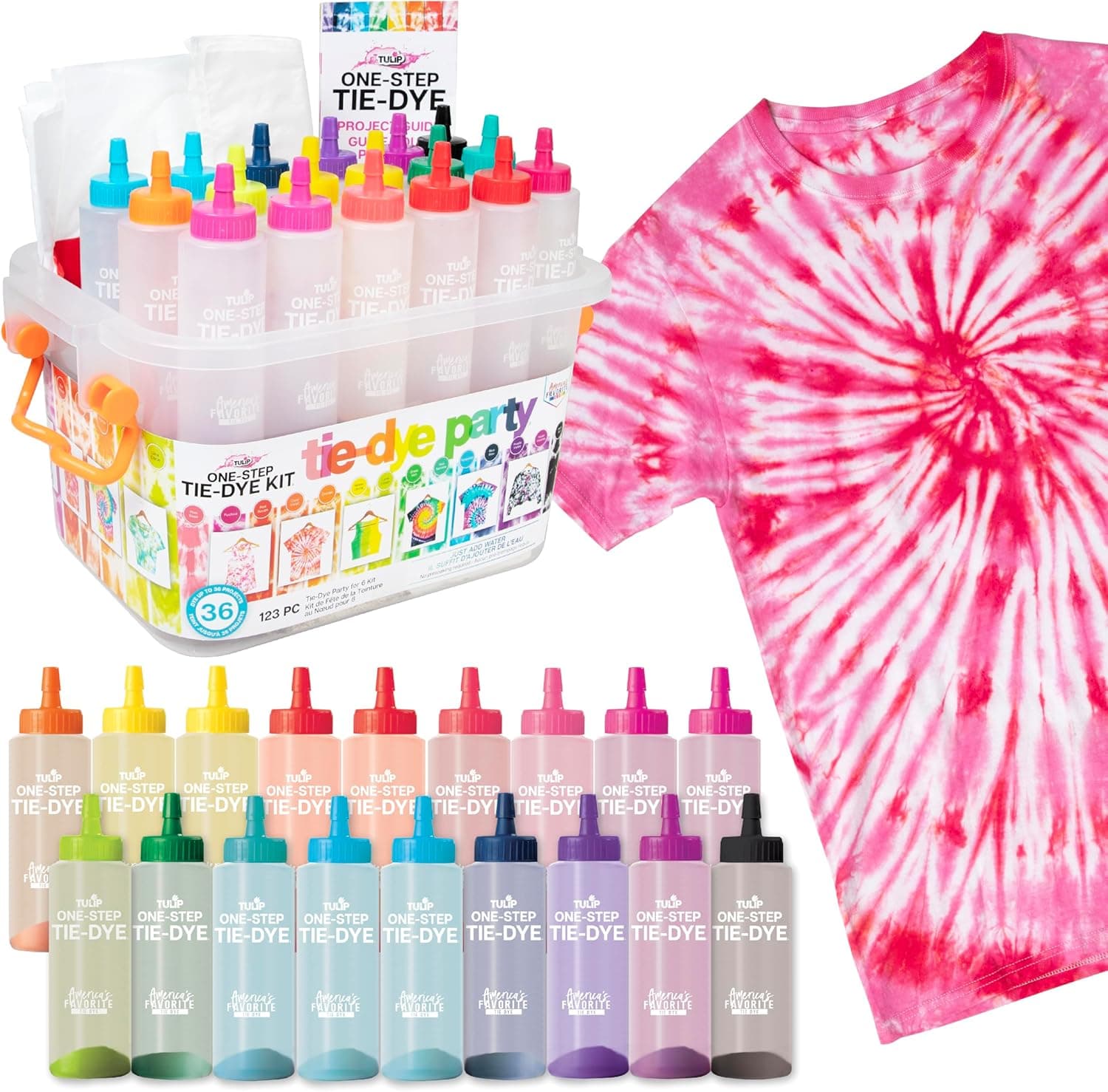
Tulip One-Step Tie Dye Kit, 18 Bottles, 14 Colors, Large Group Activity
The best kit when multiple kids are involved. Pre-filled squeeze bottles in 14 colors, rubber bands, gloves, and a technique guide are all included. Easy enough for younger kids to handle independently once the rubber banding is done. Colors are bright and hold up well through a season of washing. Not the most permanent dye formula, but genuinely fun and forgiving for beginners.
KOOL KRAFTS Tie Dye Kit with T-Shirts
The thing that makes the KOOL KRAFTS kit worth recommending is that it includes four white cotton t-shirts in the box. That sounds like a small detail but it eliminates one of the more annoying parts of planning a tie-dye day, which is tracking down plain white shirts in the right sizes for everyone involved. For a family with kids in very different sizes, you may still need to supplement, but for a starter batch this is genuinely convenient.
Beyond the shirts, the kit includes 12 colors in squeeze bottles, 12 pairs of gloves, 90 rubber bands, two disposable tablecloths, and an instruction guide. The tablecloths are a detail I appreciate. One of the most consistent mistakes new tie-dyers make is underestimating how much dye migrates off the fabric onto whatever surface is underneath. Having disposable coverage already included means one less thing to figure out ahead of time.
The dye quality is solid for a beginner kit. Colors come out bright, and the fade rate is similar to the Tulip kit. What I noticed is that the colors have slightly less depth, meaning the difference between your lightest and darkest shades is a bit more compressed. That is not a dealbreaker, but if you want particularly dramatic contrast between color sections, the Tulip kit edges it out.
The 12-color selection is a good range. You have all the primary and secondary colors plus a few shades that let you do more than a basic rainbow. The selection works better for bright patterns than for darker or more muted palettes.
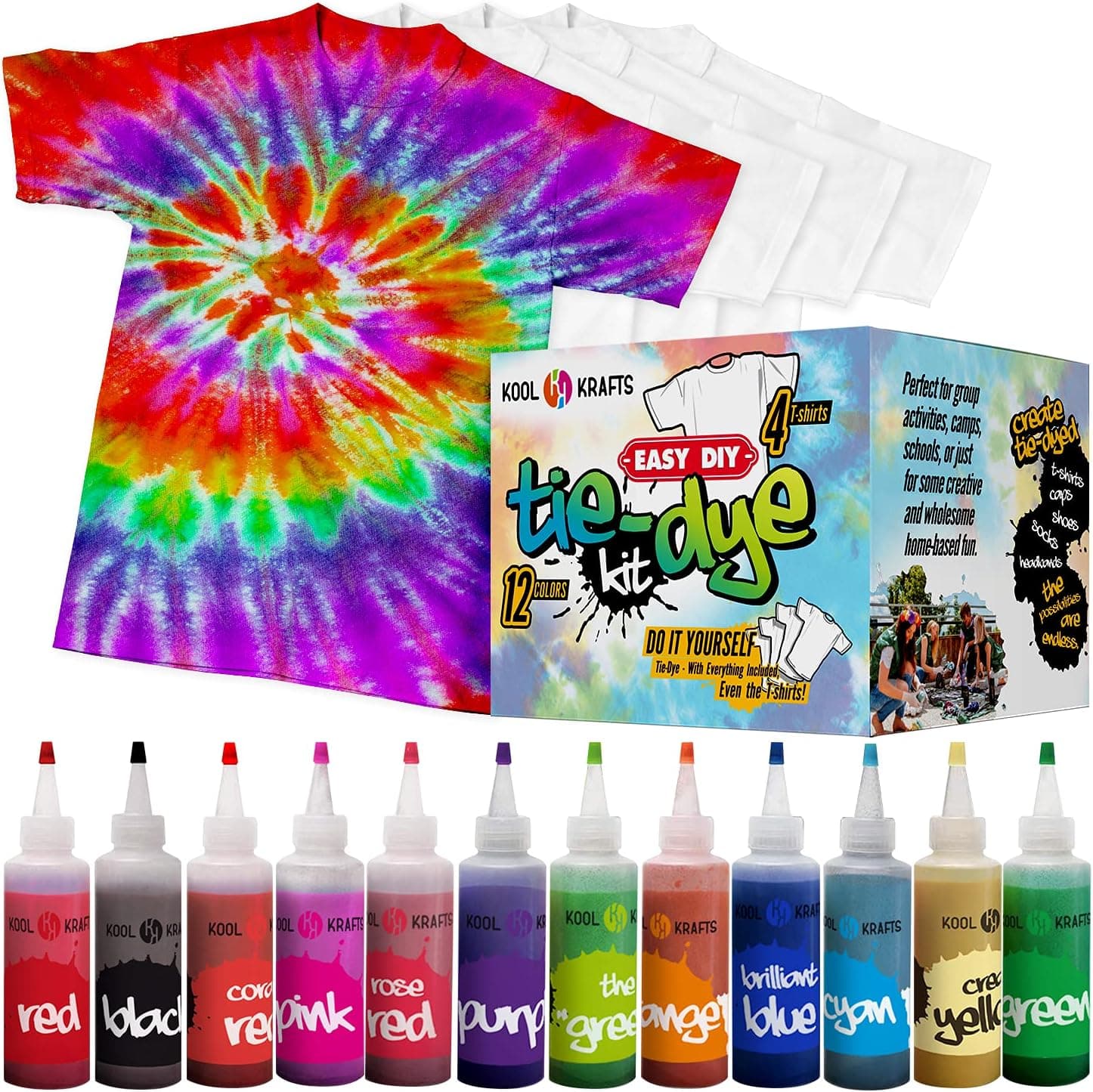
KOOL KRAFTS Tie Dye Kit - 12 Colors + 4 White T-Shirts Included
The most all-inclusive starter kit. Comes with 12 dye colors, four white cotton t-shirts, 12 pairs of gloves, 90 rubber bands, and two disposable tablecloths. A genuinely complete package for a first tie-dye session. Solid beginner dye quality with bright results that hold up well through the season. The best pick if you want to open the box and just start without extra shopping.
Jacquard Procion MX Dye Kit
This one is for when you care about the result lasting. The Jacquard Procion MX kit uses fiber-reactive dye, which is the same type used by professional fabric dyers and textile artists. Fiber-reactive dye forms a permanent chemical bond with cotton fibers, which means the colors do not fade the way standard beginner kits do. Shirts dyed with Jacquard Procion MX and properly set will still look vivid after a year of regular washing.
The kit comes with magenta, turquoise, and yellow in powdered form, along with soda ash dye fixer. The fixer matters. It is what enables the chemical bond between the dye and the fiber. Without it, even fiber-reactive dye will eventually wash out. Soda ash is simple to use, but it adds a pre-soak step (about fifteen minutes) that standard beginner kits skip.
Because the colors are primaries, you can mix them to create virtually any color you want. Red and blue make purple. Yellow and blue make green. This gives you a lot more flexibility than a kit with preset colors, but it requires some basic color knowledge and willingness to experiment. I would not start here with younger kids, but for older kids who are genuinely interested in learning the process and want more control over their results, this is the right kit.
The honest limitation: the powdered dye requires more preparation and is messier to handle than pre-filled squeeze bottles. You need to mix each color with water before dyeing, which adds setup time and cleanup. Rubber bands and gloves are not included, so you need to have those on hand.
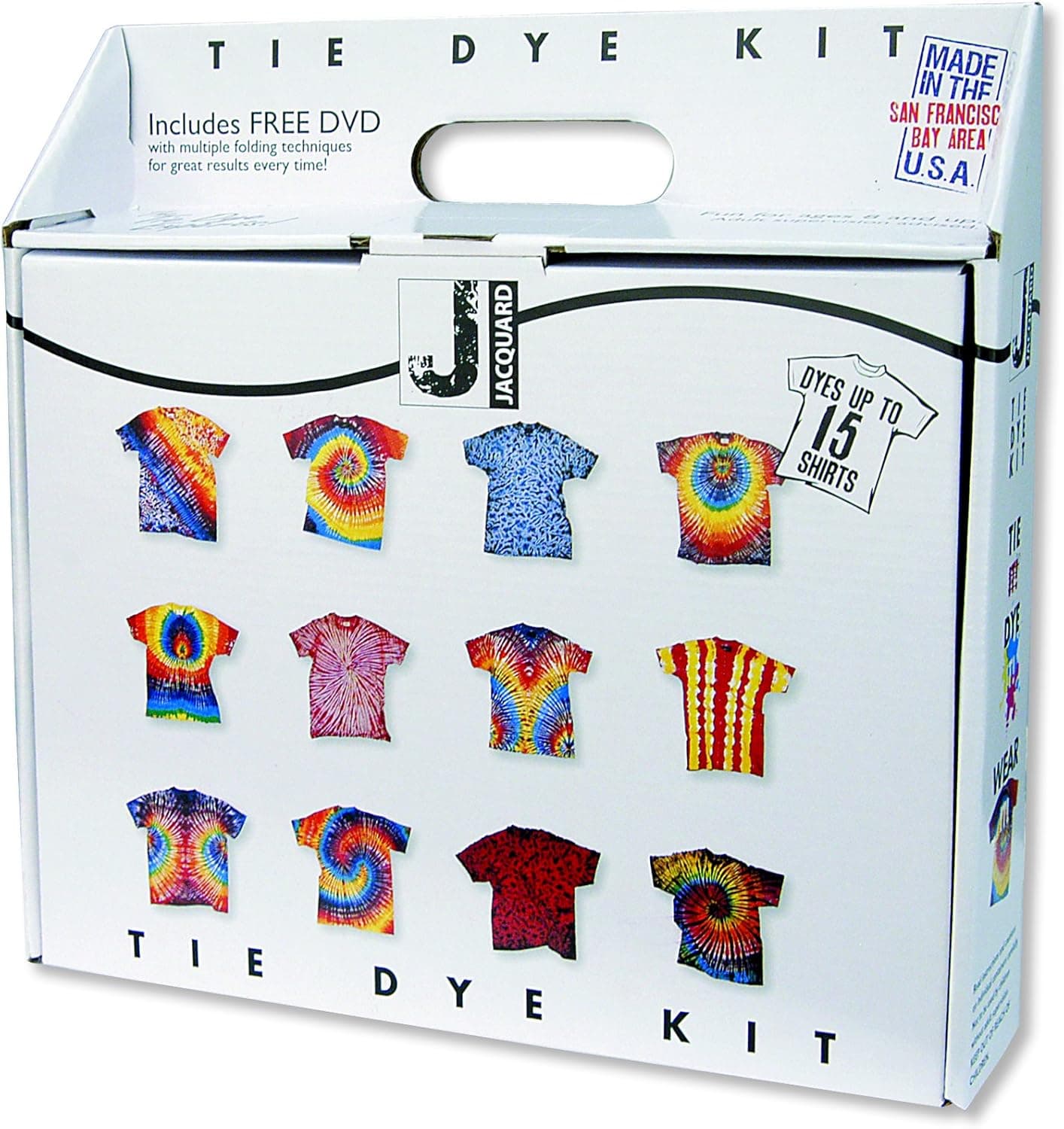
Jacquard Procion MX Dye Kit - Magenta, Turquoise & Yellow with Soda Ash Fixer
The best option when you want colors that actually last. Fiber-reactive Procion MX dye forms a permanent chemical bond with cotton, keeping colors vivid after dozens of washes. Comes with magenta, turquoise, and yellow primaries plus soda ash fixer. You mix colors yourself, giving you full control but requiring more prep than pre-filled kits. Best for older kids and anyone serious about lasting results.
How to Get Good Results
Most tie-dye frustration comes from skipping a few steps that take very little time but make a real difference in the outcome.
Pre-wash the fabric. New shirts often have a fabric softener coating that repels dye. Washing once before you start gives the dye better contact with the fibers. Skip this and colors will be uneven and may wash out faster.
Dampen before dyeing. Slightly damp fabric (not soaking wet, just lightly misted) absorbs dye more evenly than bone-dry fabric. This is especially important for fiber-reactive dyes, which need moisture to begin the bonding process.
Bag it after dyeing. After you apply the dye and before you rinse, seal the shirt in a plastic bag and let it sit for at least six to eight hours. Overnight is better. This curing time is when the dye bonds to the fabric, and rinsing too soon is the most common reason colors end up dull. For the Jacquard Procion MX, sixteen to twenty-four hours makes a noticeable difference in vibrancy.
Rinse cold first, then warm. Start rinsing the excess dye in cold water, then gradually move to warm. Rinse until the water runs clear. The amount of dye that comes out will surprise you on the first wash. This is normal. Wash the shirt separately the first time before adding it to regular laundry.
Protect the surface. Tie-dye dye migrates aggressively. A small dye splash spreads considerably on wood, concrete, or fabric underneath. Disposable tablecloths, a layer of trash bags, or old shower curtains under everything is not optional. Our backyard deck learned this lesson the hard way one summer.