Iron Deficiency Signs Women Often Miss
Iron deficiency in women goes way beyond fatigue. The overlooked symptoms, who's at risk, how to test properly, and what actually helps, food and supplements.

I spent almost two years feeling like I was running on empty, not the kind of tired where you need more sleep, but the kind where sleep doesn't fix it. I was breathless walking upstairs. My hair was falling out more than usual. I had restless legs at night that drove me crazy. I bruised easily. My brain felt slow. And the thing that finally connected the dots? A blood test that showed my ferritin (stored iron) was at 12, technically within the "normal" lab range, but nowhere near optimal.
Iron deficiency is the most common nutritional deficiency worldwide, and women of reproductive age are disproportionately affected. Yet it's routinely under-tested, under-diagnosed, and under-treated, partly because the symptoms are vague enough to be blamed on stress, poor sleep, or "just being a mom," and partly because standard lab panels often don't include the right markers to catch it early.
Symptoms That Go Way Beyond Fatigue
Yes, fatigue is the hallmark symptom of iron deficiency. But if that's the only one you're looking for, you'll miss the bigger picture. Iron is involved in oxygen transport, energy production, immune function, cognitive performance, and neurotransmitter synthesis. When it's low, the effects show up everywhere.
Symptoms women commonly experience but don't connect to iron:
- Breathlessness during normal activity, getting winded going upstairs, during moderate exercise, or while talking and walking simultaneously
- Hair shedding, not pattern baldness, but diffuse thinning and increased hair fall, especially when washing or brushing
- Restless legs, that creeping, uncomfortable sensation in your legs that worsens at night and makes it hard to fall asleep
- Pale skin and pale inner eyelids, pull down your lower eyelid; if the inside is very pale rather than pink-red, that's a sign
- Brittle or spoon-shaped nails, nails that chip easily, develop ridges, or curve inward
- Cold hands and feet, chronically, not just in winter
- Frequent illness, iron is essential for immune function, and low iron can mean you catch everything going around
- Brain fog and poor concentration, iron is needed for cognitive function and neurotransmitter production (including dopamine and serotonin)
- Headaches, particularly with exertion or position changes
- Heart palpitations, your heart works harder to circulate oxygen-poor blood
- Cravings for ice, dirt, or starch (called pica), this unusual symptom is actually a well-documented sign of significant iron deficiency
- Anxiety and low mood, iron is needed to make serotonin and dopamine; deficiency can mimic or worsen anxiety and depression
If you're reading this list and ticking multiple boxes, please get your iron tested. Not just hemoglobin, ferritin.
Who's Most at Risk
Some women are significantly more likely to develop iron deficiency than others.
Heavy menstrual periods: This is the number one risk factor for premenopausal women. If you soak through a pad or tampon every hour, pass clots larger than a quarter, or bleed for more than seven days, you're losing more iron than your diet can easily replace. Many women don't realize their periods are unusually heavy because they have nothing to compare them to.
Pregnancy and postpartum: Blood volume increases dramatically during pregnancy, iron demands skyrocket, and then you lose additional iron during delivery. Postpartum iron deficiency is extremely common and often goes undiagnosed because the symptoms (fatigue, brain fog, mood issues) overlap with normal new-parent exhaustion.
Vegetarian and vegan diets: Plant-based iron (non-heme iron) is absorbed at a much lower rate than iron from animal sources (heme iron). You can absolutely get enough iron on a plant-based diet, but it requires intentional planning and attention to absorption enhancers.
Endurance athletes: Intense exercise increases iron loss through sweat, GI microbleeding, and a process called foot-strike hemolysis (red blood cell destruction from repetitive impact). Female runners are particularly vulnerable.
Women with GI conditions: Celiac disease, inflammatory bowel disease, H. pylori infection, and other conditions that affect gut lining or absorption can dramatically reduce iron uptake even with adequate dietary intake.
Perimenopause: Irregular, heavier periods during perimenopause can increase iron loss at a time when many women aren't paying attention to their iron status.
Testing, Get the Right Labs
This is critically important: a standard CBC (complete blood count) that shows normal hemoglobin does not rule out iron deficiency. Hemoglobin is the last marker to drop, by the time it's low, you've been iron-deficient for a while.
The labs to request:
- Ferritin, this is your stored iron and the earliest indicator of deficiency. The standard lab range starts at 12–15, but research increasingly suggests that symptoms begin when ferritin drops below 30, and optimal levels for women are 50–100+. A ferritin of 18 is "normal" on paper but can absolutely cause symptoms.
- Serum iron, the amount of iron currently circulating in your blood
- TIBC (Total Iron Binding Capacity), measures how much transferrin (the iron transport protein) is available to carry iron; when iron is low, TIBC goes up
- Transferrin saturation, the percentage of transferrin that's carrying iron; low saturation indicates deficiency
- Hemoglobin and hematocrit, standard red blood cell markers; low levels indicate anemia (the late stage of deficiency)
If your doctor only checks hemoglobin and tells you you're fine, ask specifically for ferritin. Advocate for the complete panel. The difference between a ferritin of 15 and a ferritin of 80 is enormous in terms of how you feel, and both fall within most lab reference ranges.
Food Sources, Heme vs. Non-Heme Iron
Iron from food comes in two forms, and they're absorbed very differently.
Heme iron (from animal sources) is absorbed at about 15–35% efficiency. The best sources include red meat (beef, lamb, bison), organ meats (liver is the most iron-dense food that exists), dark poultry meat, oysters, mussels, and sardines.
Non-heme iron (from plant sources) is absorbed at about 2–20% efficiency. Sources include lentils, chickpeas, kidney beans, spinach, tofu, quinoa, fortified cereals, pumpkin seeds, and dark chocolate.
Absorption enhancers:
- Vitamin C dramatically increases non-heme iron absorption, eat citrus, bell peppers, strawberries, or tomatoes with iron-rich meals
- Cooking in cast iron adds small amounts of iron to food (especially with acidic dishes)
- Eating heme and non-heme iron together improves overall absorption
Absorption blockers:
- Calcium and dairy taken at the same time as iron reduce absorption
- Coffee and tea (tannins) inhibit iron absorption, wait at least an hour after an iron-rich meal before drinking them
- Phytates in whole grains and legumes reduce absorption (soaking, sprouting, and fermenting help mitigate this)
When Food Isn't Enough, Supplements
If your ferritin is significantly low (below 30–50), food alone may not replenish your stores fast enough, especially if you have ongoing losses from heavy periods. This is where supplementation comes in.
Iron bisglycinate is the form I'd recommend starting with. It's gentler on the stomach than other forms (like ferrous sulfate, which commonly causes constipation, nausea, and stomach upset) and has good absorption. Take it on an empty stomach with vitamin C for maximum absorption, or with a small amount of food if it bothers your stomach.
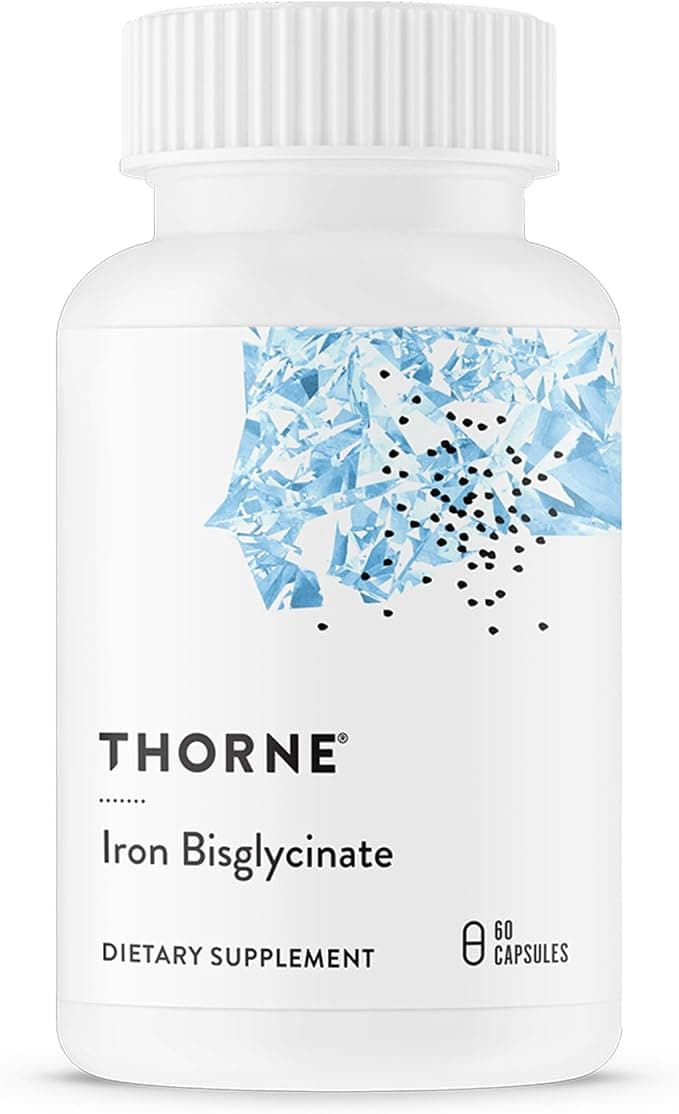
Thorne Iron Bisglycinate, 25mg, Gentle on Stomach
Thorne's iron bisglycinate is well-absorbed, easy on the GI tract, and third-party tested. One of the most recommended forms for women with low ferritin.
Timing matters: Take iron supplements on an empty stomach (at least 30 minutes before a meal or 2 hours after) with a source of vitamin C (a glass of orange juice, a few strawberries, or a vitamin C supplement) for optimal absorption. If stomach upset is an issue, taking it with a small amount of food is better than not taking it at all, just avoid calcium-rich foods, coffee, and tea at the same time.
Dosing considerations: More isn't always better with iron. Taking a lower dose (15–25mg) every other day has been shown in research to be as effective as daily supplementation with better absorption and fewer side effects. This is because hepcidin, a hormone that regulates iron absorption, rises after an iron dose and stays elevated for about 24 hours, reducing absorption from the next dose. Alternate-day dosing works with this biology rather than against it.
Retest after 3–4 months: It takes time to rebuild iron stores. Recheck ferritin after 3–4 months of consistent supplementation to track progress. Don't stop supplementing just because you feel better, your stores may not be fully replenished yet.
Pair with cofactors: Iron doesn't work in isolation. Vitamin C enhances absorption (as mentioned above). Vitamin B12 and folate are needed for red blood cell formation, if these are low alongside iron, you may not see the improvement you expect from iron alone. A comprehensive approach that includes all the relevant nutrients works better than supplementing iron in isolation. For a broader picture of what women need, my guide on the best vitamins for women covers this in more detail.
Watch for constipation: Iron supplements, even gentler forms like bisglycinate, can cause constipation in some women. Increasing water intake, fiber (especially from leafy greens, which also provide some iron), and magnesium can help counteract this. If constipation is severe, try reducing your dose or switching to an alternate-day schedule.
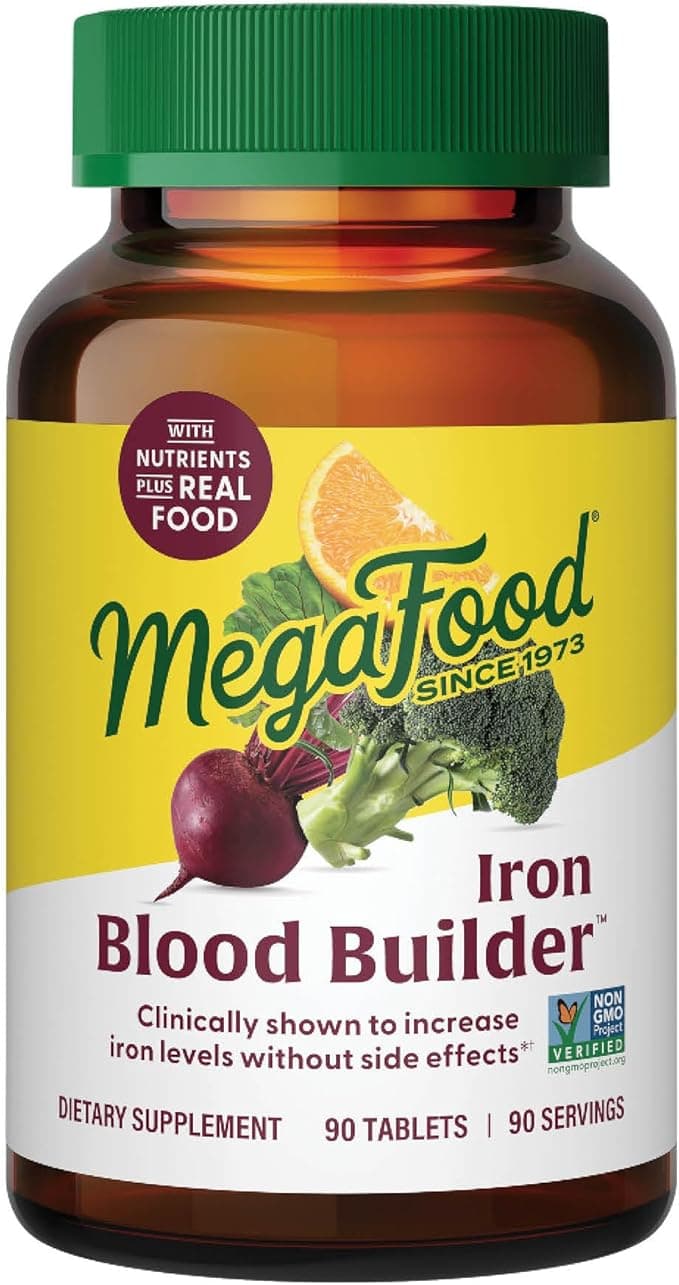
MegaFood Blood Builder, Whole-Food Iron Supplement
If you prefer a food-based approach, Blood Builder combines iron with vitamin C, folate, and B12 from whole-food sources. Clinically shown to increase iron levels without common side effects.
Important Cautions
Don't supplement iron without testing first. Unlike water-soluble vitamins, iron accumulates in the body, and excess iron can be harmful, particularly for people with hemochromatosis (a genetic condition causing iron overload). Always test, supplement based on results, and retest.
If your ferritin is very low (under 15) or you have confirmed iron deficiency anemia, talk to your doctor about whether IV iron infusion might be appropriate. Oral supplementation works but is slow, and in cases of severe deficiency or malabsorption, IV iron can replenish stores much more quickly.
The Connection Between Iron and Mental Health
This is something that doesn't get enough attention: iron deficiency can significantly impact your mental health, and the symptoms can be mistaken for anxiety or depression. Iron is needed for the production of dopamine, serotonin, and norepinephrine, the neurotransmitters that regulate mood, motivation, and emotional stability.
Women with low ferritin often report a flat, unmotivated feeling, not quite depression, but a loss of drive and enjoyment. Some experience heightened anxiety, restlessness, or irritability that seems disproportionate to their circumstances. Others notice brain fog so significant that they worry about cognitive decline.
If you've been prescribed antidepressants or anti-anxiety medication without ever having your iron levels checked, it's worth asking for a ferritin test. I'm not suggesting iron deficiency is the cause of all mood issues, but it should be ruled out before attributing symptoms entirely to a mental health diagnosis. Fixing a nutritional deficiency is a much simpler intervention than long-term psychiatric medication, and when iron is the root cause, repletion can make a dramatic difference in how you feel.
Iron deficiency is fixable. But first, you have to know it's there. If any of the symptoms in this post resonated, especially if you've been told your labs are "normal", ask for the full iron panel and look at the numbers yourself. Your fatigue might not be burnout. Your brain fog might not be stress. It might be something as straightforward and treatable as low iron.