Mandelic Acid Benefits for Skin (And Who Should Use It)
Mandelic acid is the gentlest AHA for sensitive, acne-prone, and rosacea skin. Here's what it does, who it's for, and the three serums I'd actually recommend.
If you've ever looked at the acid wall at Sephora and felt your eyes glaze over, I get it. Glycolic, lactic, salicylic, azelaic, mandelic. They all sound like chemistry class, and most beauty content treats them like you already know the difference. I didn't for a long time. I just knew my skin couldn't handle the popular ones without turning red and angry, and I kept landing on articles that said "use glycolic for glow" like that was helpful for skin as reactive as mine.
Mandelic acid is the one that changed that for me. Not because it's trendy or because some influencer swore by it, but because it's the gentlest AHA I've tried that still actually does something. It exfoliates without stinging. It fades marks without flaking. And for anyone with sensitive skin, acne-prone skin, or rosacea, it might be the acid you've been looking for without knowing it had a name.
This isn't a science textbook. It's what I've learned from using it, what the dermatology literature says in plain language, and who I think should seriously consider it versus who can skip it.
What Is Mandelic Acid?
Mandelic acid is an alpha hydroxy acid (AHA) derived from bitter almonds. All AHAs work by loosening the bonds between dead skin cells so they slough off instead of building up on the surface. That buildup is what makes skin look dull, feel rough, and trap oil and bacteria that lead to breakouts.
What makes mandelic different from the other AHAs is its molecular size. It has the largest molecule of all the common AHAs, bigger than glycolic and lactic acid. That sounds like a negative, but it's the whole reason it works for sensitive skin. A larger molecule penetrates the skin more slowly. Slower penetration means less irritation at the surface, where rosacea and sensitivity live. You get the exfoliation without the aggressive "I just acid-washed my face" feeling.
It also has mild antibacterial properties, which most AHAs don't. That means it's not just resurfacing, it's also helping keep acne-causing bacteria in check. For anyone whose breakouts and sensitivity show up at the same time, that dual action is useful.
What Mandelic Acid Actually Does for Your Skin
Let me break this down into the benefits that matter, not a list of marketing claims.
Gentle exfoliation. This is the core function. Mandelic acid dissolves the glue holding dead skin cells together so they shed normally. The result is smoother texture and a less dull, flat appearance. Because it works slowly, you get this benefit without the redness or peeling that stronger AHAs trigger.
Fades dark spots and post-acne marks. Mandelic acid inhibits tyrosinase, the enzyme that produces melanin. That means it helps fade hyperpigmentation over time, including the dark marks left behind after a breakout heals. It won't work overnight, nothing does, but consistent use over weeks and months visibly lightens those spots.
Helps with acne. The antibacterial action plus the exfoliation makes mandelic acid useful for mild to moderate acne. It keeps pores clear of dead cell buildup and reduces the bacterial environment that contributes to breakouts. It's not a replacement for a full acne treatment plan if yours is severe, but for the person who gets a few breakouts a month alongside sensitivity, it's a good fit.
Improves skin texture and tone. Regular use smooths rough patches, evens out tone, and gives skin a softer, more uniform look. My goal with skincare has always been even tone over perfect skin, and mandelic acid supports that without pushing reactive skin into a flare. If you have rosacea, it's the kind of gentle resurfacing that fits a calm, barrier-first routine.
Works on melasma. Several studies have looked at mandelic acid for melasma specifically, and the results are genuinely encouraging. A 50% mandelic acid peel used in clinical settings showed comparable results to 35% glycolic acid peels for melasma, with less irritation. You won't get clinical peel results from an at-home serum, but the mechanism is the same.
Mandelic Acid vs. Glycolic Acid: What's the Difference?
This is the comparison that comes up most, so let me make it clear.
Glycolic acid has the smallest molecule of all AHAs. It penetrates fast and deep, which makes it effective for resurfacing but also makes it the most likely to irritate. If you have resilient skin and no sensitivity issues, glycolic is great. If you have rosacea, eczema, or skin that reacts to everything, glycolic is usually the one that sets you on fire.
Mandelic acid is the opposite end of the AHA spectrum. Largest molecule, slowest penetration, gentlest experience. You trade some of the aggressive resurfacing power for a formula your skin can actually tolerate. For a lot of us, that trade is worth it.
Lactic acid sits in the middle. It's gentler than glycolic but more potent than mandelic. If mandelic feels too mild and glycolic is too harsh, lactic is the middle ground worth trying.
Who Should Use Mandelic Acid?
You should seriously consider it if:
- You have sensitive skin that reacts to glycolic or salicylic acid
- You have rosacea and want an exfoliating acid that won't trigger flares
- You get mild to moderate breakouts and your skin can't tolerate stronger acne actives
- You have post-acne dark marks or hyperpigmentation you want to fade gradually
- You're new to chemical exfoliation and want to start with the gentlest option
- You have melasma and want something that works on pigment without inflaming your skin
You can probably skip it if:
- Your skin is tough as nails and glycolic acid works great for you (no reason to switch down)
- You're dealing with severe cystic acne that needs prescription-strength treatment
- You're looking for an overnight fix (mandelic is slow and steady, not dramatic)
- You have an almond allergy, since it's derived from bitter almonds (talk to your doctor)
How to Use Mandelic Acid in Your Routine
Start slow. This is the rule for any active, but especially for sensitive skin. Here's how I'd ease in:
Weeks 1-2: Use it one night, after cleansing and before moisturizer. One layer, a few drops, patted on. Wait and see how your skin responds over the next 48 hours.
Weeks 3-4: If your skin stayed calm, move to two nights a week. Not three. Two is enough for most people to see results over time.
Ongoing: Two to three nights a week is the sweet spot for most skin types. You don't need daily use, and for sensitive skin, daily use of any AHA is asking for trouble.
A few practical tips:
- Use it at night. AHAs can make your skin more photosensitive, so nighttime application gives your skin the darkest hours to recover before sun exposure.
- Always follow with moisturizer. Mandelic acid is gentler than most, but it's still an acid. Seal your skin afterward.
- Wear SPF the next morning. Non-negotiable. If you're using any AHA, daily sunscreen is the price of admission. My go-to is the DRMTLGY Tinted Moisturizer SPF 46 I mentioned in my calming daily routine, it tones down redness and protects in one step.
- Don't layer it with other AHAs or strong actives on the same night. If you use retinol (I wrote about how to buffer retinol on rosacea-prone skin), keep it on a different night than your mandelic acid.
Mandelic Acid Serums I'd Actually Recommend
I'm not going to list twelve options and leave you overwhelmed. These are the three I think are worth your attention, at three different price points.
The Budget Pick: The Ordinary Mandelic Acid 10% + HA
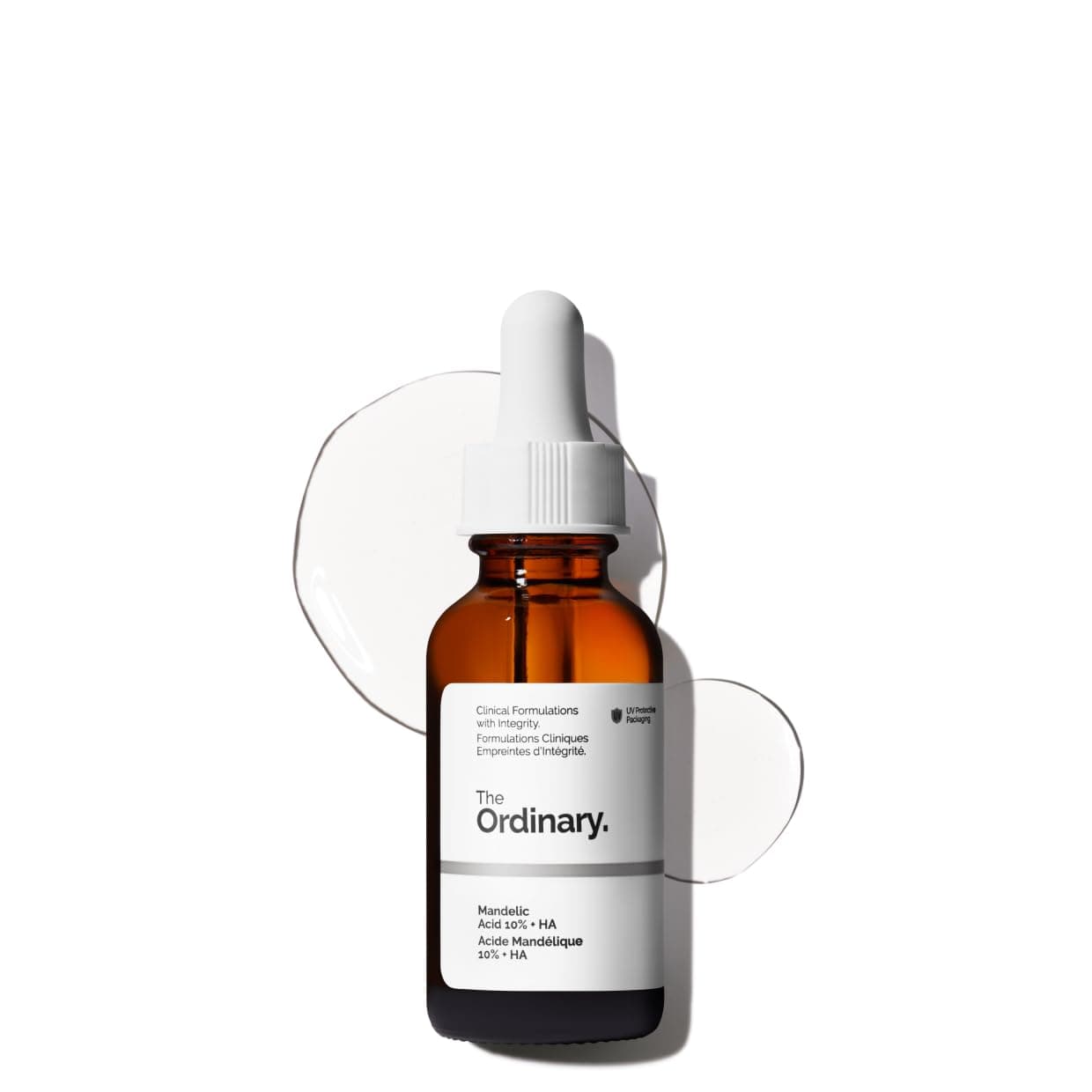
This is the one most people start with, and for good reason. It's under $10, it's straightforward, and the 10% concentration is a solid middle ground for most skin types. The hyaluronic acid in the formula adds a bit of hydration, which helps offset the drying effect acids can have. If you've never used a chemical exfoliant before and want to test the waters without spending much, this is where I'd start.
The texture is slightly viscous, not watery, and it absorbs quickly. No fragrance, no fancy packaging, just the active ingredient at a reasonable strength. You can get it on Amazon or at Sephora.
The Mid-Range Pick: Naturium Mandelic Topical Acid 12%
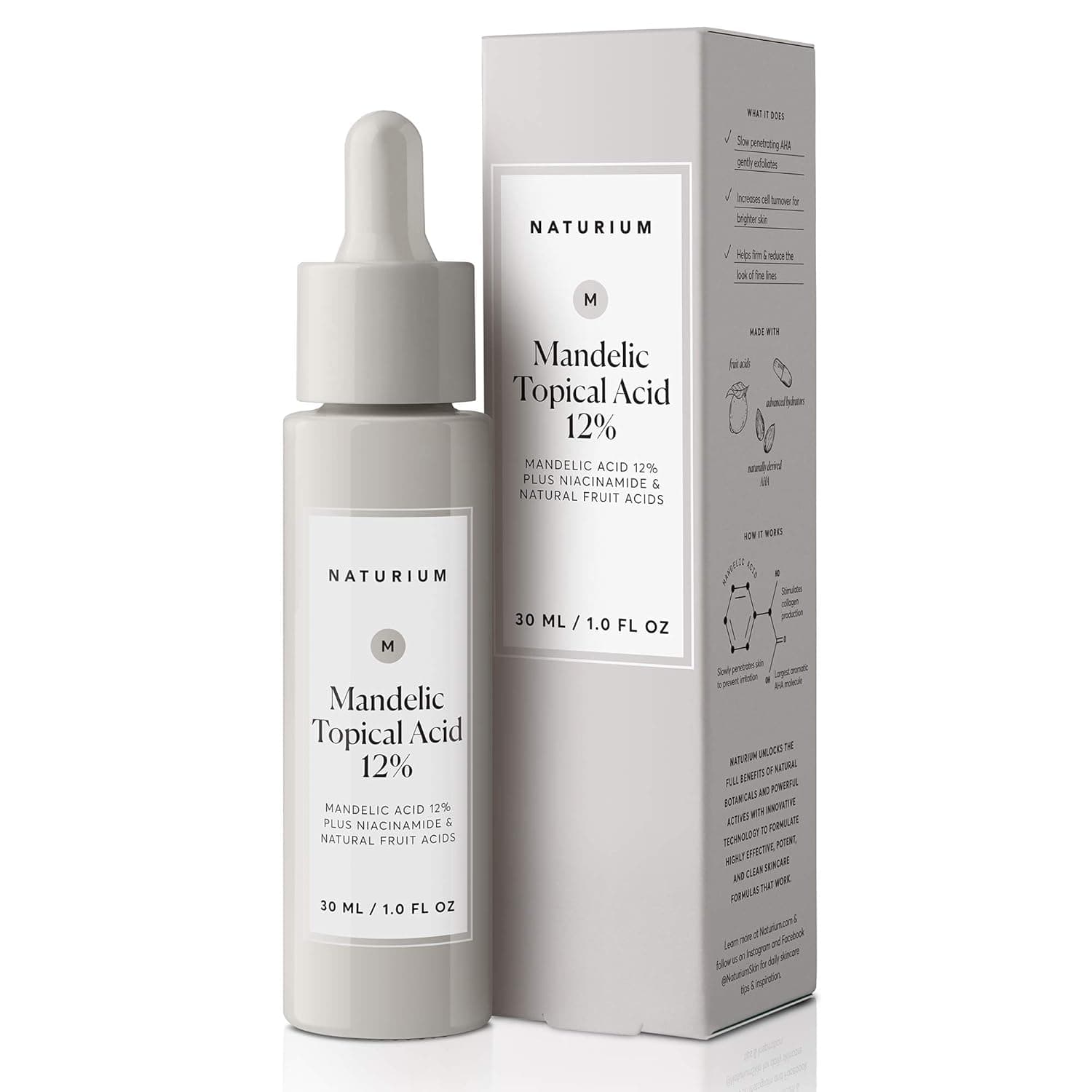
This is the one I'd pick if I wanted a step up in formulation quality without jumping to luxury pricing. Naturium's 12% is the highest concentration I'd recommend for at-home use, and they pair it with niacinamide (which adds brightening), sodium hyaluronate (hydration), and a blend of fruit-derived AHAs for gentle support. The texture is creamy rather than liquid, which some people prefer.
It's fragrance-free and a good option if you want something more nourishing than The Ordinary but still under $25. Available on Amazon.
The Investment Pick: Allies of Skin Mandelic Pigmentation Corrector Night Serum
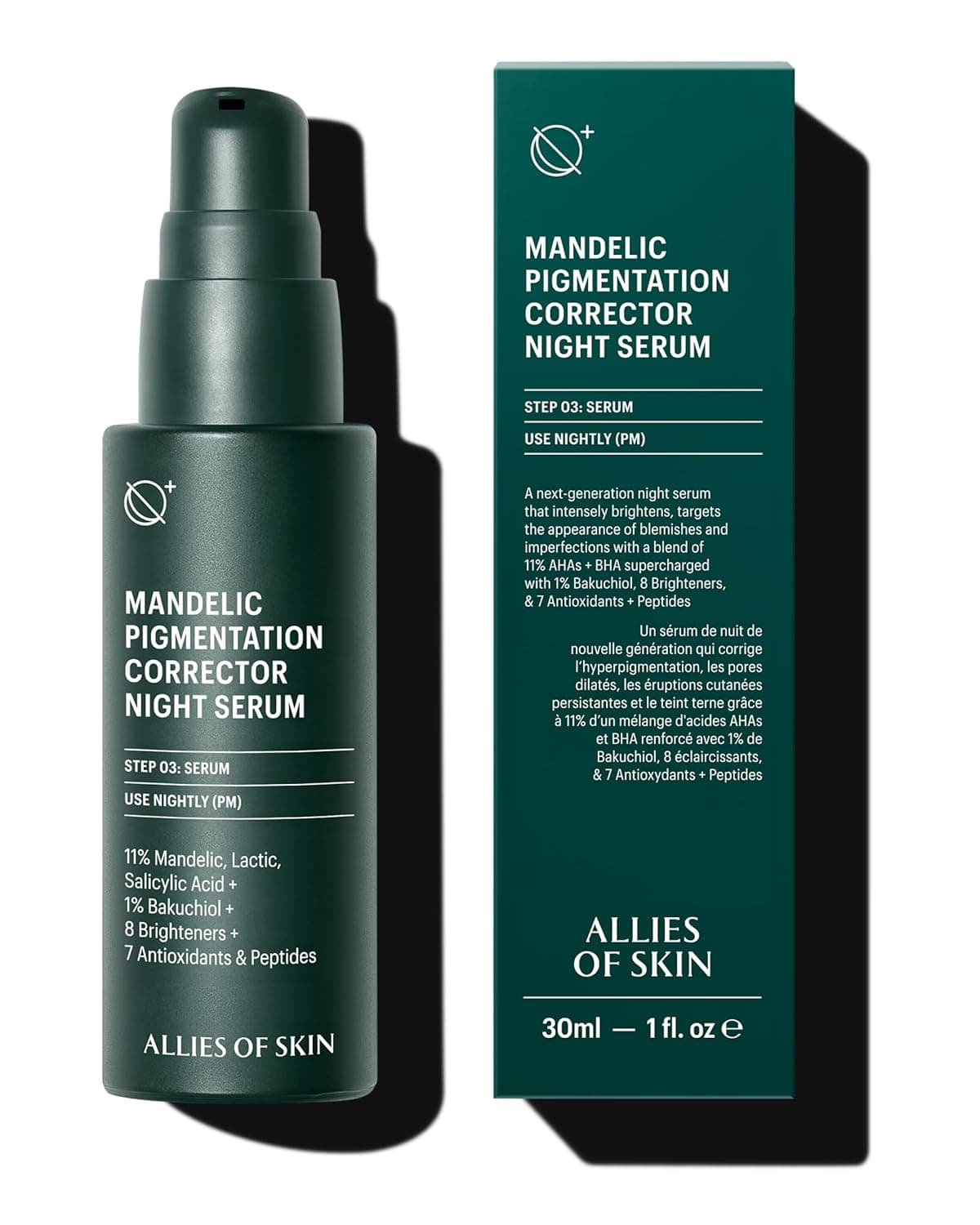
If hyperpigmentation is your main concern and you want a formula that does more than just exfoliate, this is the one. It combines 11% mandelic and lactic acid with 1% bakuchiol (a plant-based retinol alternative), niacinamide, salicylic acid, and a stack of antioxidant and calming ingredients. It's a multi-tasking night serum, meaning you get exfoliation, brightening, and anti-aging support in one bottle.
It's not cheap, but the ingredient list justifies the price if your skin can handle a more complex formula. If you're sensitive to a lot of ingredients at once, start with one of the simpler formulas above. Available on Amazon.
What to Expect: Realistic Timeline
I want to be honest about the timeline because beauty content often makes it sound like you'll see results in three days. You won't.
- First 1-2 weeks: Your skin may feel slightly smoother after each use, but you won't see visible changes in dark spots or tone yet. This is the adjustment period. If you're going to have a reaction, it usually shows up here.
- Weeks 3-6: Texture improvement becomes more consistent. If you had rough patches or bumpiness, those start to smooth out. Post-acne marks may look slightly lighter.
- Months 2-3: This is where the fading of hyperpigmentation becomes genuinely visible. Not gone, but noticeably lighter. Skin tone looks more even overall.
- Months 4+: Cumulative benefits. Smoother texture, more even tone, fewer breakouts if acne was part of the picture. The kind of results people ask "what are you using?" about.
Consistency is the whole game with mandelic acid. It's not dramatic in the short term, which is exactly why it works for sensitive skin long term.
A Quick Note on My Experience
I have sensitive, easily-reddened skin, and my approach to any new active is cautious. I patch test on my jawline for a few days before putting anything on my full face. With mandelic acid, I didn't get the stinging or flushing I'd had with glycolic. It felt mild, almost like nothing was happening, which for my skin is a good sign. Over a couple of months, the post-acne marks on my cheeks faded enough that I stopped reaching for concealer there every morning.
I'm not saying it'll be the same for you. Sensitive and reactive skin is different for everyone, and what calms mine might flare yours. But if you've been afraid to try chemical exfoliation because every acid you've tested has gone badly, mandelic is the one I'd point you toward first. Start low, go slow, and listen to your skin.
Common Questions About Mandelic Acid
Frequently Asked Questions
The Bottom Line
Mandelic acid isn't a miracle. It's not the strongest acid, it's not the fastest, and it's not going to transform your skin in a week. What it is, for the right person, is the first exfoliating acid that actually works without making sensitive skin worse. If you've been priced out of gentle options (literally and figuratively) by formulas that are too harsh or too expensive, it's worth a serious look.
Start with The Ordinary if you want to test it cheap. Move up to Naturium if you want a richer formula. Try Allies of Skin if pigmentation is your main battle and your skin can handle a multi-ingredient serum. Whatever you pick, give it at least two months of consistent use before you judge the results.
This post contains affiliate links. If you buy through them, I may earn a small commission at no extra cost to you. I only recommend products I've researched and believe are worth considering.