Best Homeschool Planners for Moms With Multiple Kids
Four homeschool planners we've used to juggle four boys, from a budget dated grid to a fully customizable disc-bound system, with honest notes on each.

Every August I tell myself this is the year I finally keep one clean, unified record of what all four boys are doing in school, and every October I am back to a stack of sticky notes and a half filled composition notebook. Planning for one kid is manageable with almost any planner. Planning for four kids at different grade levels, with different curricula, different co op days, and different testing requirements, is a different problem entirely, and most planners on the market are simply not built for it.
I have bought more planners than I want to admit over the years, some from big office supply stores, some from small Etsy sellers, a couple that looked beautiful in photos and were completely useless once I actually sat down with a pen. What follows are the four that have actually earned a permanent spot on our kitchen counter, along with honest notes on which family situation each one is really built for.
What to Look for in a Homeschool Planner
Before the picks, here is what I have learned actually matters once you are managing more than one student.
Room for multiple kids on one page, or a clean per kid system. Some planners cram every child into a single weekly grid, which works for one or two kids but gets cramped once you are tracking four different subject loads. Others give each child dedicated pages. Neither approach is wrong, but know which one you are buying before your first pencil mark.
Dated versus undated. A dated planner keeps you honest about the calendar and matches state reporting periods, but the whole thing is wasted if life interrupts your school year for a few weeks. An undated planner is more forgiving of a slow start or a mid year curriculum switch.
Binding that survives daily handling. Spiral and disc bound planners lie flat on a table, which matters more than it sounds when you are writing in one while handing a workbook to a kid. Paperback planners are cheaper and more portable, but the spine eventually cracks with heavy daily use.
Space for attendance and record keeping, not just lesson plans. If your state requires documented hours or a portfolio, a planner with a built in attendance tracker saves you from building your own spreadsheet on top of it.
How much structure you actually want. Some moms want a planner that tells them exactly what boxes to fill in every day. Others want mostly blank space to adapt to whatever curriculum they are using that month. Buying a heavily structured planner when you actually want flexibility is a common reason a planner ends up abandoned by October.
At a Glance
| Pick | Best For | Binding | Layout | Approx. Price |
|---|---|---|---|---|
| Homeschool Mama Planner | Best for 4 kids at once | Paperback, dated | Per kid daily/weekly grids | $15-$20 |
| Blue Sky Teacher Planner | Best traditional weekly view | Wirebound, dated | Weekly + monthly spreads | $20-$25 |
| Home Sweet Classroom Planner | Best simple, budget option | Spiral, undated | 40 weeks lesson grid | Under $20 |
| Happy Planner Disc-Bound | Best customizable system | Disc-bound, dated | Teacher weekly layout | $25-$35 |
Homeschool Mama Planner 2026-2027
This is the one I actually reach for most mornings, and it is the only planner on this list that was designed from the ground up for a mom teaching more than one kid at the same time. It is built specifically for up to four kids, which is exactly our situation, and each week gets a layout where I can log all four boys' subjects side by side instead of flipping between four separate sections.
What sold me was how it handles the reality of homeschooling multiple ages at once. My oldest is doing real writing assignments and history reading while my youngest is still working on phonics, and this planner does not force everyone into the same rigid subject columns. There is enough flexibility in the weekly grid to write in whatever each kid is actually working on that week.
It also includes attendance tracking pages and a simple record keeping section, which matters in Virginia where I keep some documentation of our school year even though we are not required to test every grade. I do not use every page, some of the goal setting spreads at the front went untouched, but the core weekly planning pages get filled in every week.
Honest limitation: because it is a paperback bound book rather than spiral or disc bound, it does not lie fully flat on the table, which is a minor annoyance when I am writing in it one handed while also handing a workbook to a kid with the other. If flat lying matters more to you than the multi kid layout, one of the wirebound or disc bound options below will serve you better.
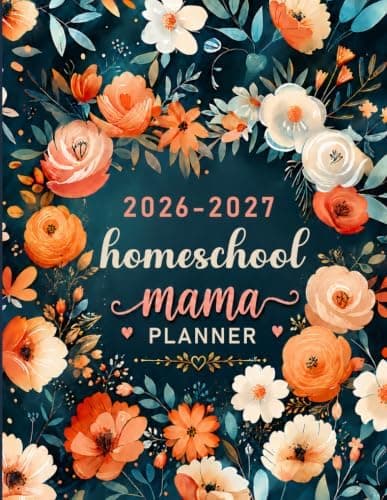
A dated 2026-2027 planner built specifically for moms teaching up to four kids at once, with weekly grids that let you log every child's subjects side by side. Includes attendance tracking and simple record keeping pages. The most purpose built option here for a large homeschool family.
Blue Sky 2026-2027 Teacher Lesson Planner
Before I found a planner built for multiple kids specifically, this was the one I used for years, and it is still the planner I recommend to a friend just starting out who is not sure yet what system will work for her family. It is technically marketed as a teacher planner, but the weekly and monthly spreads translate directly to homeschool use, and the wirebound design means it actually lies flat, which the Homeschool Mama planner does not.
The monthly view up front is genuinely useful for a big picture look at co op days, field trips, and testing dates across all four boys, while the weekly spread gives room to break the week down by day. I ended up using a different colored pen per kid within the same weekly boxes, which worked but takes more setup than a planner with built in per kid columns.
The laminated tabs and the storage pocket in the back are small details that end up mattering more than expected. I keep field trip permission slips and testing paperwork tucked into that back pocket rather than losing them in a kitchen drawer, and the tabs make flipping to the current week fast even with four kids' worth of scribbled notes filling every page.
Honest limitation: because it was not designed with multiple students in mind, you are building your own system within a single student layout, which takes more initial setup than a planner already structured for a big family. If you would rather have that structure handed to you, the Homeschool Mama Planner above is the better starting point.
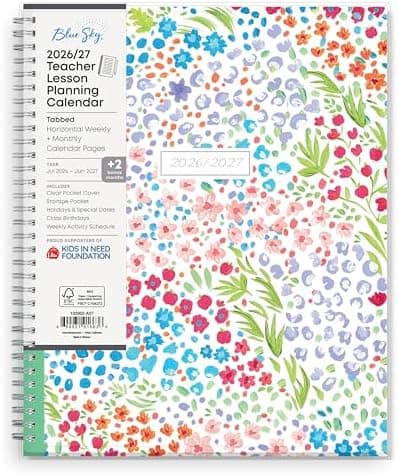
A dated wirebound planner that lies fully flat, with monthly overview pages, weekly spreads, laminated tabs, and a back storage pocket for paperwork. Built as a teacher planner but works well for homeschool once you build your own per kid tracking system inside it.
Teacher Created Resources Home Sweet Classroom Lesson Planner
Another homeschool mom in our co op recommended this one a couple years ago when I mentioned wanting something simpler and less expensive to try, and it has stayed in rotation as the planner I hand to a new co op family testing the waters without spending much.
It is undated, which is the biggest practical difference from the other picks here. That means you can start it in September, January, or the middle of a curriculum switch without a wasted page, and it covers 40 weeks of lesson planning, which lines up well with a standard academic year. The spiral binding lies reasonably flat, though not as smoothly as the Blue Sky.
The layout itself is straightforward to the point of being almost bare bones, a weekly grid with space to jot subjects and notes, no elaborate goal setting sections or motivational content padding out the pages. For a mom who wants a planner to just get out of her way and let her write down what she is teaching, that simplicity is the whole appeal.
Honest limitation: there is no dedicated attendance or record keeping section built in, so if your state requires documented hours, you will want to track that separately. It also does not have any built in structure for multiple kids, so like the Blue Sky, you are creating your own system within single student pages.
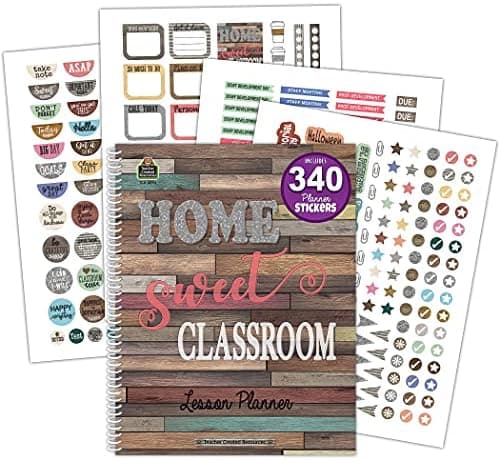
Teacher Created Resources Home Sweet Classroom Lesson Planner (TCR8294)
An undated, budget friendly lesson planner covering 40 weeks with a straightforward weekly grid layout. No elaborate extras, just a simple place to write down what you are teaching each week. A good low commitment option for a family testing out a new planning system.
Happy Planner Disc-Bound 12-Month Planner
This is the pick for a mom who likes to customize her system rather than adopt one exactly as it comes out of the box. The disc bound design means you can add, remove, and rearrange pages, and once you get into the world of disc bound planner inserts you can genuinely build something that fits your family's exact needs instead of working around a fixed layout.
I started using this one after my kitchen table planning system got messy enough that I wanted the ability to physically add extra pages during a busy month rather than running out of room and improvising in the margins. The teacher weekly layout gives a solid starting structure, but the real value is being able to snap in extra subject tracking pages, a goal sheet, or even blank paper when a specific week needs more space than the standard layout provides.
It genuinely lies flat on the table because of the disc binding, which after years of fighting with paperback spines is a small thing that makes a real daily difference. The cover options also tend to be sturdier than a basic wirebound planner, since the whole system is built to be opened and closed constantly through a full school year.
Honest limitation: the customization is also the catch. If you are not the type of person who wants to spend time building your own inserts and system, the flexibility here can feel like extra decision making you did not want, and a planner with the structure already decided for you, like the Homeschool Mama Planner, will serve you better with less setup time.
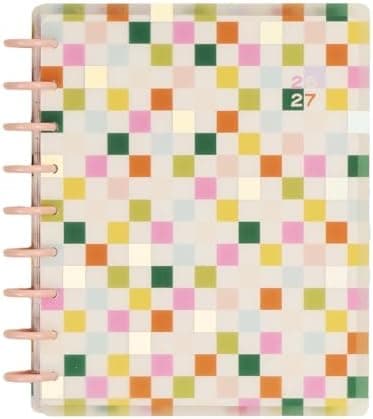
A dated, disc-bound teacher layout planner that lies flat and lets you add, remove, or rearrange pages as your school year changes. The most customizable pick on this list, best for a mom who wants to build her own system rather than use a fixed layout.
Making Any Planner Actually Stick
Buying the planner is the easy part. Here is what has kept mine from turning into another half filled notebook in a drawer.
Keep it somewhere you will actually see it. Mine lives open on the kitchen counter, not in a binder in the school room. If I have to go looking for it before I can write anything down, it does not get used consistently.
Plan on Sunday, adjust daily. I block out the coming week's subjects on Sunday evening while the house is quiet, then just check boxes and jot quick notes as we go. Trying to plan and log in the same sitting every day was never sustainable for me.
Do not aim for a perfectly filled page. Some weeks get messy, some entries are one word, and that is fine. A planner that has to look perfect to feel worth using is one that gets abandoned the first hard week.
Pair it with a simple wall calendar for the big picture. My planner handles daily subjects, but a large wall calendar in the kitchen catches co op days, appointments, and field trips at a glance for the whole family, not just me.